
Albuquerque · Large tree removal
Large Tree Removal in Albuquerque
A mature valley cottonwood can be 80 feet tall, six feet through the trunk and hollow in the middle. Removing one is the largest residential tree job in New Mexico, and it is planned more like a construction project than yard work.
Call availability varies by area and time of day. Calls are answered by an independent tree service provider.
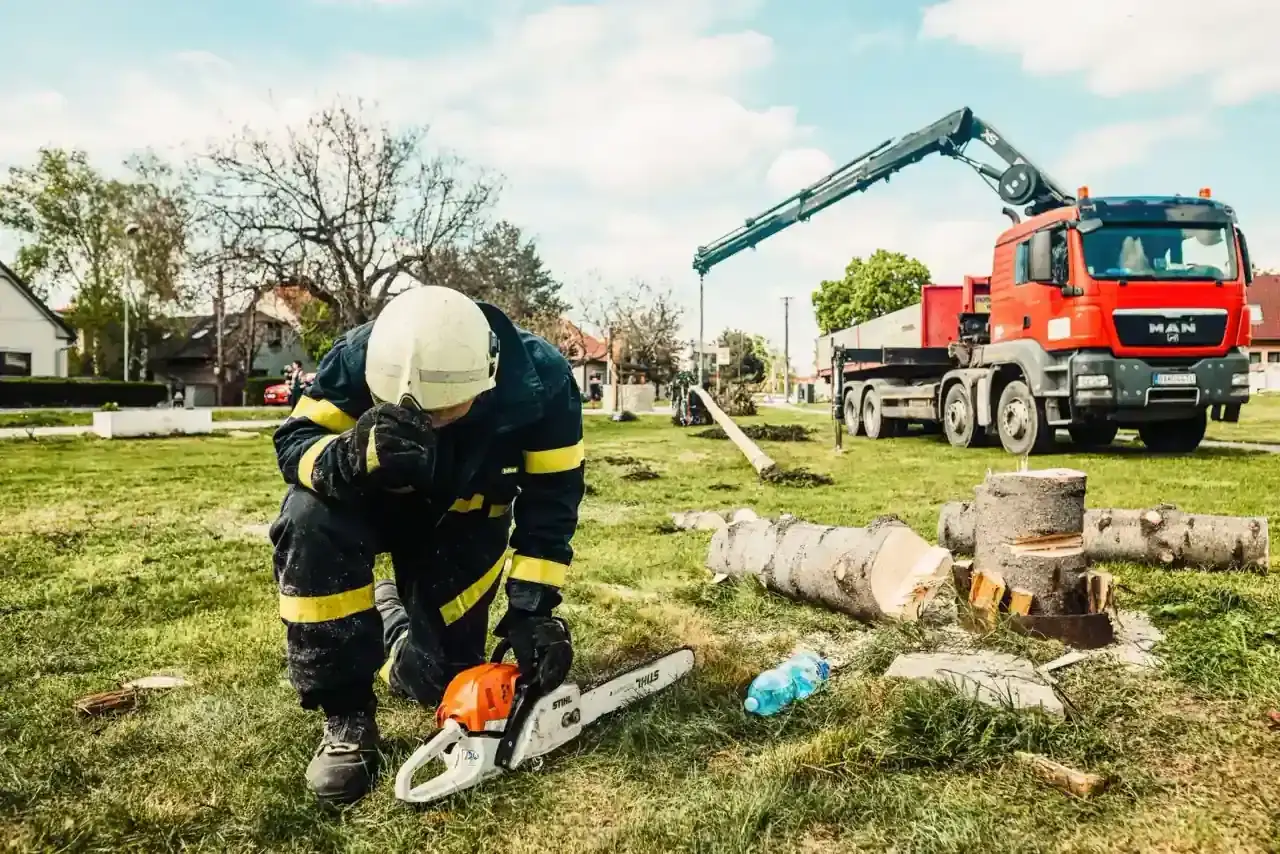
What makes these trees hard
Size is only part of it. Cottonwood is soft, weak wood that decays quickly once heartwood is exposed. An old tree commonly has a hollow trunk and major limbs with only a shell of sound wood, all hidden behind thick, healthy-looking bark.
That makes them hard to climb safely and hard to rig from. A limb chosen as an anchor may not hold the load of the piece being lowered. Experienced crews test, use several anchor points, or avoid rigging off the tree altogether and bring a crane.
The wood is also heavy when green. A single lower limb can weigh several tons. Each cut is sized to what the crane or rigging can take at that reach.
Methods for a big cottonwood
| Method | When it is used | Trade-off |
|---|---|---|
| Crane-assisted removal | Most large trees with truck access within reach | Needs truck access. Shortest and safest job. |
| Climbing and rigging | No crane access and wood sound enough to hold | Slow. More risk in decayed trees. |
| Aerial lift | Trees reachable from a driveway or field | Limited by the lift's height and the ground it sits on |
| Staged reduction over years | Owner wants to keep the tree | Smaller visits. Does not remove the risk entirely. |
How a crane removal runs
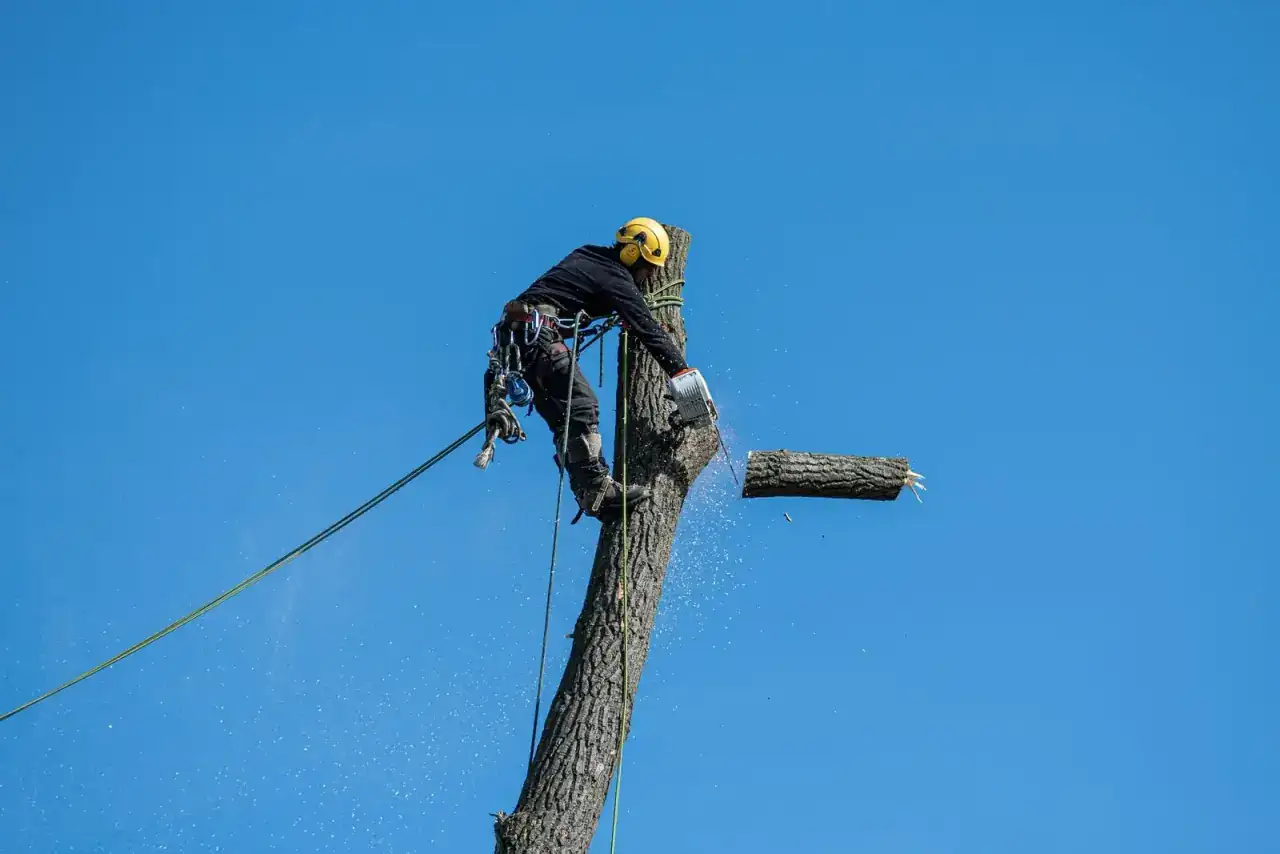
Site visit
The crane company checks where it can set up, the ground under the outriggers and the reach to the tree.
Utilities
Overhead lines are identified. A service drop may be disconnected for the day.
Picks
A climber or lift operator attaches the crane's sling, makes the cut, and the piece is lifted out and laid down for processing.
Trunk
Taken in sections sized to the crane's capacity. Hollow sections are handled with extra care because they can crush.
Stump
A stump this size takes hours to grind. Many owners cut it low and leave it.
Valley lots and their complications
- Narrow lanes
- Many North and South Valley properties are reached by unpaved private drives that a large crane cannot enter.
- Acequias and laterals
- Ditch banks will not carry heavy equipment, and debris must be kept out of the water. The ditch belongs to the conservancy district or the acequia association.
- Adobe and block walls
- Old walls are fragile. Loads are swung over them, never dragged.
- Septic systems and leach fields
- Common in the valley. Outriggers and trucks must avoid them.
- Shared trees
- Cottonwoods on old property lines may have two or three owners.
Signs that removal, not pruning, is the answer
A cavity large enough to stand in
Too little sound wood remains to hold the crown.
Major limbs that have already failed
Each break exposes more heartwood to decay.
Dead top across most of the crown
The roots or water supply have failed.
Fungal conks at the base or on main limbs
Advanced decay.
Keeping the tree: what reduction pruning does
- Shortens the longest limbs
- Less leverage at the end means less chance of a break at the base.
- Removes dead wood
- The most likely pieces to fall in wind or on a still, hot afternoon.
- Is a fraction of the work of removal
- And can be repeated every few years.
- Has limits
- It will not fix a hollow trunk. Topping the tree to bare stubs is not reduction and speeds its decline.
Albuquerque cottonwood removal questions
How long does it take to remove a large cottonwood?
One to three days for most, depending on access and whether a crane is used. Stump grinding, if wanted, is usually another visit.
Can the wood be used?
Cottonwood is poor firewood and of little value as lumber. Most is chipped or hauled to a green waste facility, which is a significant part of the job.
Can a hollow cottonwood be saved?
Sometimes for a while. If enough sound shell remains and the crown is reduced, a hollow tree can stand for years. An arborist can measure the wall thickness.
Who is responsible for a cottonwood on the ditch bank?
Often the conservancy district or acequia association, since the ditch and its banks are theirs. Confirm ownership before arranging work.
Large Tree Removal help in Albuquerque
Call to be connected with an independent tree company that works in Albuquerque, NM.
(844) 955-1716Call availability varies by area and time of day
Limbwright is a referral service. Your call goes to an independent tree service company that sets its own schedule and terms. Ask for proof of insurance and a written scope before work starts. How this works
Call now
Talk to a tree service provider in your area. Have the tree's location and what it is near ready.
(844) 955-1716Call nowCall availability varies by area and time of day