
Hawaii
Tree Removal and Tree Service in Hawaii
Trees in Hawaii grow all year, and some of the largest are also the weakest. Albizia can reach 100 feet in a couple of decades and shed limbs without wind. Coconut palms need trimming several times a year wherever people walk beneath them.
Why albizia is the tree to worry about
Albizia was introduced a century ago for reforestation and now covers lowland valleys on every main island. It is among the fastest-growing trees in the world. The price of that speed is weak, brittle wood and wide, flat crowns carried on long limbs.
When Tropical Storm Iselle struck the Puna district of Hawaii Island in August 2014, fallen albizia blocked roads and brought down power lines across the district. Some communities were cut off for days, and electricity took weeks to restore.
Large albizia are also expensive to remove, because pieces cannot be dropped freely near houses and the wood is too unreliable to rig from with confidence. Dealing with one while it is 30 feet tall costs a fraction of what it will at 90.
Common Hawaii trees and their care
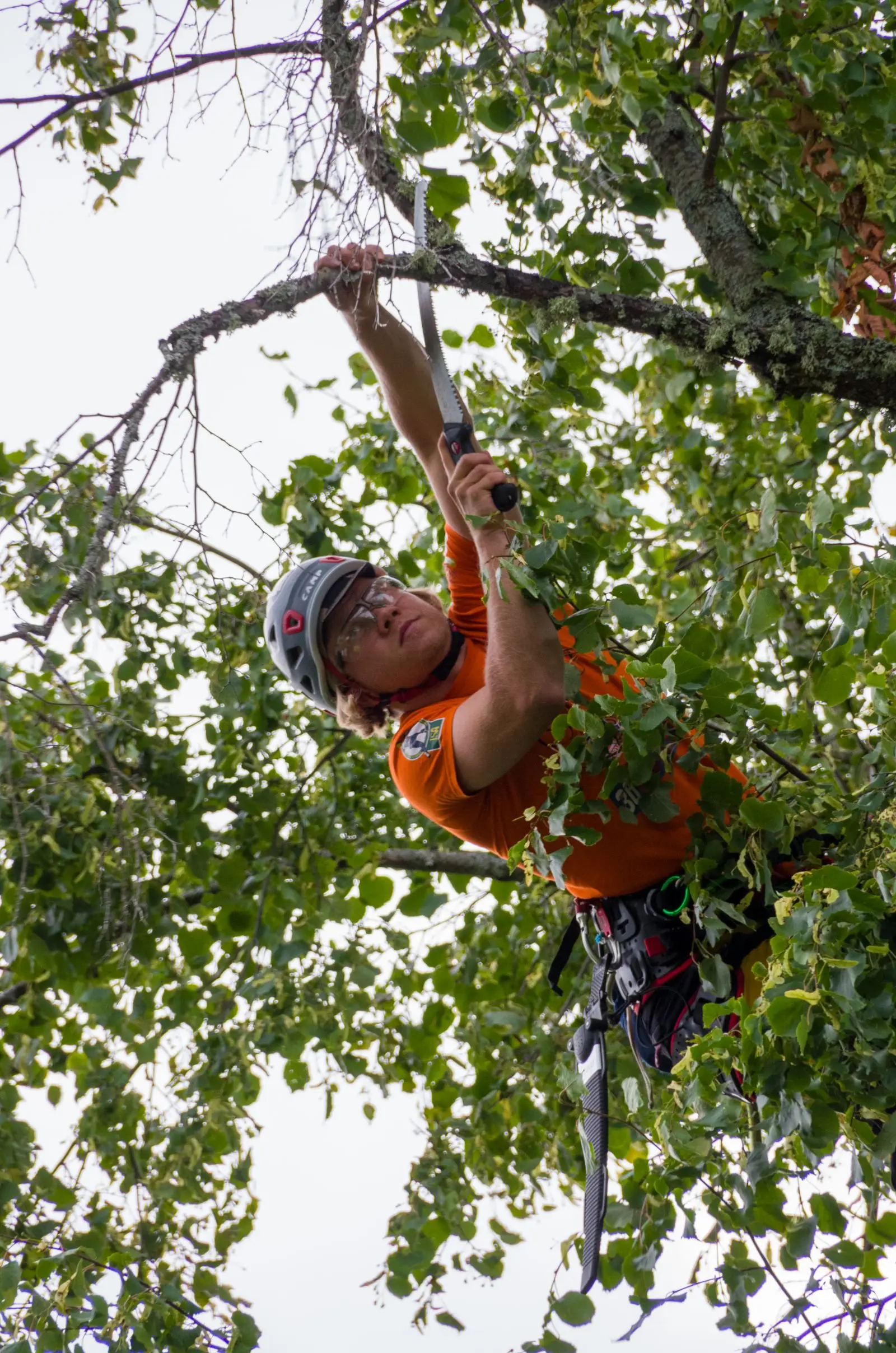
- Coconut palm
- Falling nuts and fronds are a real injury risk. Palms over walks, parking and pools are trimmed two to four times a year.
- Monkeypod
- Broad shade tree that needs periodic structural pruning to keep long limbs sound.
- Banyan and other figs
- Huge, long-lived and often protected. Aerial roots and buttresses complicate any work nearby.
- Kiawe
- Thorny, shallow-rooted mesquite of dry leeward coasts. Topples in wind and wet soil.
- Ironwood and Cook pine
- Tall coastal and ridge trees that shed limbs or lean with the trades.
- Mango and avocado
- Backyard fruit trees that outgrow small lots and need reduction.
Contractor license, exceptional trees and wood movement
Hawaii licenses tree work as a specialty contracting classification, C-27b Tree Trimming and Removal, issued by the Contractors License Board. A license is required for jobs above the state's small-project exemption. You can search a contractor's license on the Department of Commerce and Consumer Affairs website.
Under the state's Exceptional Tree Act, each county designates trees of outstanding age, size, rarity or cultural value. An exceptional tree may not be removed or seriously altered without county approval, even on private land. Each county keeps its own register.
Quarantine rules restrict moving plant material that can carry pests. Green waste and mulch movement is regulated because of coconut rhinoceros beetle, and ohia wood and plant parts may not leave Hawaii Island without inspection because of Rapid Ohia Death. A professional crew will know where your green waste can legally go.
Invasive pests affecting Hawaii trees
| Pest or disease | Affects | What owners should know |
|---|---|---|
| Coconut rhinoceros beetle | Coconut and other palms | First found on Oahu in 2013 and since detected on other islands. Look for V-shaped cuts in fronds and bore holes in the crown. Breeds in mulch and green waste piles. |
| Rapid Ohia Death | Ohia lehua | A fungal disease found on Hawaii Island in 2014 and later on other islands. Avoid wounding ohia and clean tools and gear. |
| Banyan and ficus pests | Chinese banyan and other figs | Gall wasps and whiteflies have caused dieback in urban banyans |
| Little fire ant | People working in trees | Nests in tree crowns. Crews in infested areas take precautions. |
Warning signs in tropical trees
An albizia or other large tree leaning over the house or road
Fast growers add weight every month. A lean rarely corrects itself.
Brown, hanging fronds and heavy nut clusters on a palm
Overdue for trimming.
A notch or hole in the top of a palm with deformed new fronds
Possible rhinoceros beetle damage. Report it.
Cracks or cavities where big limbs join the trunk
Common in old monkeypod and mango.
Soft, saturated ground at the base after days of rain
The usual setup for whole-tree failure on slopes.
Before hurricane season and Kona storms
- This week
Coconuts hang over a walkway, driveway or lanai
Schedule trimming now and set a regular cycle.
- This week
Albizia stand within falling distance of the house or power line
Get removal quotes before they grow larger. Hurricane season runs June through November.
- Act now
A tree is on your home after a storm
See emergency tree removal and keep clear of any wires.
- Plan it
A very large old tree on the lot may be on the county register
Check with the county before any major pruning.
Hawaii tree service questions
Does a tree trimmer need a license in Hawaii?
For jobs above the state's small-project exemption, yes. The classification is C-27b Tree Trimming and Removal. Look the contractor up with the Department of Commerce and Consumer Affairs and ask for insurance certificates.
How often should coconut palms be trimmed?
Wherever people or cars pass underneath, two to four times a year. Nuts and old fronds are removed before they are heavy enough to fall.
Who is responsible for albizia on a neighbor's or vacant lot?
The owner of the land where the tree stands. If it threatens your home, put your concern in writing to the owner. Counties and utilities have run albizia control programs along roads and power lines.
What is an exceptional tree in Hawaii?
A tree or grove a county has designated for its age, size, rarity, location or cultural significance. It is protected by county ordinance, and removal or major work needs approval.
Tree service in Hawaii, by phone
Call to be connected with an independent tree company serving your part of Hawaii, or leave your number for a callback.
(888) 555-0142Call availability varies by area and time of day
Limbwright is a referral service. Your call or request goes to an independent tree service company that sets its own prices and schedule. Ask for proof of insurance and a written scope before work starts. How this works
Request a callback
Leave a number and a tree service provider in your area will call you.