
Colorado
Tree Removal and Tree Service in Colorado
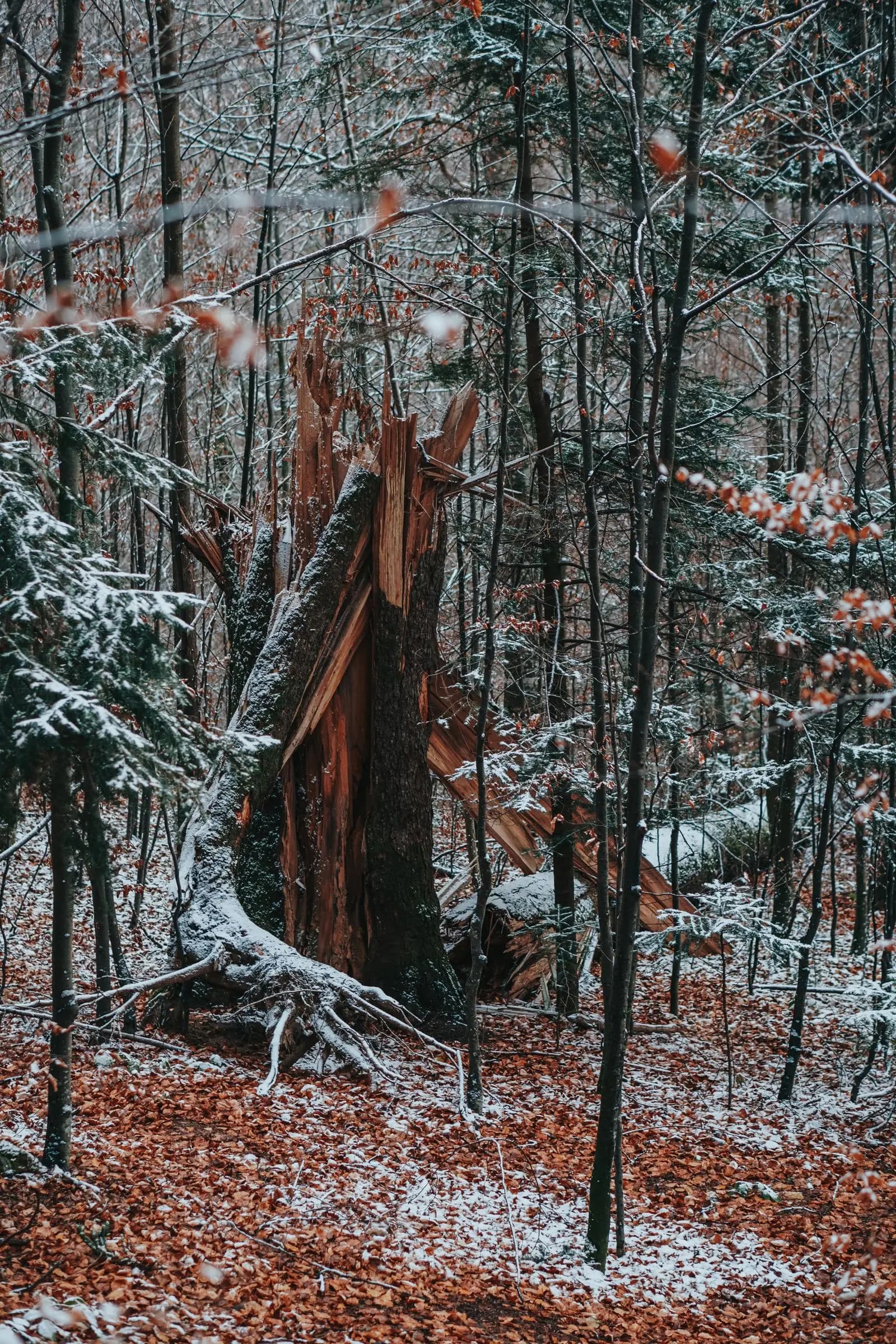
Along the Front Range the classic tree emergency is a foot of wet snow in May or September, when branches are full of leaves. In the mountains it is standing dead conifers left by two decades of bark beetles, and the wildfire risk that comes with them.
Upslope snow and downslope wind
The Front Range gets its heaviest snow in the shoulder seasons. A storm on September 8 and 9, 2020 followed days of record heat and dropped wet snow on trees in full summer leaf from Fort Collins to Colorado Springs. The March 2003 blizzard buried Denver under two to three feet and broke limbs across the metro area.
Wind arrives from the other direction. Chinook and bora winds pour down the east slope of the mountains with gusts over 100 mph in the foothills. On December 30, 2021 such an event drove the Marshall Fire through Superior and Louisville, and it toppled trees along the entire urban corridor.
Colorado's dry air and intense sun also matter. Winter drought kills roots, and thin-barked trees suffer sunscald on the southwest side of the trunk.
City tree licenses along the Front Range
Colorado has no state arborist license, but its larger cities license tree companies directly. Denver requires a Tree Contractor License from the Office of the City Forester to perform tree maintenance anywhere in the city and county, and it publishes the list of licensed contractors. Fort Collins, Colorado Springs, Boulder and others run comparable programs.
The license usually requires a written test and proof of insurance, so it is a meaningful screen. Check the city's list before you hire.
Street trees are a second issue. In Denver the tree in the public right-of-way is the adjoining owner's responsibility to maintain, yet removing or planting one requires a permit from the City Forester. Private yard trees generally need no removal permit, apart from development sites and designated landmarks.
Colorado tree pests from plains to treeline
| Pest | Where | Effect |
|---|---|---|
| Emerald ash borer | Found in Boulder in 2013 and since in more Front Range communities | Roughly one in six urban trees in the Denver area is an ash |
| Mountain pine beetle | Lodgepole and ponderosa forests | An epidemic from the late 1990s to the early 2010s affected about 3.4 million acres |
| Spruce beetle | High-elevation spruce, especially in the south | The most damaging forest insect in the state in recent years |
| Ips beetles | Spruce and pine in yards and windbreaks | Attack drought-stressed and freshly pruned trees |
| Japanese beetle | Front Range landscapes | Defoliates linden and other trees. Rarely a reason for removal. |
After a wet snow: what to check
Limbs cracked but still attached
They can fall days later once the snow melts and the wood dries. Keep clear.
A split where two trunks meet
Common in silver maple, Siberian elm and ornamental pear. The tree may not be repairable.
Branches bent to the ground
Leave them. Many spring back. Shaking off snow often snaps them.
Limbs on the service line
Call the utility before anyone touches the tree.
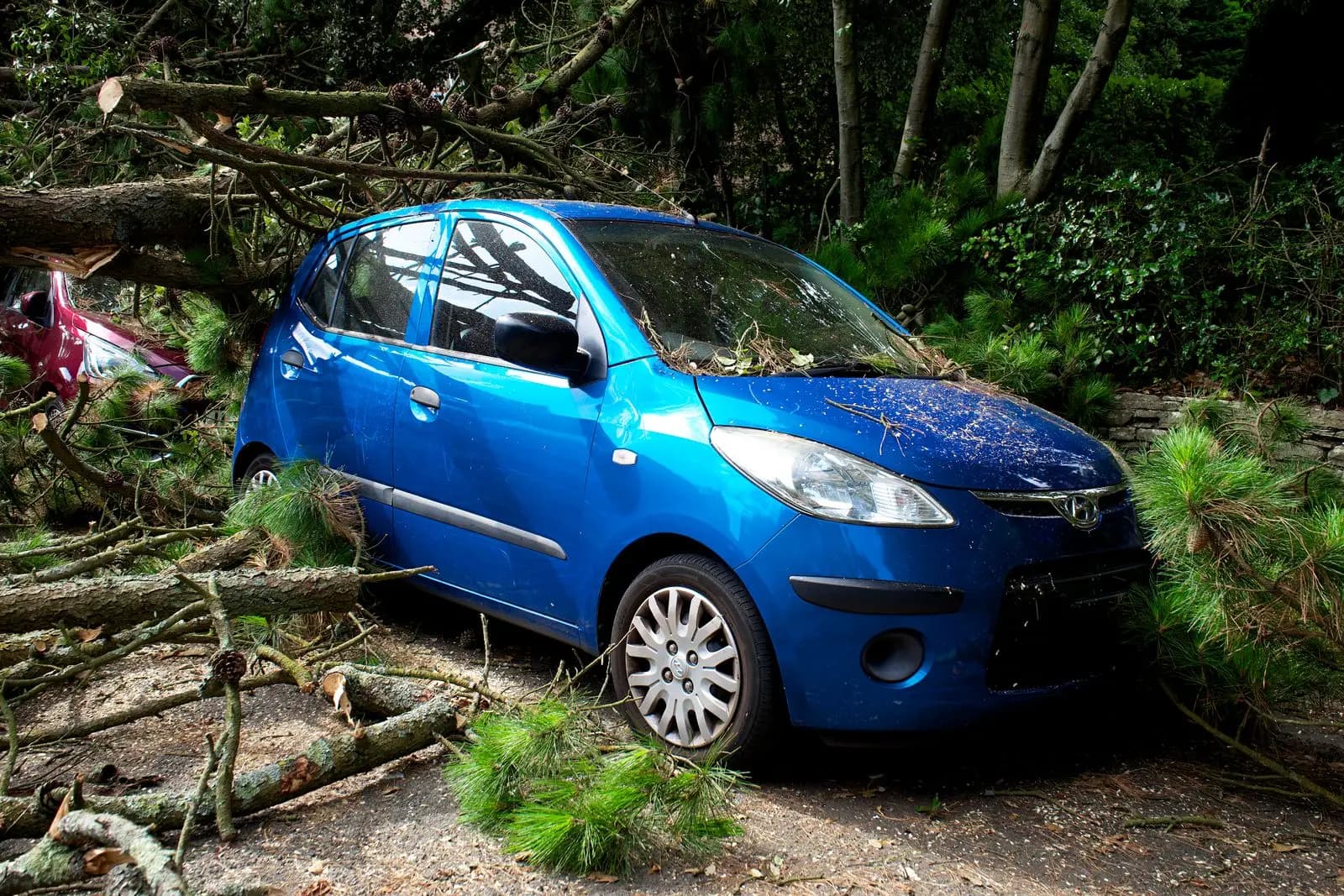
Mountain property: dead trees and defensible space
- Standing beetle-kill
- Lodgepole dead for ten or more years falls without warning in wind. Clear it from around houses, drives and power lines.
- Defensible space
- The Colorado State Forest Service describes zones around a home in which fuels are removed, thinned and pruned. Some counties and insurers require the work.
- Access
- Steep, narrow roads limit trucks and chippers. Slash may be piled for winter burning under a county permit.
- Aspen
- Short-lived and prone to cankers. Stands near houses need periodic removal of dead stems.
What to do and when in Colorado
- Act now
A snow-broken limb is hanging over the walk or drive
Rope off the area and call. See hazardous tree removal.
- This week
Dead pines stand within a tree length of a mountain home
Remove before fire season and before they start falling.
- This week
A healthy ash stands in a community where the borer has been found
Begin treatment or plan a replacement.
- Plan it
Trees have not been watered through a dry winter
Water monthly when the ground is not frozen. Drought damage shows up the following summer.
Colorado tree service questions
Does a tree company need a license in Denver?
Yes. A Tree Contractor License from the Office of the City Forester is required for tree maintenance in Denver. The city posts the list of licensed contractors online.
Should I knock snow off my trees in Colorado?
Only gently, from below with a broom, on small trees and before the snow freezes on. Never stand under a loaded limb, and do not shake large branches.
Who is responsible for the street tree in Denver?
The adjoining property owner maintains it, but a permit from the City Forester is needed to remove or plant a tree in the right-of-way.
Do I have to remove beetle-killed trees on my mountain lot?
No state law requires it. Some counties, fire districts, HOAs and insurers do set mitigation requirements, and dead trees within reach of a building or road are a hazard worth removing regardless.
Tree service in Colorado, by phone
Call to be connected with an independent tree company serving your part of Colorado, or leave your number for a callback.
(888) 555-0142Call availability varies by area and time of day
Limbwright is a referral service. Your call or request goes to an independent tree service company that sets its own prices and schedule. Ask for proof of insurance and a written scope before work starts. How this works
Request a callback
Leave a number and a tree service provider in your area will call you.