
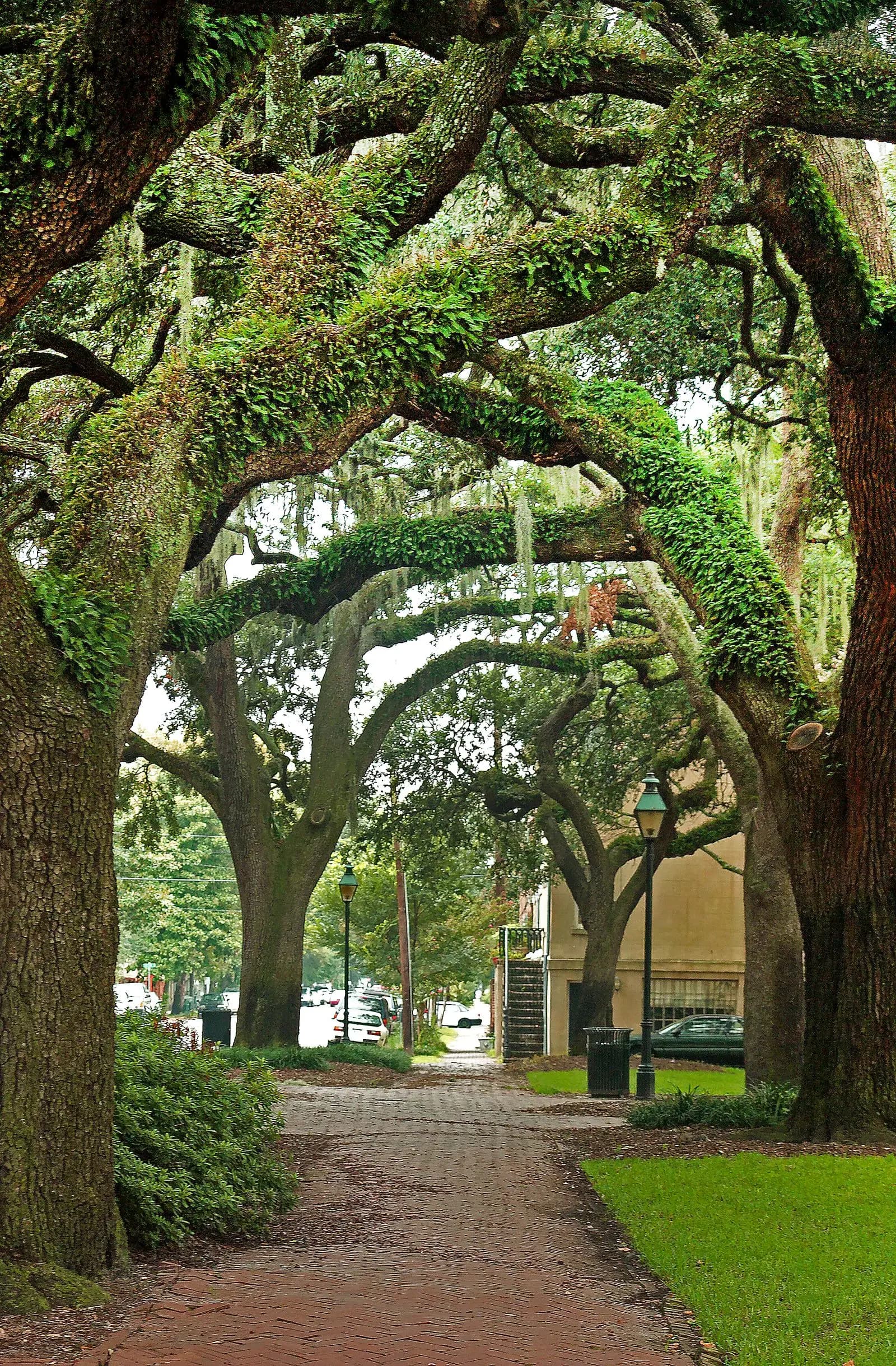
South Carolina
Tree Removal and Tree Service in South Carolina
South Carolina's tree problems split by region. The Lowcountry has protected live oaks and hurricane surge, the Midlands has pines that fail in ice, and the Upstate learned in 2024 that a tropical storm can level trees 200 miles inland.
Hugo, Helene and the storms between
Hurricane Hugo came ashore near Sullivan's Island in September 1989 as a Category 4 storm and damaged forest across roughly two thirds of the state. It reached Charlotte still strong enough to flatten trees.
Helene in September 2024 was the inland version. It arrived over ground already soaked by days of rain, and the Upstate and the Aiken area lost trees by the thousand: whole oaks tipped out of red clay onto houses in Greenville, Spartanburg and Anderson.
Ice is the quieter hazard. The February 2014 storm coated the Midlands and the Aiken area, and loblolly pines broke under the weight across several counties.
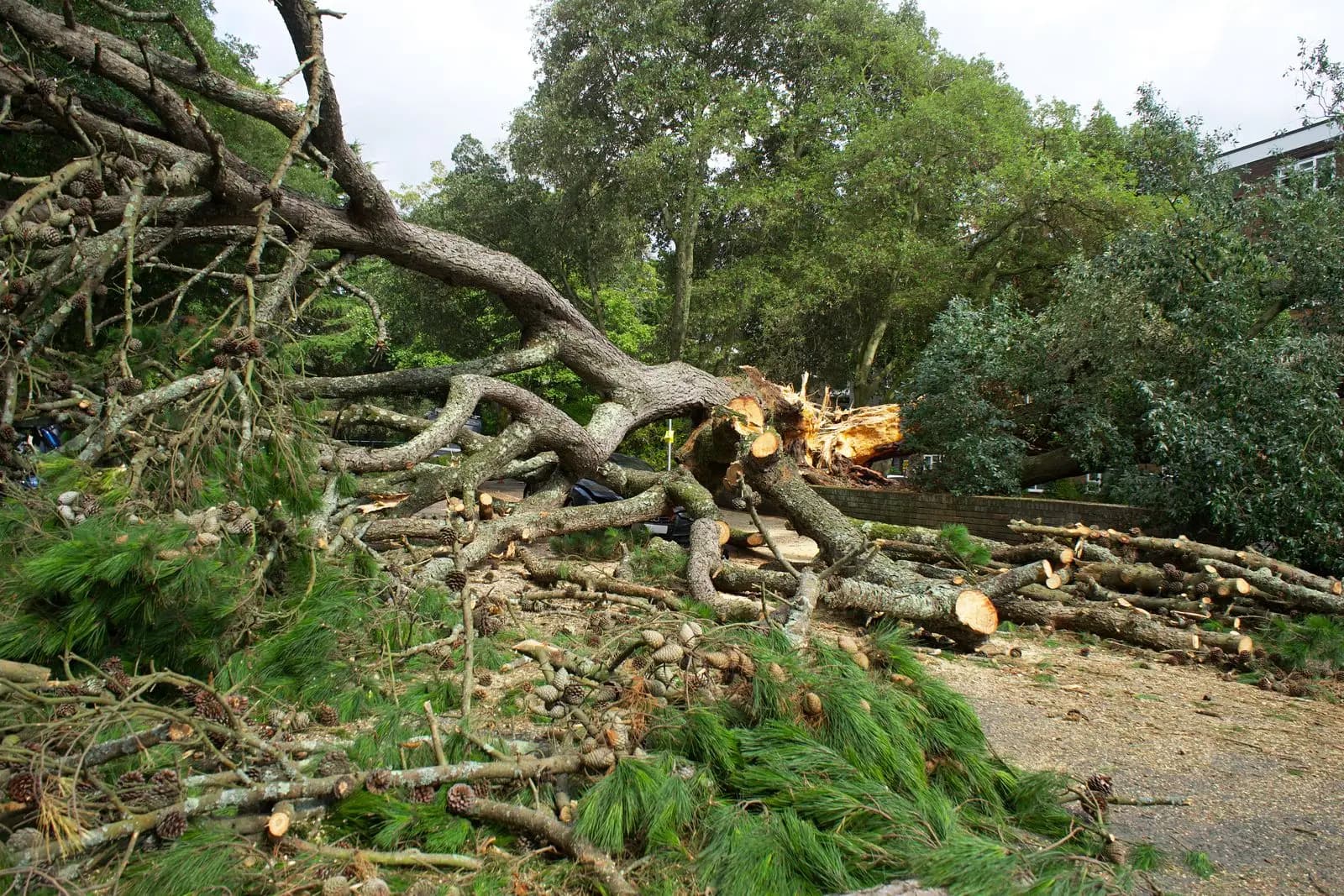
Tree risks by South Carolina region
| Region | Main hazard | Trees most often involved |
|---|---|---|
| Lowcountry and Grand Strand | Hurricane wind, surge and salt | Laurel oak, water oak, pines. Live oaks and palmettos mostly survive. |
| Midlands and Sandhills | Ice, summer thunderstorms, drought | Loblolly and longleaf pine, turkey oak |
| Upstate | Tropical remnants on wet clay, occasional ice | Mature white, red and water oaks, tulip poplar |
Grand trees and local permits
South Carolina has no statewide permit for removing a tree on private property and no state license specific to tree work. Protection comes from city and county ordinances, and the Lowcountry has some of the firmest in the Southeast.
Charleston's zoning code defines a grand tree as one 24 inches or more in diameter at breast height, with pines and sweetgum excluded, and requires city approval to remove one. Mount Pleasant, Hilton Head Island, Beaufort and Columbia have their own size thresholds and species lists.
Because nothing at the state level screens tree companies, vetting falls to the owner. Ask for an ISA Certified Arborist on the job where a protected tree is involved, since most of these ordinances want an arborist's letter before a hazardous grand tree is approved for removal.
Live oak, laurel oak and why the difference matters
The two look alike from the street, and they behave very differently. Live oak is long-lived, dense and wind-firm. Laurel oak grows faster, decays from the inside by about 50 years, and accounts for a large share of the oaks that fail in coastal storms.
Pines are the other half of the workload. Loblolly was planted or left standing on thousands of subdivision lots, and a pine 90 feet tall and 15 feet from a bedroom is the most common reason people in the Midlands call about removal.
One tree you can no longer buy: South Carolina banned the sale of Bradford and other Callery pears in October 2024 because they spread into natural areas. Existing trees may stay, though most split apart by 20 years.
Pests South Carolina owners are asked to report or watch
Asian longhorned beetle
Found in Charleston County in 2020. A federal and state quarantine restricts moving hardwood from the regulated area. Look for dime-sized round exit holes in maples.
Emerald ash borer
Present in the Upstate since 2017. D-shaped exit holes and heavy woodpecker flecking on ash.
Southern pine beetle
Groups of pines dying outward from one spot.
Laurel wilt
Redbay and sassafras wilting with leaves still attached.
Before hurricane season in South Carolina
- Act now
Dead limbs hang over the roof or driveway
Have them removed before June. Crews stop booking routine work when a storm is forecast.
- This week
A large laurel or water oak stands within falling distance of the house
Get it inspected for trunk and root decay.
- Act now
A pine leans toward the house and the lean is new
Treat as urgent. See tree leaning toward the house.
- Plan it
A grand live oak needs clearance pruning
Plan it for winter and confirm whether your city wants a permit for major pruning.
South Carolina tree service questions
Do I need a permit to cut down a tree in South Carolina?
The state does not require one. Many cities and counties do for trees above a set diameter, and coastal communities are the strictest. Check your local zoning office before removing any large hardwood.
What is a grand tree in Charleston?
Under the city's zoning code it is a tree 24 inches or more in diameter at breast height, other than a pine or sweetgum. Removal needs city approval, and a hazardous tree generally needs an arborist's written assessment.
Are palmettos a hurricane risk?
Rarely. Sabal palmettos bend and shed fronds but seldom fall. Remove dead fronds and seed stalks before storm season and leave the green ones.
How long did tree removal take after Helene in upstate South Carolina?
Trees on houses were handled in days to a couple of weeks. Non-urgent removals and stump work ran for months because so many trees fell at once. After any regional storm, expect the same order of priority.
Tree service in South Carolina, by phone
Call to be connected with an independent tree company serving your part of South Carolina, or leave your number for a callback.
(888) 555-0142Call availability varies by area and time of day
Limbwright is a referral service. Your call or request goes to an independent tree service company that sets its own prices and schedule. Ask for proof of insurance and a written scope before work starts. How this works
Request a callback
Leave a number and a tree service provider in your area will call you.