
Decision guide
Is My Tree Dead or Just Dormant?
Updated · Limbwright editorial
Short answer
Scratch the bark on several twigs with a thumbnail. Green, moist tissue underneath means the branch is alive. Brown and dry on twigs all around the crown, with no buds and brittle wood, means the tree is dead.
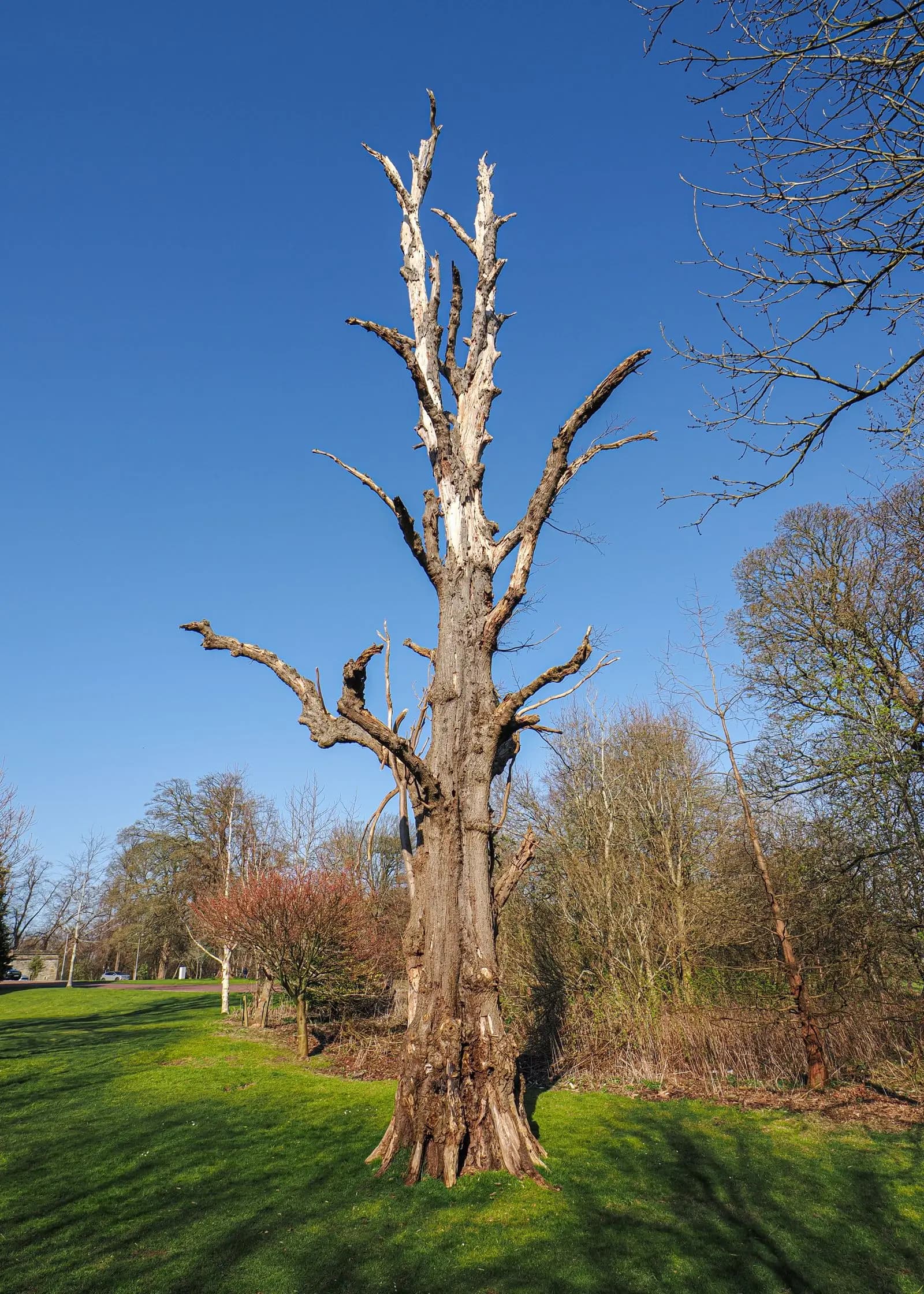
Five tests, from quickest to most telling
The scratch test
On a pencil-thick twig, scrape away a little outer bark. Bright green or creamy white and damp is alive. Tan, brown and dry is dead. Test a dozen twigs around the tree.
The bend test
Live twigs flex. Dead twigs snap cleanly with a dry crack.
Buds
Even in winter, live branches carry firm buds at the tips and along the stems. Shriveled or missing buds indicate dead wood.
Bark
Bark loosening and falling off in sheets, with dry wood and no new bark forming beneath, is a late sign.
The base
Mushrooms or woody conks on the trunk or roots mean decay fungi are established inside.
Dead, dying or dormant?
| What you see | Most likely | What to do |
|---|---|---|
| No leaves in winter, twigs green inside, buds present | Dormant and healthy | Nothing |
| No leaves by early summer, all twigs brown inside | Dead | Plan removal. See dead tree removal. |
| Leaves on some branches, others bare and brittle | Partly dead. Declining. | Have it inspected to find the cause |
| Leaves browned suddenly in summer and stayed attached | Sudden death from vascular disease, drought or root failure | Inspect soon. Some causes spread. |
| Leaves only on shoots from the trunk and base | Crown has died. Roots are making a last effort. | Usually removal |
| Late leaf-out after a harsh winter or drought | Stressed but alive | Water, wait, and recheck in midsummer |
Trees people wrongly think are dead
Some conifers drop their needles every fall. Bald cypress, dawn redwood and larch go bare in winter and leaf out again in spring. Each year people cut down healthy ones.
Certain trees leaf out very late. Pecan, walnut, honey locust, crape myrtle and some oaks can still be bare weeks after everything else is green. After a hard freeze or late frost, many species push a second set of leaves a month behind schedule.
Pines and other evergreens shed their oldest inner needles each autumn. Yellowing on the inside of the branch is normal. Browning at the tips, or of the whole crown, is not.
Signs that a living tree is in serious decline
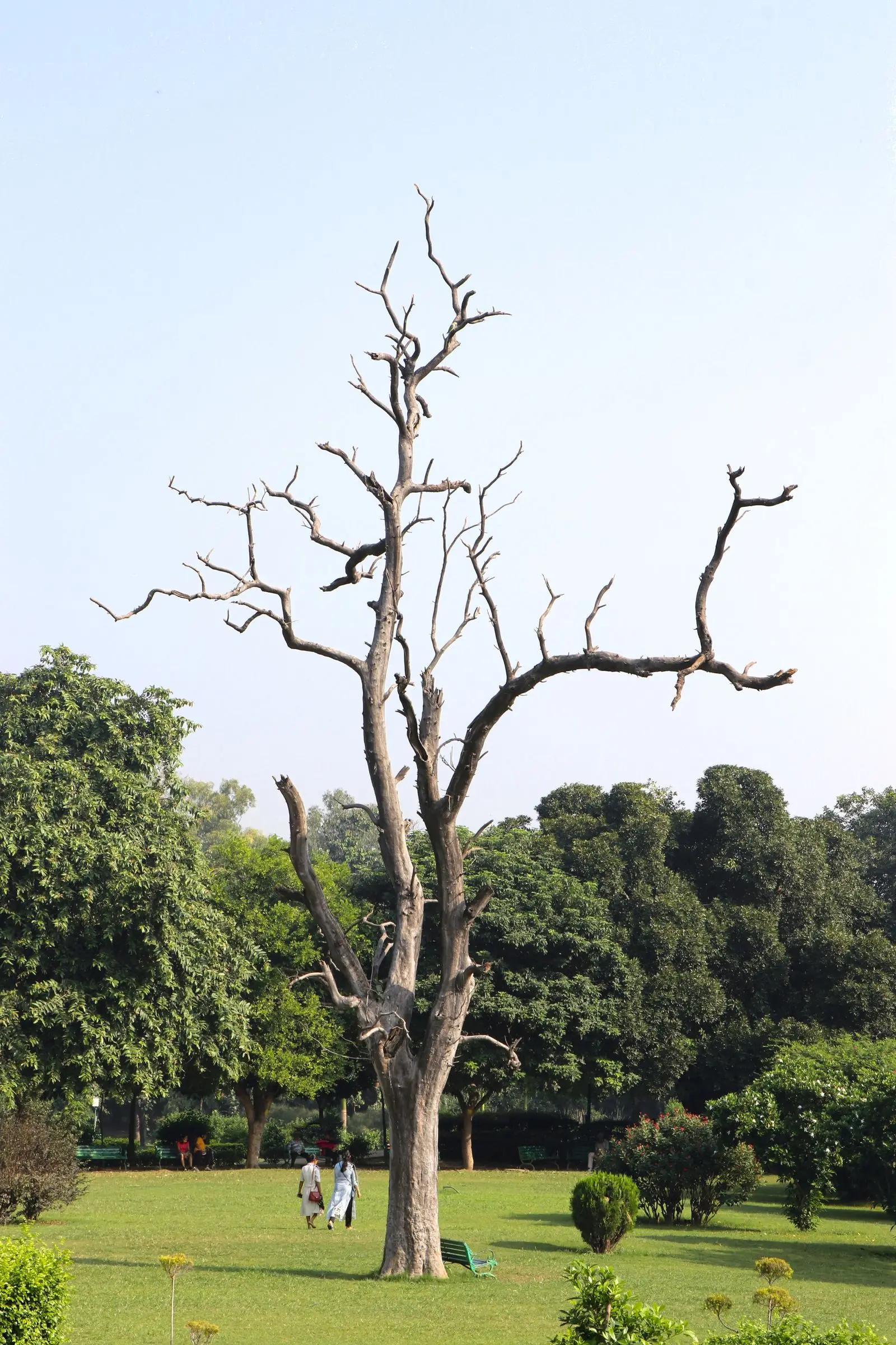
- Dieback from the top
- Dead branch tips in the upper crown, advancing downward year by year.
- Small, pale or sparse leaves
- Compared with previous years or neighboring trees.
- Early fall color
- One tree turning weeks before others of its kind.
- Heavy sprouting on the trunk
- A stress response when the crown is failing.
- Peeling bark and cankers
- Sunken, dead patches on the trunk or major limbs.
- Boring dust or exit holes
- Signs of insects such as emerald ash borer or bark beetles. See what that means for owners in Minneapolis and Nashville.
What to do with the answer
- This week
Dead, and within reach of a house, drive, play area or line
Schedule removal soon. Dead wood gets more brittle and costlier to remove with time.
- Act now
Dead, with large limbs already dropping
Keep people away from under it and move removal up.
- This week
Half alive
Get an arborist's opinion. Removing dead sections may be enough, or the cause may be terminal.
- Plan it
Alive but stressed
Deep, infrequent watering in drought, mulch over the root zone, and no fertilizer or heavy pruning until it recovers.
Questions about dead and dying trees
Can a dead tree come back to life?
No. If every twig is brown under the bark and the buds are dead, the tree will not recover. Sprouts from the roots or base are new growth from the root system, not a revival of the crown.
How long before a dead tree falls?
It varies from months to many years by species, size and climate. Limbs begin to drop long before the trunk fails, so the hazard starts early.
Should I remove a half-dead tree?
It depends on why it is declining and what it can hit. When more than about half the crown is dead, recovery is unlikely and removal is usually the practical choice.
Who can tell me for certain?
An ISA Certified Arborist can confirm the tree's condition and the cause. For a tree near a structure, a tree risk assessment also rates the hazard.
This guide is general information, not professional, legal or insurance advice. Tree conditions, local rules and policy terms vary. Have a qualified arborist inspect the tree, and confirm regulations and coverage with your city and insurer.
Want someone to look at the tree?
Call to be connected with an independent tree service company in your area, or leave your number for a callback.
(888) 555-0142Call availability varies by area and time of day
Limbwright is a referral service. Your call or request goes to an independent tree service company that sets its own prices and schedule. Ask for proof of insurance and a written scope before work starts. How this works
Request a callback
Leave a number and a tree service provider in your area will call you.