Tampa, Florida
Tree Removal and Tree Service in Tampa
Tampa's older neighborhoods sit under very large oaks, and the city protects the biggest of them. After Hurricanes Helene and Milton in 2024, the practical question for many owners is which of the surviving trees are still sound.
- County
- Hillsborough
- Tree permits
- City of Tampa Construction Services, Natural Resources
- Key local rule
- Grand trees, 32 inches in diameter and larger, have special protection
- Electric utility
- Tampa Electric (TECO)
- Main hazards
- Hurricanes, lightning, saturated sandy soil
After Helene and Milton
Two hurricanes reached the Tampa Bay area within two weeks in the fall of 2024. Helene passed offshore in late September and pushed record storm surge into low-lying neighborhoods. Milton made landfall south of the bay on October 9 with destructive wind and extreme rainfall across Hillsborough County.
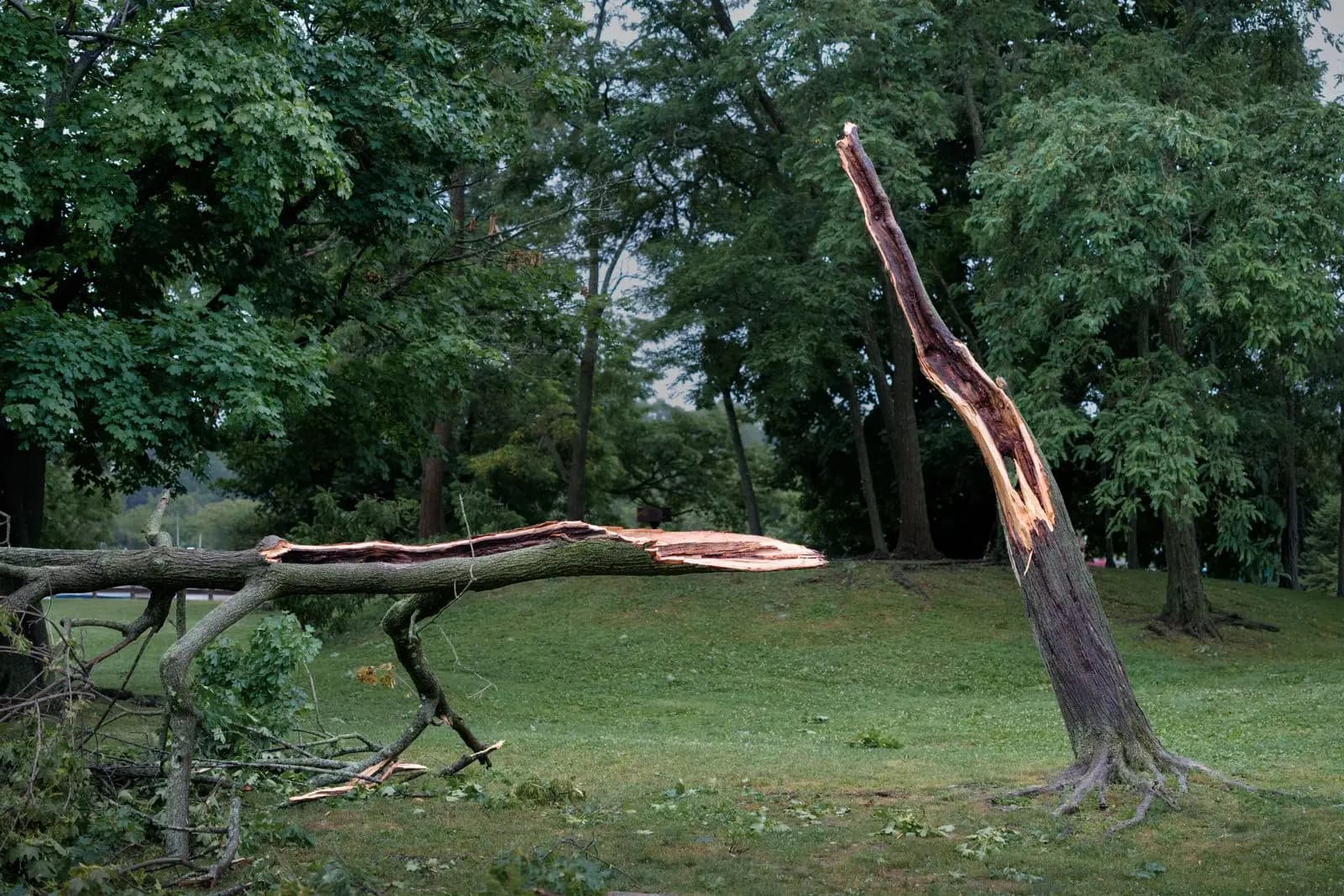
Surge and wind damage trees differently. Saltwater flooding kills roots, and trees in flooded areas of South Tampa and the bayshore browned and died over the following months. Milton's wind uprooted oaks on soaked ground and snapped pines.
Some damage is still showing up. Trees that lost large limbs, were partly uprooted and settled back, or stood in salt water can decline for two or three years. If a tree on your lot went through either storm and now has a thin crown, new lean or dead top, have it looked at.
Tampa's tree rules and the state exemption
Tampa regulates tree removal on private property through its tree and landscape code. Grand trees, defined as 32 inches or more in trunk diameter, get the highest protection. Removing a grand tree that is not hazardous can require a public process such as review by the Variance Review Board, with public notice first.
State law creates an exception. Under Section 163.045, Florida Statutes, a residential owner who holds a signed assessment from an ISA Certified Arborist or Florida-licensed landscape architect showing the tree poses an unacceptable risk may remove it without a city permit. The city has published its interpretation of how it applies the exemption.
The exemption applies to residential property and to documented risk only. For a healthy tree, the normal permit rules stand. Unincorporated Hillsborough County, Temple Terrace and Plant City are separate jurisdictions.
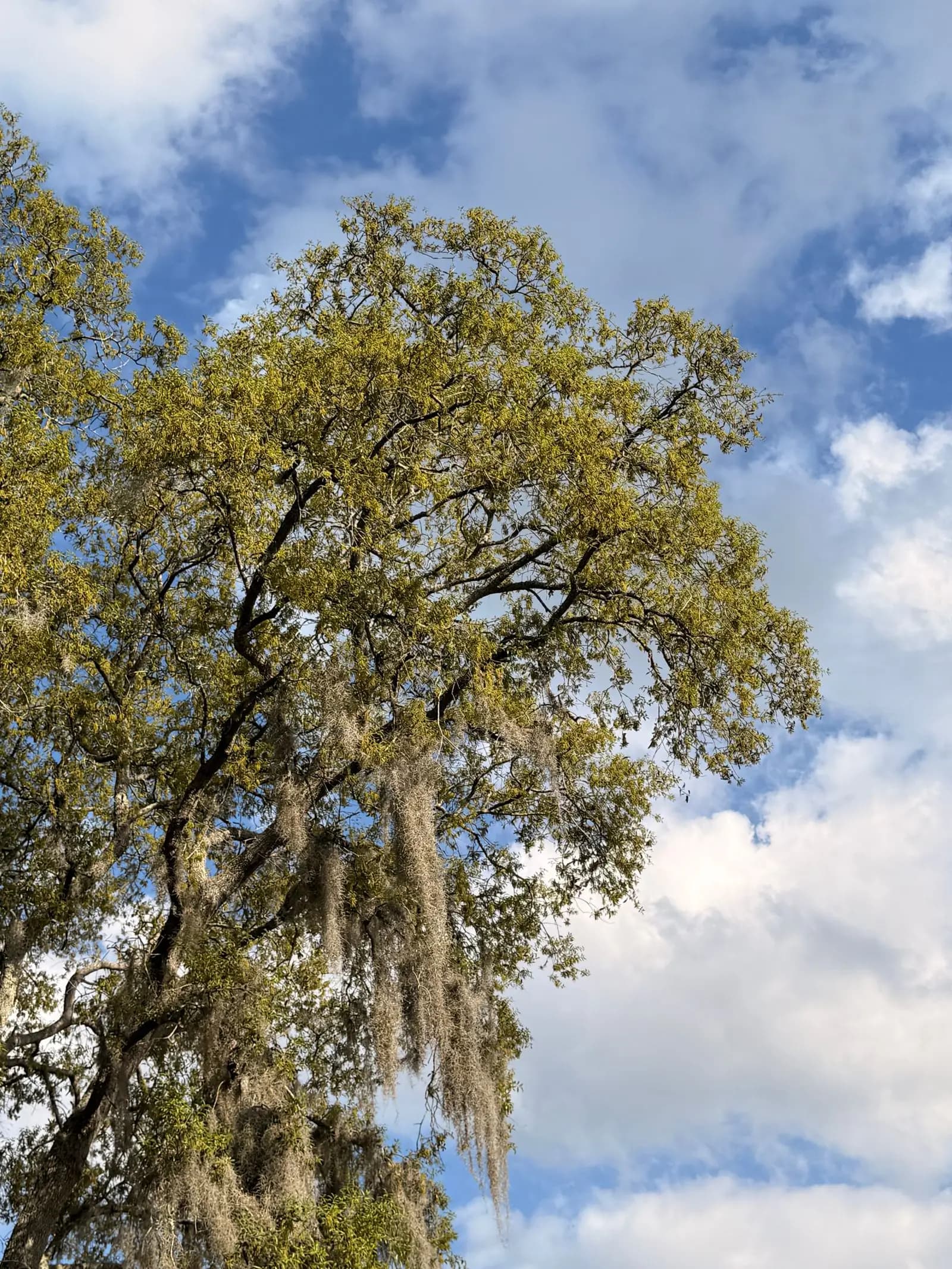
Live oak or laurel oak? It matters in Tampa
The two look alike from the street and behave very differently in a hurricane.
Live oak
- Thick, leathery leaves with rolled edges, dark above and pale below
- Wide, low crown with heavy horizontal limbs
- Can live for centuries
- Among the most wind-resistant trees in Florida
Laurel oak
- Thinner, flat, glossy leaves, often diamond-shaped
- Taller and more upright
- Often declining and hollow by 50 to 70 years
- A leading source of trunk failures and house strikes
Many Tampa laurel oaks were planted in the mid-1900s and are now at the end of their lifespan. An older laurel oak over a house is a good candidate for a risk assessment.
Old neighborhoods, big trees, small lots
Seminole Heights, Hyde Park, Palma Ceia and much of South Tampa were built in the early and mid-1900s on narrow lots, and the oaks planted then now spread over two or three properties each.
That makes most removals here technical. There is rarely room to drop anything, overhead service lines run through the canopy, and rear yards are reached through a side gate. Expect climbing and rigging or a crane set up in the street, and expect the price to reflect it.
Bungalows on piers and older clay sewer lines are common in these areas as well. Tell the company about either before heavy equipment or stump excavation is planned.
Tampa's year in trees
| Months | Conditions | Good time for |
|---|---|---|
| November to April | Dry and mild | Assessments, pruning, planned removals. Shortest waits. |
| May to June | Daily thunderstorms and lightning begin | Finishing pre-season work |
| July to October | Peak storm months | Emergency and storm work. Routine jobs get delayed after any strike. |
Lightning is a year-round killer of pines and tall oaks around Tampa Bay. A struck tree may take months to die.
What to check on a tree that went through a hurricane
A dip or crack in the soil at the base
The root plate lifted and dropped back. The tree has lost anchorage.
Leaves browning from the edges on a flooded lot
Salt damage. Recovery depends on how long the roots were submerged.
A crown much thinner than last year
Root loss or internal cracking.
Mushrooms or conks at the base
Decay in the lower trunk or roots, common in old laurel oaks.
Torn limb stubs
Ragged breaks that were never recut invite decay into the trunk.
Tree services Tampa owners ask about most
- Storm damage tree removal in TampaCleanup and triage after a hurricane.
- Emergency tree removalA tree on the house or blocking the way out.
- Tree trimming and pruningDry-season crown cleaning for oaks and correct palm pruning.
- Stump grindingGetting lawn back after storm removals.
- Florida overviewState law and species wind-resistance ratings.
Tampa tree questions
Do I need a permit to remove a tree in Tampa?
Usually yes for protected and grand trees on private property. The exception is a residential tree documented as dangerous by an ISA Certified Arborist or Florida-licensed landscape architect, which state law exempts from local permitting.
What is a grand tree in Tampa?
A tree with a trunk diameter of 32 inches or more. Grand trees have the strongest protection in the city code, and removing one that is not hazardous can require a public review.
Who trims trees near power lines in Tampa?
Tampa Electric maintains clearance around its distribution lines. The service line from the pole to your house is generally the owner's responsibility, and work near it should be coordinated with the utility. See tree on a power line.
Can a tree that stood in storm surge survive?
Some do. Salt-tolerant species such as live oak and sabal palm often recover if flooding was brief. Give the tree a full growing season before deciding, unless it is also structurally damaged.
Reach a tree service in Tampa
Call to be connected with an independent tree company that works in the Tampa area, or leave your number and one will call you back.
(888) 555-0142Call availability varies by area and time of day
Limbwright is a referral service. Your call or request goes to an independent tree service company that sets its own prices and schedule. Ask for proof of insurance and a written scope before work starts. How this works
Request a callback
Leave a number and a tree service provider in your area will call you.