
Removal · Dead trees
Dead Tree Removal
A dead tree near anything you care about should come down within months, not years. Dead wood dries, cracks and sheds limbs unpredictably, and the longer it stands the fewer safe ways remain to remove it.
Call availability varies by area and time of day. Calls are answered by an independent tree service provider.
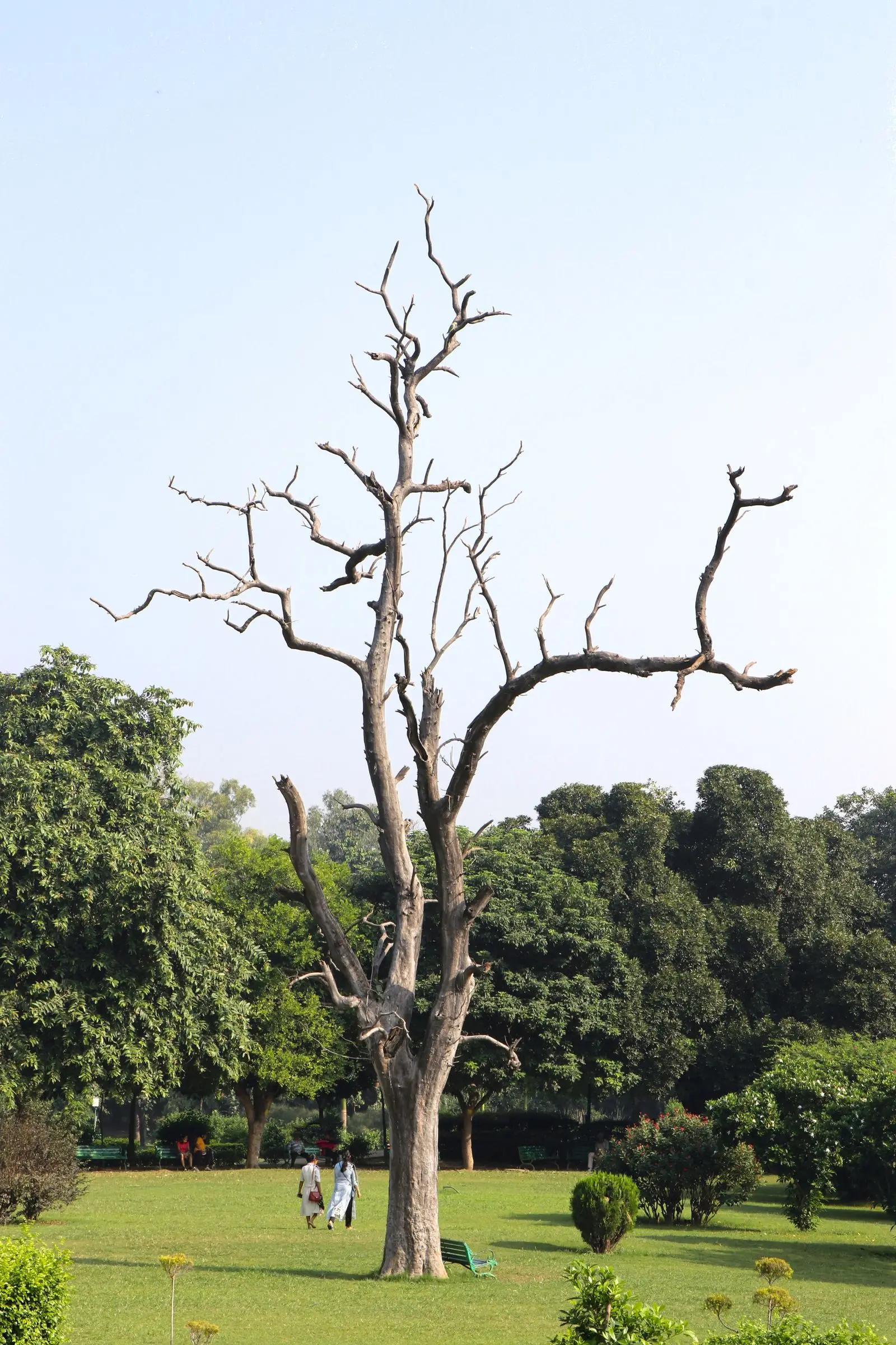
How long can a dead tree stay standing?
There is no safe number. Some pines drop their tops within a year of dying, while a dead oak may stand for five or more, shedding large limbs the whole time. What matters is what the tree can hit.
- Within reach of a house, drive or play area
- Schedule removal now. Limb drop starts well before the trunk fails.
- Near a property line or street
- You may be liable for damage once you know the tree is dead, so do not wait for a storm to decide.
- Deep in a wooded lot with no target
- It can stay as wildlife habitat. See the comparison further down.
Confirming the tree is dead, not dormant
Check in the growing season if you can. The is my tree dead guide walks through each test in detail.
Scratch test
Scrape a thumbnail of bark from several twigs. Green and moist underneath means alive. Brown and dry on every twig means that branch is dead.
No buds, brittle twigs
Live twigs bend and carry plump buds. Dead ones snap cleanly.
Bark falling away
Sheets of bark dropping from the trunk with bare, dry wood beneath.
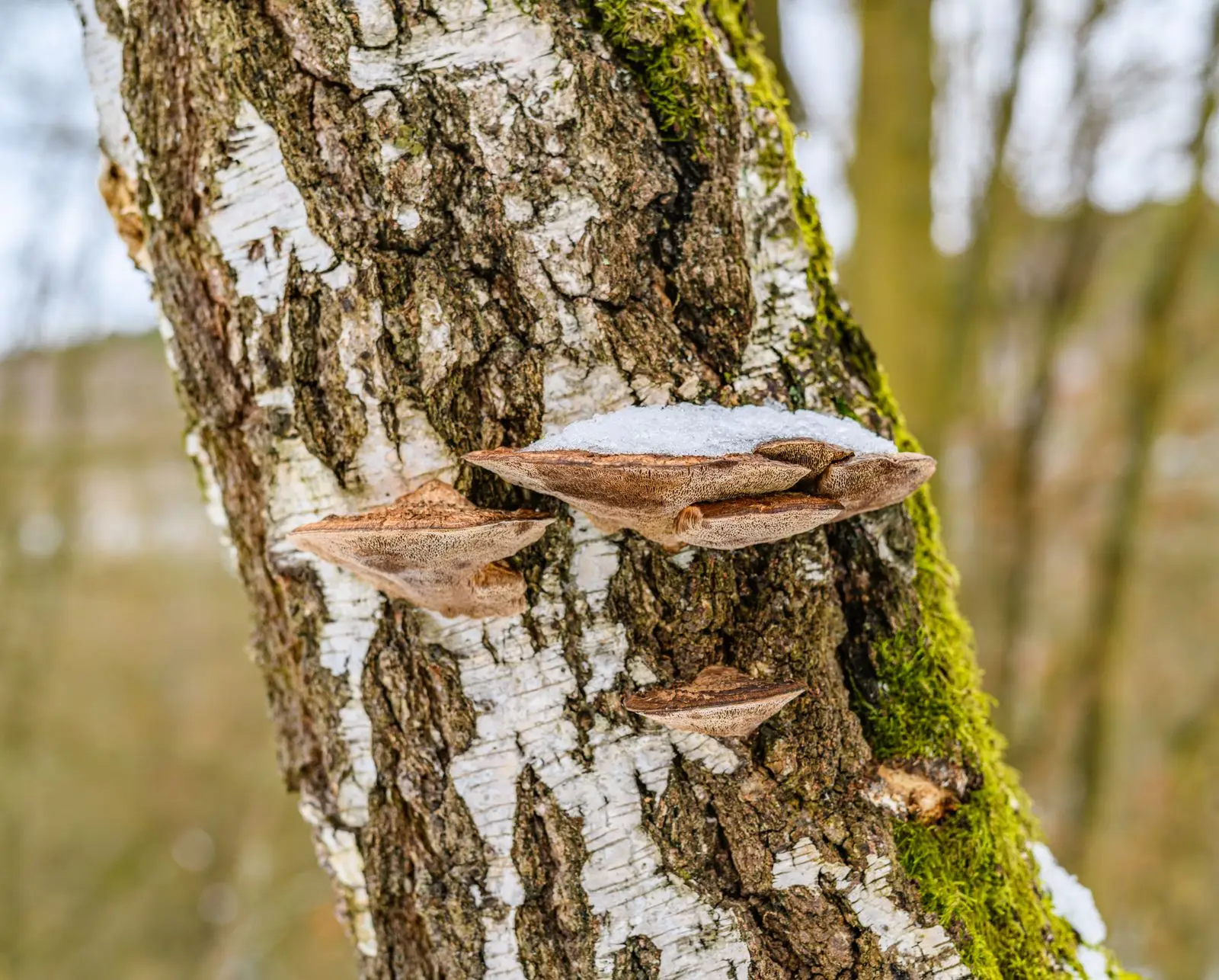
Fungus at the base
Shelf-like conks or mushrooms on the trunk or root flare point to internal decay.
Leaves that never dropped
Brown leaves clinging through winter often mean the tree died suddenly mid-season.
The removal gets harder every season you wait
A freshly dead tree still has most of its strength. A climber can tie in, and limbs hold together when lowered on a rope. That window closes as the wood dries and decay fungi move in.
After a year or two, many dead trees can no longer be climbed. Branches shatter instead of hinging, tops snap under a climber's weight, and the crew needs a bucket truck, spider lift or crane to work from outside the tree. That equipment is the main reason an old snag costs more to remove than the same tree would have just after it died.
Ash trees killed by emerald ash borer are the best-known case. The wood turns brittle unusually fast, and many companies will not climb a dead ash at all.
What usually kills yard trees
Knowing the cause tells you whether the neighbors' trees, or your next planting, face the same threat.
- Emerald ash borer
- Fatal to untreated ash across the Midwest, South and East. Covered on the Minneapolis dead tree page.
- Bark beetles
- Southern pine beetle and Ips beetles kill stressed pines in groups, often after drought or lightning. The warning signs are listed on the Georgia and Jacksonville pages.
- Oak wilt
- A vascular fungus that can kill red oaks within weeks. A major concern in Texas and Minnesota.
- Drought and heat
- Trees often die one to three years after the dry spell that weakened them.
- Root damage
- Trenching, grade changes and soil compaction from construction cut off roots. Decline shows up years later.
- Root and butt rot
- Fungi such as Armillaria and Ganoderma decay the base while the crown still looks passable.
Take it down, or leave it as a wildlife snag?
Leaving it can be reasonable when
- Nothing of value is within one and a half times the tree's height
- It is not near a trail, driveway or property line
- The trunk can be shortened to a stable 12 to 20 foot stub
- No ordinance, HOA or insurer requires removal
Remove it when
- People, buildings, vehicles or lines sit inside the fall zone
- It died from a pest that spreads from standing wood
- Your city has condemned it, as Minneapolis does with infested ash
- An insurer or lender has flagged it in writing
Shortening a dead tree to a low habitat stub costs less than full removal and removes most of the risk.
How a dead tree is taken down
Test the wood
The crew sounds the trunk with a mallet, checks the base for decay and looks for cracks before choosing a method.
Work from outside the tree
Where possible, an aerial lift or crane carries the cutter so no one depends on dead wood for support.
Small pieces, minimal rigging
Dead limbs are cut small and hand-thrown or lowered gently, since shock loads can break the tree.
Fell the stem if there is room
A cleared drop zone allows the remaining trunk to be felled in one piece with a pull line.
Clean up and deal with the stump
Dead stumps grind quickly. Ask for it on the same visit.
Why two dead trees the same size get different quotes
- Time since death
- Recent death allows climbing. Advanced decay calls for a lift or crane.
- Lift access
- If no machine can reach a brittle tree, the work becomes slow and specialized.
- Targets
- A dead tree over a roof must be lowered in small pieces. One in a field can be felled.
- Quantity
- Beetle and borer losses often involve several trees. Per-tree prices drop when a crew stays all day.
- Disposal rules
- Some areas restrict moving infested ash or oak wood, which can add a handling fee.
Dead tree questions
Does homeowners insurance pay to remove a dead tree?
Generally no. Policies treat a dead tree as a maintenance issue and pay only when a tree falls from a covered cause and damages an insured structure. Details are in the insurance and tree removal guide.
Do I need a permit to remove a dead tree?
In many regulated cities, yes. Atlanta and Portland both require a permit for dead trees above their size thresholds, typically with no fee or a reduced one. Take dated photos before removal in any case.
Can a half-dead tree be saved?
Sometimes. If the dead portion is one side or the upper crown and the cause is identified, pruning and care can stabilize it. When more than about half the crown is dead, removal is usually the practical choice.
Is dead wood good for firewood?
Standing dead hardwood is often already partly seasoned. Do not move firewood out of an area with emerald ash borer or oak wilt, because that is how those pests spread.
Talk to a dead tree removal provider
Call to be connected with an independent tree service company near you, or leave your number and one will call back.
(888) 555-0142Call availability varies by area and time of day
Limbwright is a referral service. Your call or request goes to an independent tree service company that sets its own prices and schedule. Ask for proof of insurance and a written scope before work starts. How this works
Request a callback
Leave a number and a tree service provider in your area will call you.