
Decision guide
Does Homeowners Insurance Cover Tree Removal?
Updated · Limbwright editorial
Short answer
Standard homeowners insurance generally pays for tree removal when a covered cause such as wind, lightning or the weight of ice brings a tree down and it damages an insured structure or blocks your driveway. Debris removal for the tree itself is often capped at about $500 per tree and $1,000 per event. It does not pay to remove a healthy, dead or leaning tree as a precaution.
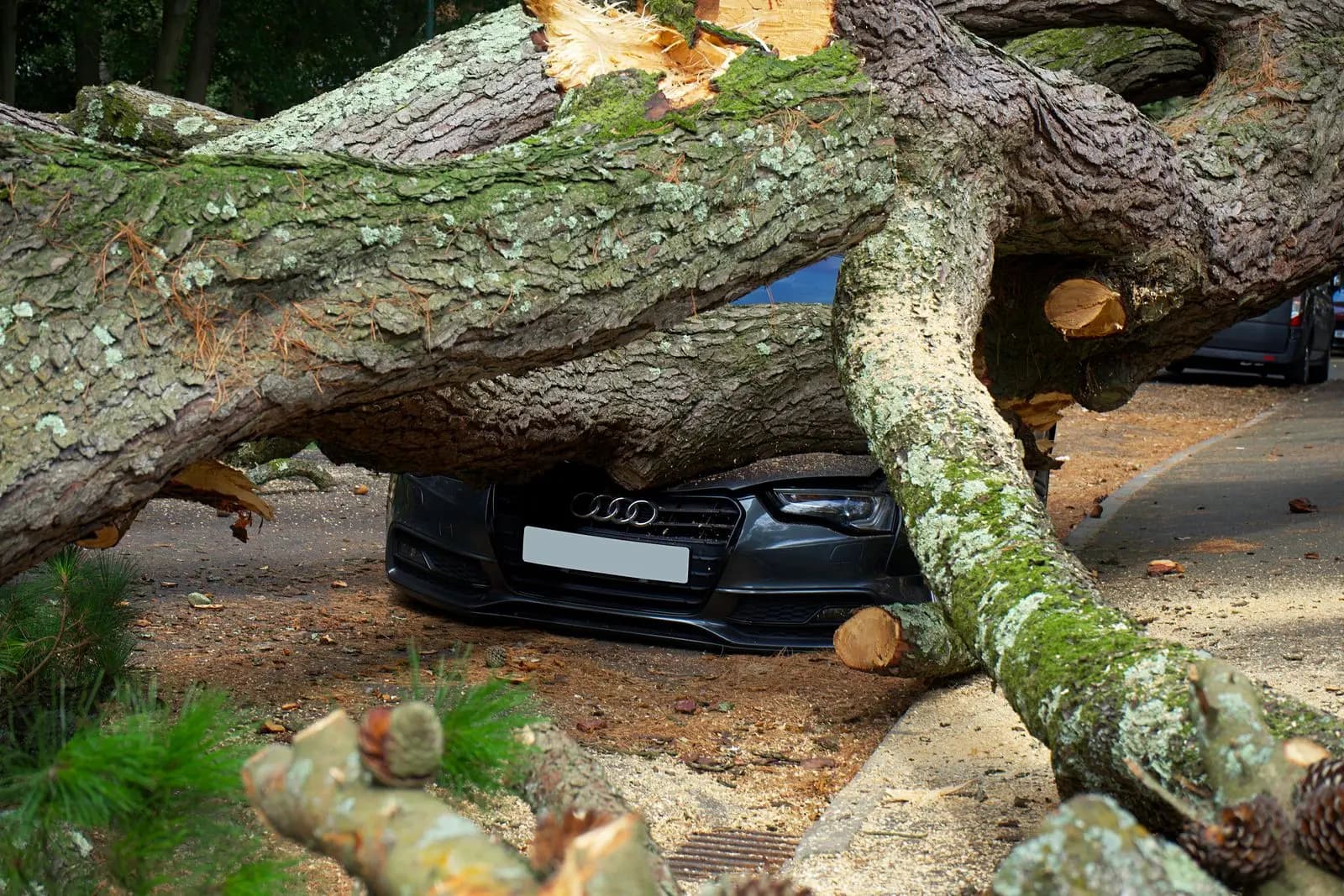
Covered or not: common situations
| Situation | Typically covered? | Notes |
|---|---|---|
| Wind blows a tree onto your house | Yes | Repair of the structure, plus removing the tree from it |
| Tree falls and blocks the driveway or a wheelchair ramp | Often yes | Many policies cover removal for blocked access even with no structural damage |
| Tree falls on the lawn and hits nothing | No | No damage to insured property |
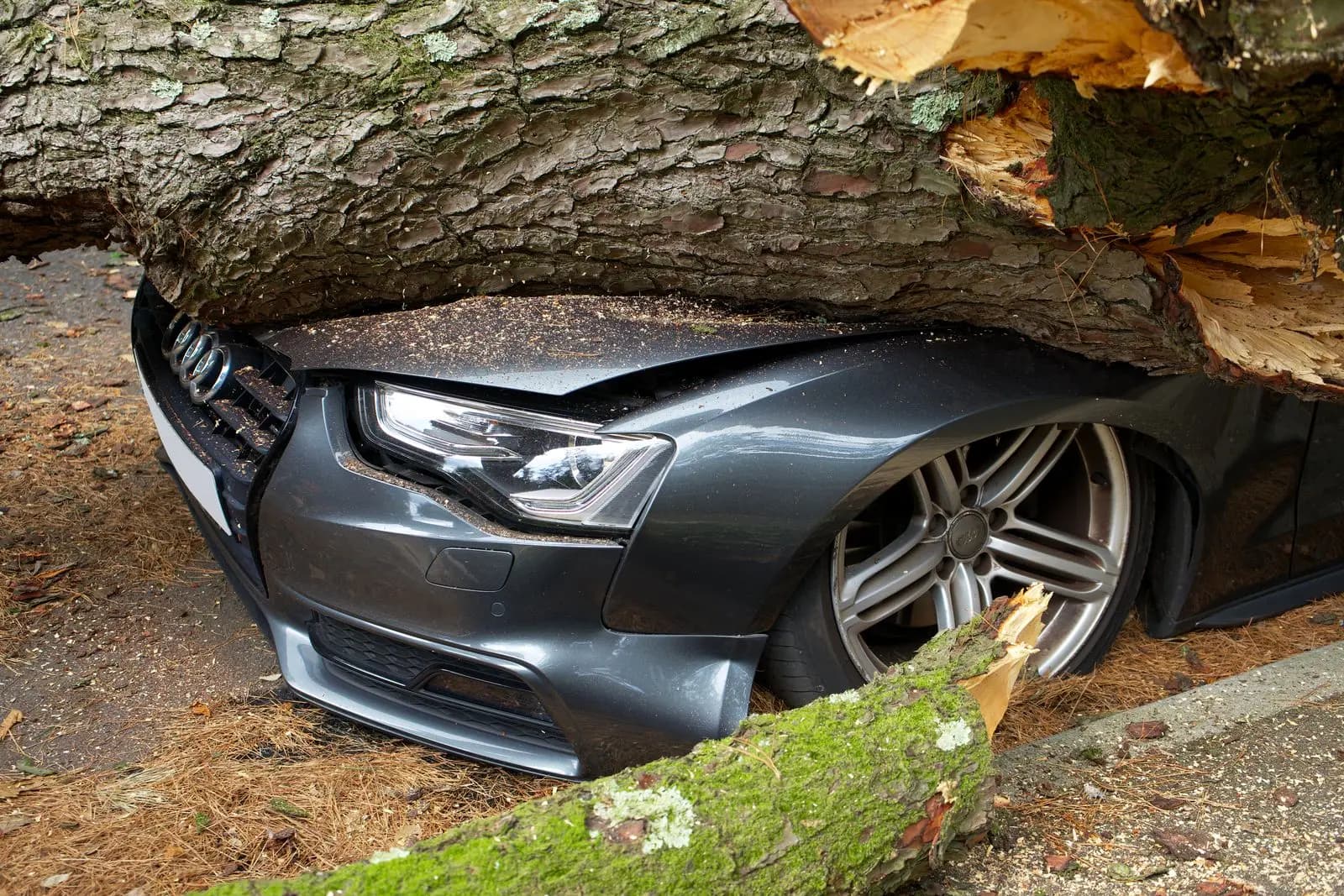
| Tree falls on your car | Under auto insurance | Comprehensive coverage on the vehicle policy, not the homeowners policy |
| Tree fell because it was rotten or dead | Often denied | Treated as lack of maintenance, not a sudden covered event |
| Removing a dead or leaning tree before it falls | No | Preventive work is the owner's expense |
| Flood or earthquake brings the tree down | Not under a standard policy | These perils need separate coverage |
General patterns for standard U.S. homeowners policies. Your own policy's wording controls. Ask your agent.
The limits most people do not know about
A policy has separate pieces. Damage to the house is paid under dwelling coverage, up to the policy limit. Getting the tree off the house so repairs can be made is normally treated as part of that repair.
Cutting up and hauling away the rest of the tree falls under debris removal, and that is where the small limits are. A common provision pays up to $1,000 per event with no more than $500 for any one tree. Some insurers offer higher limits by endorsement.
The deductible comes off first. In coastal and hurricane-prone states, wind or named-storm deductibles are often 1 to 5 percent of the dwelling coverage, not a flat amount. For moderate damage, that deductible can exceed the whole loss.
Filing a tree claim
Prevent further damage
You are expected to take reasonable emergency steps, such as lifting the tree off the roof and tarping. Keep receipts.
Document
Photos and video before work, during and after. Include the tree's base.
Report promptly
Call the insurer or agent, give the date and cause, and ask what they need.
Get itemized invoices
Ask the tree company to separate removal from the structure, debris cutting and hauling, and stump work.
Meet the adjuster
Walk them through the damage. Share your photos and the contractors' estimates.
Should you file at all?
Filing makes sense when
- The house, garage or another insured structure is damaged
- Repair plus removal clearly exceeds the deductible
- The driveway is blocked and removal is costly
- A neighbor's negligence may be involved
Think twice when
- The tree hit nothing
- Total cost is near or below the deductible
- The only damage is to a fence or landscaping with low sub-limits
- You have had other recent claims
Calling your agent with a question is not the same as filing a claim, but ask how the inquiry will be recorded.
Special cases
- Neighbor's tree
- Your policy covers your damage. Liability shifts to the neighbor only with negligence. See neighbor's tree fell in my yard.
- Trees as property
- Many policies pay a small amount, often capped per tree, for trees destroyed by specific perils such as fire, lightning or vandalism. Wind is usually excluded from this.
- Renters and condos
- The landlord's or association's policy covers the building. Your policy covers your belongings.
- Additional living expenses
- If the house is uninhabitable after a covered loss, the policy typically pays for temporary housing.
- Disaster assistance
- After a federal declaration, FEMA aid may help with uninsured essential repairs. It generally does not pay for tree removal on private property.
Insurance questions
Will insurance pay to remove a dangerous tree before it falls?
No. Standard policies cover sudden, accidental damage, not prevention. An insurer may even require you to remove a hazardous tree at your own expense to keep coverage.
Does insurance cover stump removal?
Usually not on its own. Stump grinding after a covered loss is sometimes included within the debris removal limit. Ask your adjuster.
Can my insurer deny a claim because the tree was dead?
It can dispute or deny coverage if the loss resulted from neglected maintenance. Dealing with dead and visibly defective trees promptly protects you. See dead tree removal.
What does emergency tree removal cost if insurance will not pay?
Published ranges run from about $450 to $3,000 for common cases. See emergency tree removal cost.
This guide is general information, not professional, legal or insurance advice. Tree conditions, local rules and policy terms vary. Have a qualified arborist inspect the tree, and confirm regulations and coverage with your city and insurer.
Want someone to look at the tree?
Call to be connected with an independent tree service company in your area, or leave your number for a callback.
(888) 555-0142Call availability varies by area and time of day
Limbwright is a referral service. Your call or request goes to an independent tree service company that sets its own prices and schedule. Ask for proof of insurance and a written scope before work starts. How this works
Request a callback
Leave a number and a tree service provider in your area will call you.