Seattle, Washington
Tree Removal and Tree Service in Seattle
Seattle restricts removal of nearly every tree 6 inches or more in diameter on private property, sorted into four tiers. Hazardous trees can still be removed with city approval, and anyone doing commercial tree work here must be on the city's registry.
- County
- King
- Tree permits
- Seattle Department of Construction and Inspections (SDCI). SDOT for street trees.
- Key local rule
- Tier 1 to 4 tree protections under SMC 25.11, updated July 2023
- Electric utility
- Seattle City Light
- Main hazards
- Winter windstorms, saturated soil, steep slopes, root disease
Seattle's four tree tiers
Diameter is measured at standard height, 4.5 feet above the ground.
| Tier | Which trees | Removal on a developed lot, no construction |
|---|---|---|
| Tier 1 | Designated heritage trees | Not allowed unless hazardous or an emergency |
| Tier 2 | 24 inches and larger, tree groves, and certain species at smaller sizes set by Director's Rule | Not allowed unless hazardous or an emergency |
| Tier 3 | 12 inches up to 24 inches | Not allowed unless hazardous or an emergency |
| Tier 4 | 6 inches up to 12 inches | Limited to two trees in any three-year period in most residential zones |
Different allowances apply when a property is being developed. The detail is on the tree removal in Seattle page.
Three things every Seattle owner should know
First, hazardous trees are the main exception. A Tier 1, 2 or 3 tree can be removed when it is documented as hazardous and SDCI approves, normally on the basis of an assessment by a qualified arborist. Replacement planting is typically required.
Second, the company must be registered. Seattle requires tree service providers doing commercial work on private property to be listed on SDCI's Tree Service Provider Registry, and significant work must be posted with a public notice in advance.
Third, street trees are separate. A tree in the planting strip is regulated by the Seattle Department of Transportation, and pruning or removing it needs an SDOT permit even though the adjacent owner is usually responsible for its care.
The November 2024 windstorm
On the evening of November 19, 2024, a rapidly deepening low off the coast drove strong winds through the Cascade gaps and across the Seattle area from the east. Gusts of 50 to 70 miles per hour hit trees from the side they were least braced on.
Several hundred thousand customers lost power across the region. In Seattle, trees fell on houses in the north end and the east side of the city, and two people in the region were killed by falling trees.
It followed the pattern of earlier events, including the December 2006 windstorm: weeks of rain, then wind. The trees that fell were disproportionately conifers with root disease or restricted root space, and trees recently exposed by nearby clearing.
Slopes, ravines and tight lots
A great deal of Seattle is hillside. West Seattle, Magnolia, Queen Anne, Lake City and the Lake Washington shoreline all have steep, wooded slopes that the city maps as environmentally critical areas.
Trees hold those slopes together. Removing them can trigger a landslide, and the city regulates cutting in critical areas more tightly than elsewhere, often requiring a geotechnical review. If your lot backs onto a ravine or bluff, assume extra rules apply.
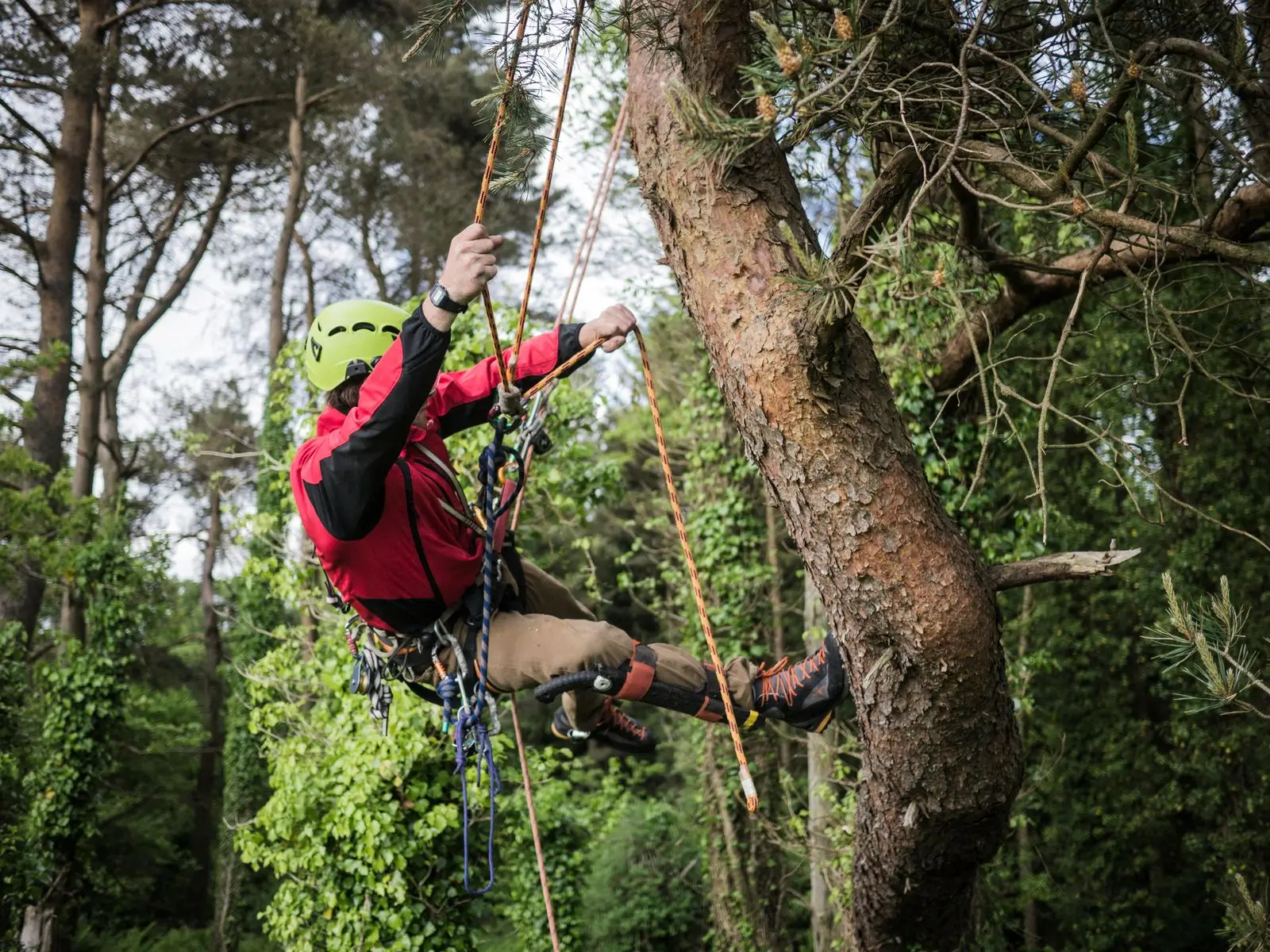
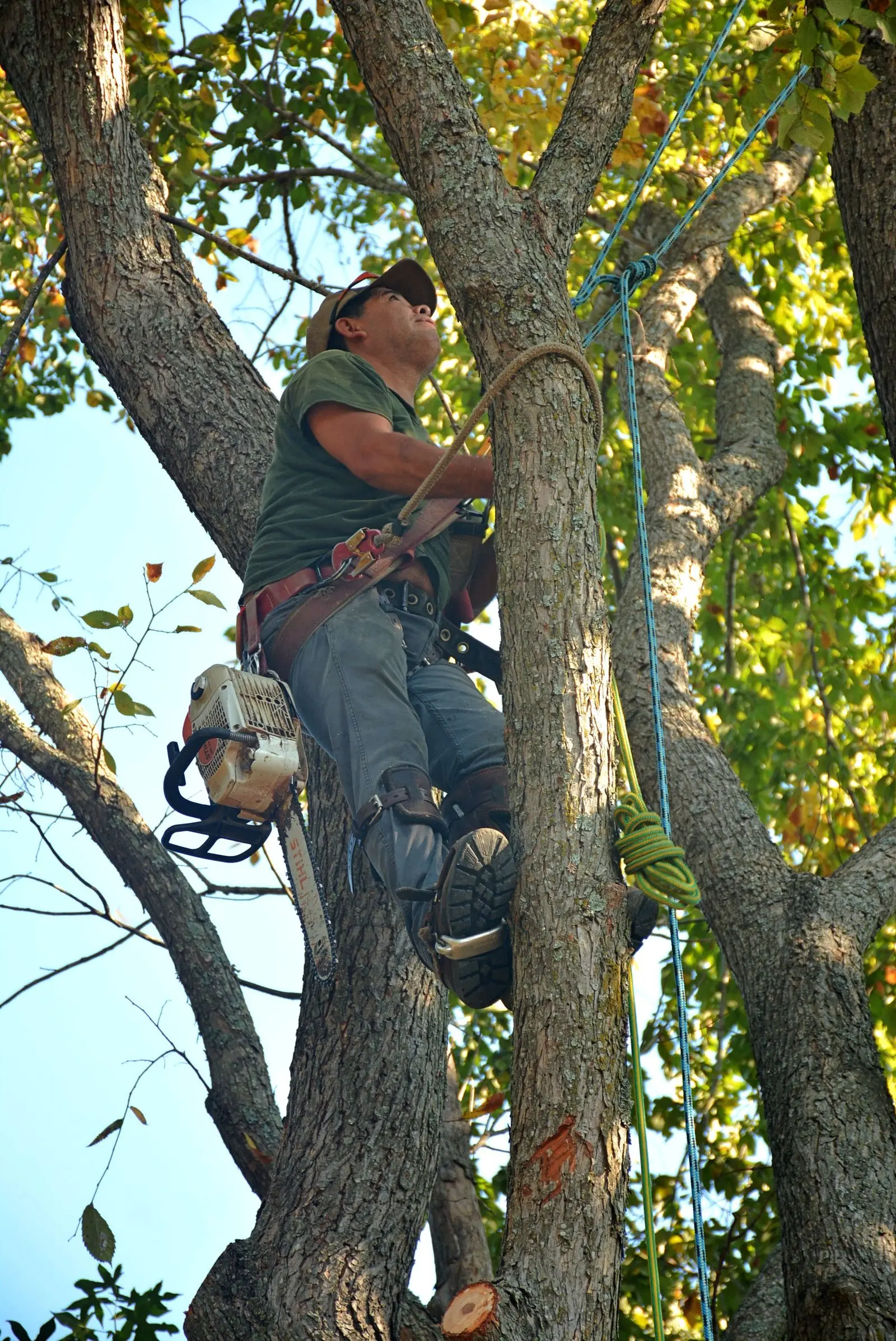
Access is the other constraint. Houses sit close together, backyards are reached by stairs, and overhead lines run along most streets. Removals often rely on climbing and rigging, or a crane set up in the street with an SDOT street-use permit.
Seattle's big trees
- Douglas-fir
- The tallest tree in most neighborhoods, often over 100 feet. Wind-firm when healthy.
- Western redcedar
- Long-lived, often Tier 2 size. Dead tops have become common after dry summers.
- Bigleaf maple
- Huge limbs and hidden decay. A frequent source of failures over houses and streets.
- Pacific madrone
- A slow-growing native of bluffs and dry slopes, given extra protection at smaller sizes.
- Red alder
- Short-lived. Common on slopes and frequently hazardous by 60 years.
- Lombardy poplar and cottonwood
- Fast, brittle and often planted too near houses.
How a hazardous-tree removal gets approved
Measure and classify
Diameter and species decide the tier.
Get a risk assessment
A qualified arborist documents the defect, the target and the rating. See tree risk assessment.
Apply to SDCI
The hazardous tree removal application includes the assessment and photos.
Post notice and use a registered provider
The work is posted publicly beforehand, and the company must be on the city registry.
Remove and replant
Replacement trees are generally required for Tier 1 to 3 removals.
Services for Seattle properties
- Tree removal in SeattleThe tier rules in detail and what can be removed.
- Tree trimming and pruningOften the permitted alternative to removal.
- Emergency tree removalWindstorm response.
- Large tree removalDismantling 100-foot conifers on small lots.
- PortlandHow the neighboring Northwest city regulates trees.
Seattle tree questions
Can I remove a tree on my property in Seattle?
Trees under 6 inches in diameter, yes. Tier 4 trees, 6 to 12 inches, are limited to two in three years in most residential zones. Larger trees generally cannot be removed from a developed lot unless they are hazardous and the city approves.
What happens in an emergency?
A tree that poses an immediate danger can be dealt with right away. Document it with photos and notify SDCI afterward as the code requires.
Do I need a permit to prune?
Routine pruning does not need a permit, but removing a large share of the canopy or topping a regulated tree can be treated as illegal removal. Commercial pruning of larger limbs must be done by a registered provider with notice posted.
Who clears trees from power lines?
Seattle City Light maintains clearance around its lines and responds to trees on lines. Stay well back and report it.
Reach a tree service in Seattle
Call to be connected with an independent tree company that works in the Seattle area, or leave your number and one will call you back.
(888) 555-0142Call availability varies by area and time of day
Limbwright is a referral service. Your call or request goes to an independent tree service company that sets its own prices and schedule. Ask for proof of insurance and a written scope before work starts. How this works
Request a callback
Leave a number and a tree service provider in your area will call you.