
Removal · Big trees
Large Tree Removal
A large tree, roughly 60 feet and taller or more than 30 inches through the trunk, is taken apart with a crane, an aerial lift or heavy rigging because single pieces can weigh more than a car. The planning matters as much as the cutting.
Call availability varies by area and time of day. Calls are answered by an independent tree service provider.
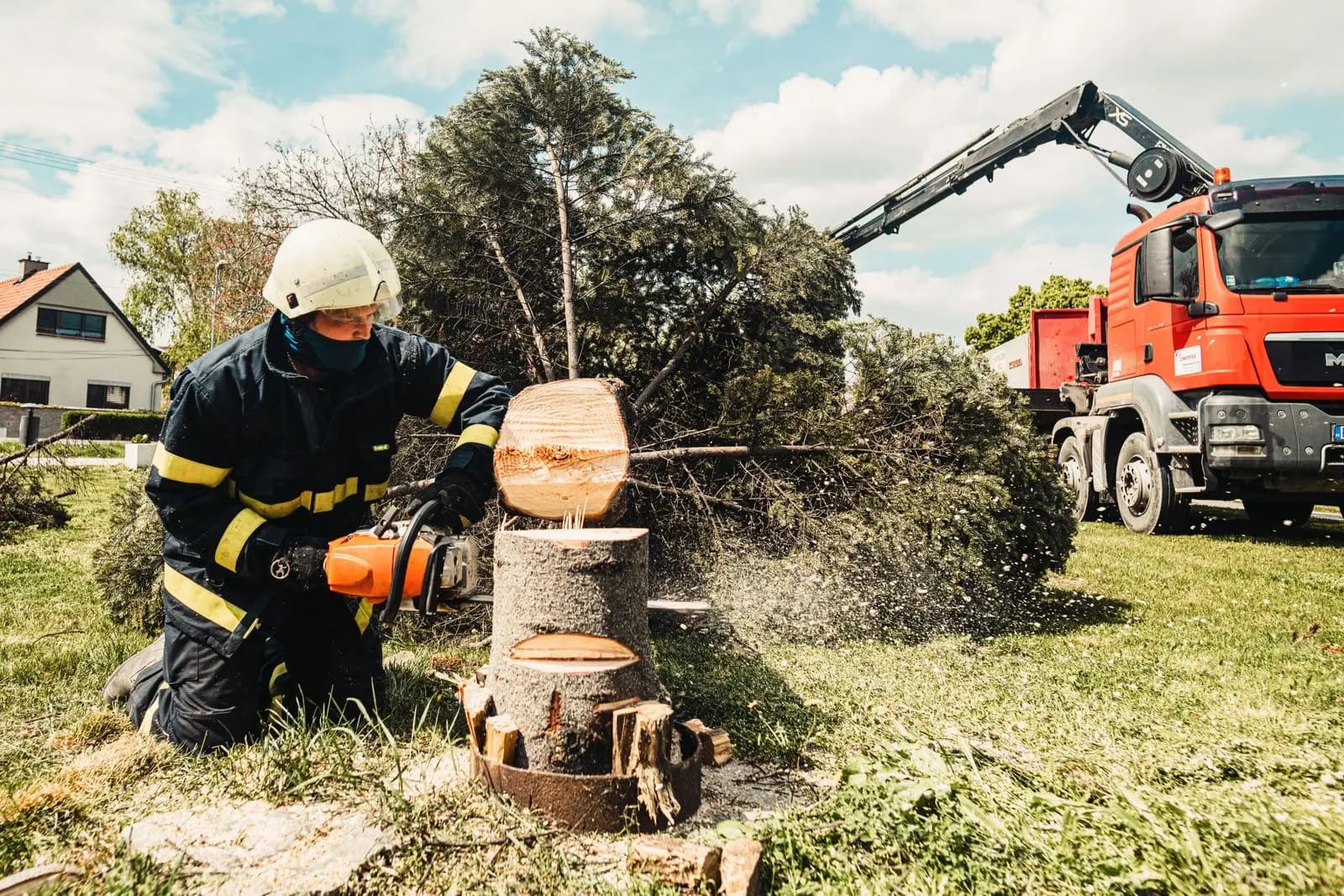
Why size changes the whole job
Green hardwood weighs around 50 to 60 pounds per cubic foot. A four-foot length of a 30-inch oak trunk is close to 1,000 pounds, and a mature tree holds several tons of wood above the roofline.
At that scale a climber cannot simply catch a piece on a rope. Each cut is planned around the load it puts on the rigging point, the swing path and what the ground crew can handle. Trees this size also tend to be old, and old trees hide decay that changes the plan once the first sections come off.
This is the work where equipment, insurance and experience differ most between companies. A low bid on a 90-foot tree deserves more scrutiny than a low bid on a 25-foot one.
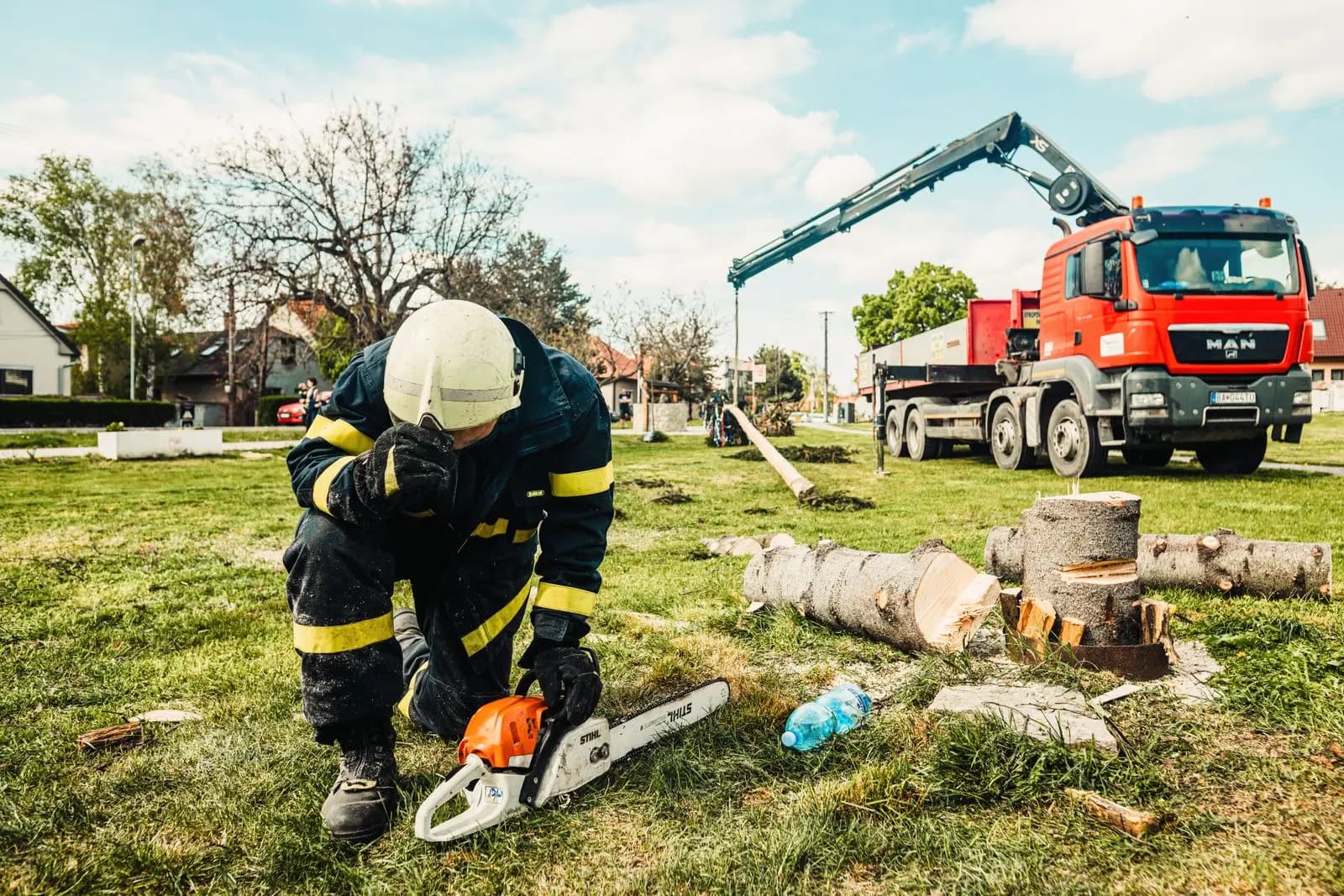
Access decides the equipment
Before quoting, the estimator measures gates, checks the driveway and looks for a place to set outriggers.
| Equipment | Needs | Good for | Limits |
|---|---|---|---|
| Truck crane | Firm, level setup spot within reach, usually a driveway or street | Backyard trees lifted over the house; trees on structures; dead trees | Street closure permit in some cities; overhead lines in the lift path |
| Bucket truck | Pavement or firm ground beside the tree | Front-yard and streetside trees to about 60 to 75 feet | Cannot reach most backyards |
| Tracked spider lift | A gate about 36 inches wide | Backyard trees too weak to climb | Slower than a crane on very large wood |
| Climb and heavy rigging | A sound tree with a strong tie-in point | Sites no machine can reach | Not suitable when the trunk is hollow or dead |
What a crane removal day looks like
Setup and lift plan
The operator sets outriggers on pads, and the crew agrees on pick sizes from the crane's load chart for that reach.
Rig, cut, lift
The climber attaches slings above the balance point of a section, the crane takes the weight, and the cut releases a piece that rises instead of falling.
Land and process
Each pick is set down in the street or drive, where the ground crew limbs it, chips the brush and loads logs.
Trunk sections
The stem comes out in large lengths, often the heaviest picks of the day, and goes straight onto a log truck.
Pack out
Pads come up, the street is swept, and the lawn is raked. Many large removals with a crane finish in four to six hours.
Site prep that falls to the owner
A crew can lose an hour to things only you can sort out. Handle these the day before.
- Vehicles
- Move every car out of the driveway and off the curb in front of the house, yours and, if they agree, the neighbors'.
- Buried things
- Mark septic tanks, drain fields, irrigation heads and invisible dog fences. Outriggers and log trucks crush them.
- Gates and locks
- Unlock gates and measure the narrowest opening so the estimator's equipment plan still holds.
- Neighbors
- Tell them the date. Crews often need a few minutes on an adjoining drive, and a heads-up prevents disputes.
- Breakables
- Bring in furniture, grills, planters and anything else in the yard or under the lift path.
What a large removal costs and why
National guides put trees over 80 feet at roughly $1,160 to $2,000 for a straightforward job, and complex crane removals run well beyond that. Compare bands in the tree removal cost guide.
- Crane time
- A crane and operator are billed by the hour or day with a minimum, plus travel.
- Wood volume
- Large hardwoods fill multiple log trucks, and dump fees are charged by weight.
- Traffic control
- A street setup may need a permit, cones and flaggers.
- Decay
- Hollow or dead trees slow everything down, because no piece can be trusted to hold a rope.
- Stump size
- A 40-inch stump is a long grind. See stump grinding cost.
Seven questions to ask before you sign
Limbwright connects you with independent companies and does not vet them on your behalf, so ask these directly.
Can I see a certificate of insurance?
Ask for general liability and workers' compensation, sent from the insurer, not a photocopy.
Who operates the crane?
In-house or subcontracted, and is the operator certified?
Is an ISA Certified Arborist involved?
Not required by law in most places, but a useful marker on technical removals.
What exactly is included?
Haul-off, stump, surface roots, lawn repair and permit handling should each appear in writing.
How will the lawn be protected?
Mats or plywood under equipment, and who fixes ruts.
What if you find the trunk is hollow?
A good answer describes a change in method, not a surprise bill.
When is payment due?
A large deposit before any work is a warning sign.
After the tree is gone
Expect more sun, more wind on the house and a different drainage pattern. Shade plants beneath the old canopy may scorch the first summer.
Large trees leave large stumps and thick surface roots. Grinding handles most situations, but if you plan to build or pave over the spot, read the difference between stump grinding and full stump removal first.
Trunk wood from oak, walnut, pecan and cherry sometimes has value to a local sawyer. It rarely offsets the removal price, but a company may leave saw logs at the curb if you arrange a pickup.
Large tree removal questions
Can a crane lift a tree over my house?
Yes. That is the standard way to remove a backyard tree with no side access. The crane sets up in the driveway or street and lifts each section over the roof. The limit is reach: the farther the tree is from the crane, the lighter each piece must be.
Is crane removal safer than climbing?
For large, dead or damaged trees it usually is, because sections are held before they are cut and nobody has to trust weak wood. It also shortens the time people spend aloft.
Will heavy equipment damage my driveway?
It can. Outrigger pads spread the load, but thin or already cracked concrete may not hold a loaded crane. Tell the estimator the driveway's age and condition and ask where the outriggers will sit.
Do large trees need a permit to remove?
More often than small ones. Many ordinances protect trees above a trunk diameter, such as 30 inches for native heritage trees in Charlotte or 24 inches in Seattle. City rules across Washington are among the strictest. Check your city page before scheduling.
Talk to a large tree removal provider
Call to be connected with an independent tree service company near you, or leave your number and one will call back.
(888) 555-0142Call availability varies by area and time of day
Limbwright is a referral service. Your call or request goes to an independent tree service company that sets its own prices and schedule. Ask for proof of insurance and a written scope before work starts. How this works
Request a callback
Leave a number and a tree service provider in your area will call you.