
Tennessee
Tree Removal and Tree Service in Tennessee
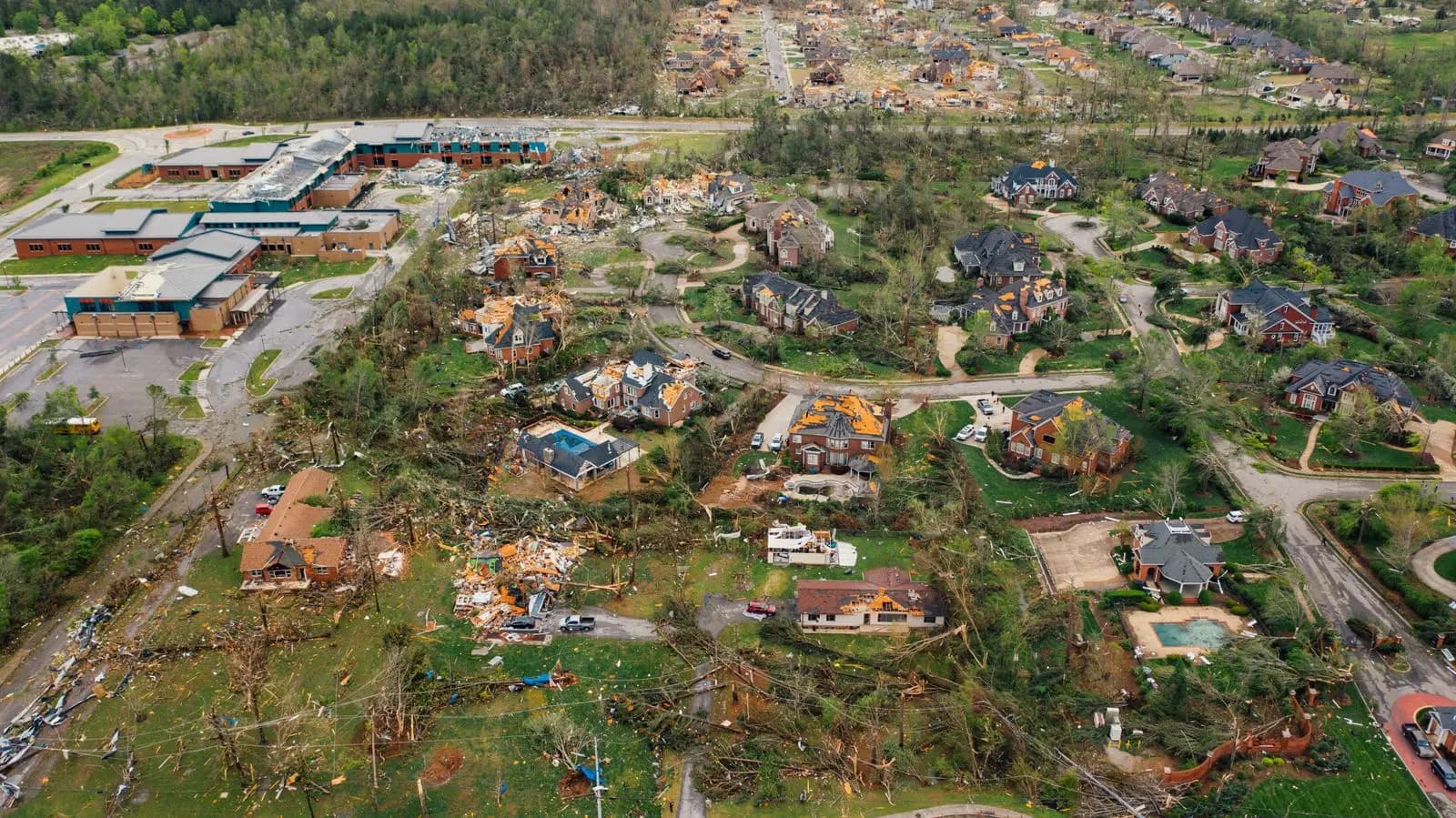
Tennessee trees are brought down by fast-moving wind more than anything else: tornadoes, derechos and severe thunderstorm lines that can arrive in any month. Thin soil over limestone in the middle of the state gives roots little to hold.
What damages trees most in Tennessee?
Sudden high wind. The state sits in a corridor of spring and late-fall severe weather, and its tornadoes often strike at night.
- Tornadoes
- The March 3, 2020 tornado cut across Nashville and neighboring counties after midnight, destroying canopy along its whole path.
- Derechos
- Two months later, on May 3, 2020, a derecho swept Middle Tennessee with widespread straight-line wind damage and one of the area's largest power outages.
- Ice
- Ice storms hit every few years. West Tennessee, including Memphis, had heavy tree damage in February 2022.
- Flooding and saturated ground
- Long rain events loosen roots before the wind arrives.
Shallow soil over limestone
The Nashville Basin is underlain by limestone that lies close to the surface, in places only a foot or two down. Tree roots cannot penetrate solid rock, so they spread sideways in a thin layer of soil.
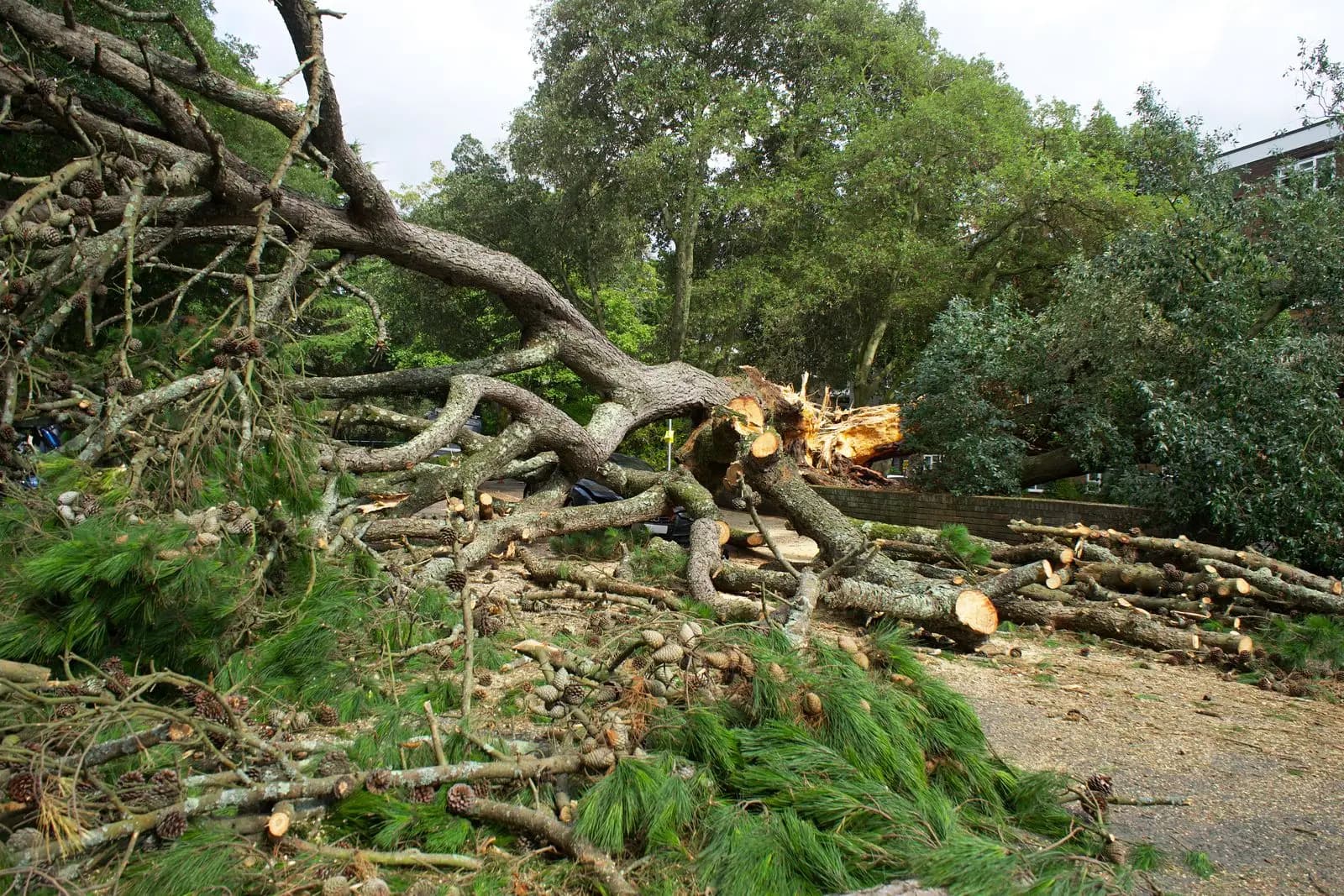
A root system like a plate works in calm weather. Under strong wind on wet ground, the whole plate lifts. That is why so many Middle Tennessee trees fall with a wide, flat disk of roots and almost no deep roots at all.
It also affects stump work. Grinders hit rock in this region, and full excavation can be limited by ledge. Tell the company if you know rock is shallow on your lot.
Severe weather by season
| Season | Main hazard | What it does to trees |
|---|---|---|
| March to May | Tornadoes, squall lines, hail | Trunk snaps and uprooting. The peak for emergency work. |
| June to August | Pop-up severe storms, heat, drought | Limb failures and stress on shallow-rooted trees |
| November to December | A second severe weather season | Wind damage, often after dark |
| January to February | Ice and wet snow | Limb breakage, especially on evergreens and pear |
Tennessee trees and how they fail
- Hackberry
- Extremely common in Nashville. Tolerates poor soil, but is prone to decay, weak unions and dropping large limbs.
- Silver maple
- Fast-growing with brittle wood and frequent trunk decay.
- Tulip poplar
- The state tree. Tall with soft wood, and upper limbs break in storms.
- Eastern redcedar
- Dense evergreen crowns catch ice and wind. Often multi-stemmed.
- Oaks
- Generally durable. Root rot and construction damage are the usual causes of failure.
- Bradford pear
- Splits at the trunk, here as everywhere.
Signs an ash tree has emerald ash borer
Emerald ash borer has been in Tennessee since 2010 and is established across much of the state. Infested ash that is not treated will die.
Thinning from the top
The upper crown loses leaves first.
D-shaped exit holes
About an eighth of an inch wide, in the bark.
Woodpecker blonding
Pale patches where birds have flaked off outer bark to reach larvae.
Sprouts on the trunk
Clusters of shoots low on the tree as the top dies.
Bark splits
Vertical cracks over S-shaped larval galleries.
Tree rules for Tennessee homeowners
Tennessee has no statewide permit for removing a tree on private residential property and does not license tree services at the state level.
In Nashville and Davidson County, the tree removal permit requirement does not apply to single-family and two-family residences. It applies to commercial, multi-family and development sites, and trees in the public right-of-way are regulated separately. See the Nashville page.
Other cities, such as Memphis, Knoxville, Chattanooga and Franklin, each have their own rules, and historic overlays can add review. Confirm with your local codes office.
Tennessee tree service questions
Do I need a permit to remove a tree at my house in Nashville?
Generally no. Metro's tree removal permit does not apply to single-family or duplex residences. Trees in the public right-of-way and properties in certain overlay districts are exceptions.
Why did my tree fall over with such a small root ball?
In Middle Tennessee, shallow limestone forces roots to grow in a thin, wide plate. When soil is saturated and wind is strong, the plate lifts in one piece.
Should I treat or remove my ash tree?
A healthy ash with a full crown can be protected with insecticide treatments repeated every two to three years. An ash that has lost more than about a third of its crown is usually past saving and should be removed before it becomes brittle.
How fast can a crew come after a tornado?
Trees on houses and blocking access are handled first. In the damage path, demand far exceeds crews for the first week or two. Outside it, response is much quicker. See emergency tree removal.
Tree service in Tennessee, by phone
Call to be connected with an independent tree company serving your part of Tennessee, or leave your number for a callback.
(888) 555-0142Call availability varies by area and time of day
Limbwright is a referral service. Your call or request goes to an independent tree service company that sets its own prices and schedule. Ask for proof of insurance and a written scope before work starts. How this works
Request a callback
Leave a number and a tree service provider in your area will call you.