
Removal
Tree Removal Service
Tree removal is the controlled dismantling of a standing tree, usually in sections lowered by rope, lift or crane, so nothing lands on the house, fence or lines beneath it. Call and you are connected with an independent tree company that serves your address.
Call availability varies by area and time of day. Calls are answered by an independent tree service provider.
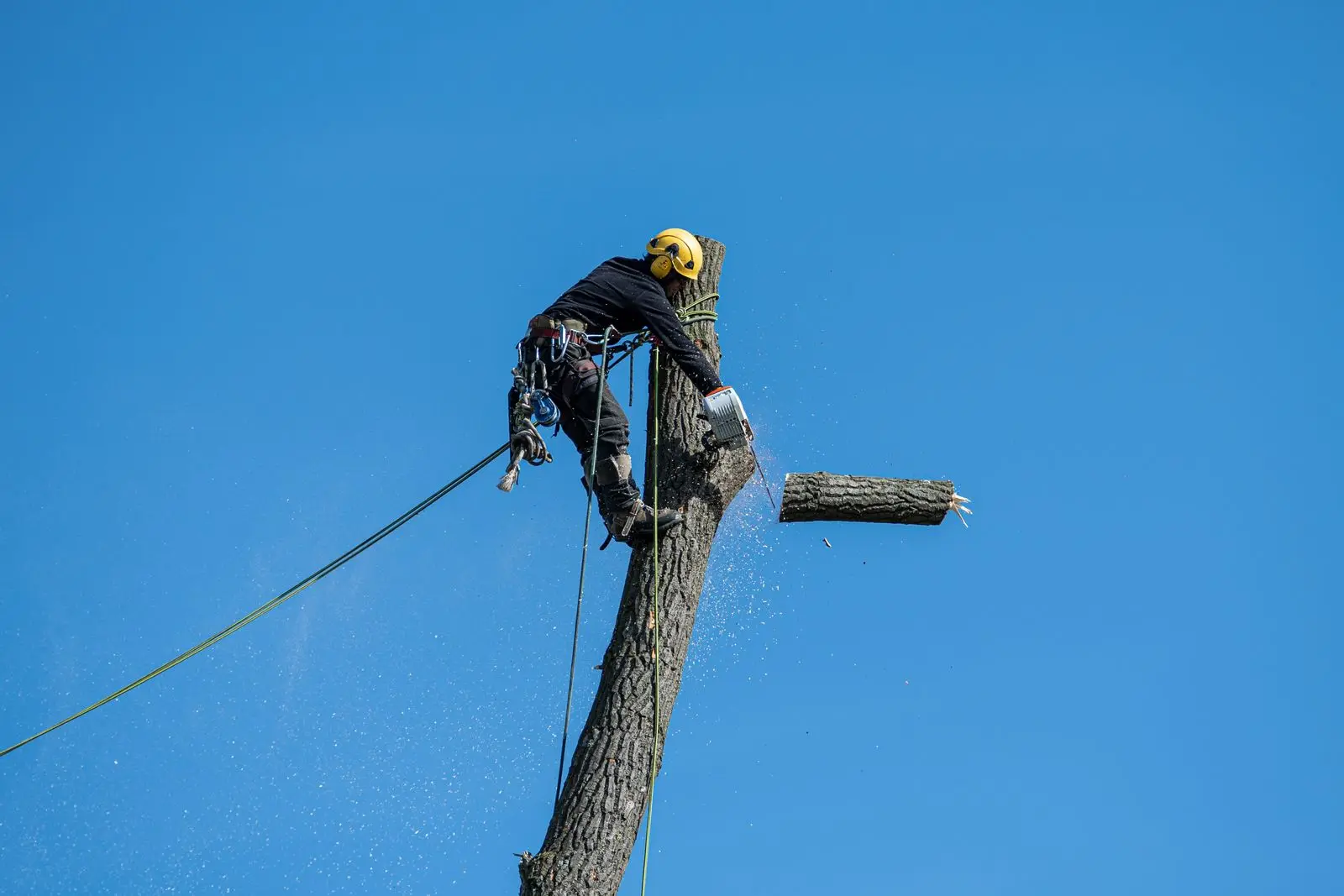
When does a tree actually need to come down?
A tree should be removed when it is dead, when a structural defect cannot be corrected by pruning or support, or when it stands where something else has to go. Size, age and leaf drop alone are not reasons.
- Dead or mostly dead
- Once more than about half the crown is gone, recovery is unlikely and the wood gets more brittle each season. See dead tree removal.
- Failing structure
- Deep trunk cracks, a hollow base, lifting roots or a fresh lean point to a tree that can fail without warning. That is hazardous tree removal territory.
- Wrong place
- Roots heaving a foundation or drive, a trunk inside a planned addition, or a canopy that cannot be kept clear of service lines.
- Storm damage past saving
- A split leader or a crown that has lost most of its main limbs rarely regrows into a sound tree. Compare the cases in storm damage tree removal.
How a residential removal runs, start to finish
Most single-tree jobs in a yard take between two hours and one working day. The sequence below is what a competent crew follows.
Site walk and written scope
The estimator checks lean, defects, access width, overhead lines and what sits in the drop zone, then writes down exactly what is included: takedown, haul-off, stump, lawn repair.
Drop zone and rigging set
Cars and furniture are moved, plywood or mats go down where equipment crosses turf, and a lowering line is anchored high in the tree.
Limbs first, then the trunk
A climber or lift operator removes branches from the bottom up or the tips in, lowering each piece. The bare trunk then comes down in short sections.
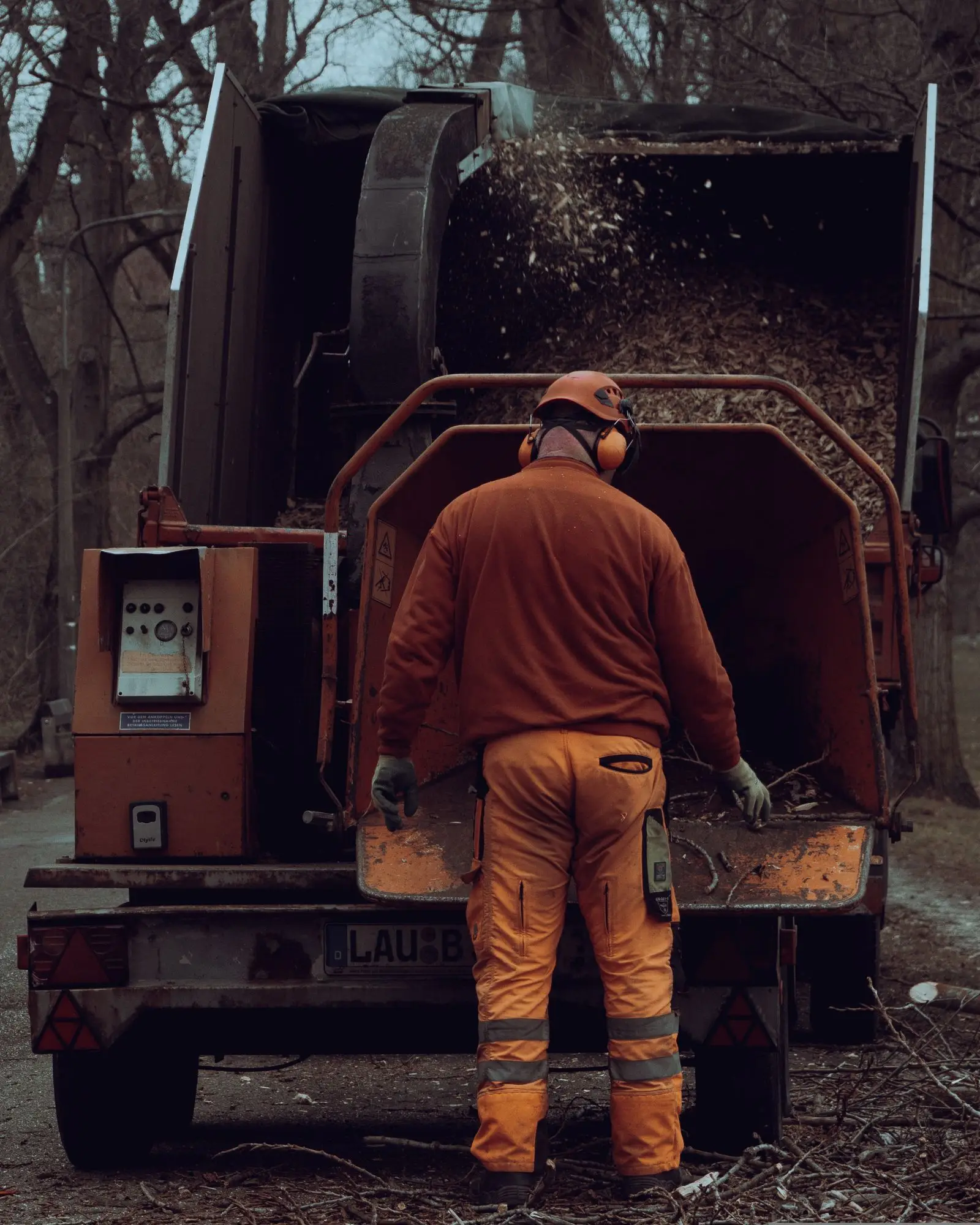
Chip, load and rake
Brush goes through the chipper, logs are loaded or stacked where you asked, and the lawn and beds are raked and blown clean.
Stump decision
The stump is cut low and either left, or ground out the same day or on a return visit. Stump grinding is normally a separate line on the quote.
Four ways a tree comes down, and where each one fits
The method is chosen by what is under the tree and how machines can reach it, not by preference.
| Method | How it works | Typical use |
|---|---|---|
| Straight felling | A notch and back cut drop the whole tree along a planned line. | Open lots where the tree's full height fits with room to spare. Rare in neighborhoods. |
| Climb and rig | A climber on rope dismantles the tree; pieces are lowered on a friction device. | Backyards with no machine access, or trees over roofs, sheds and fences. |
| Bucket truck or tracked lift | The operator works from a platform instead of the tree itself. | Front-yard and streetside trees, and dead trees too weak to climb. |
| Crane-assisted | A crane holds each section while it is cut, then swings it to the street. | Very large trees, trees on structures, and tight sites. See large tree removal. |
What moves the price of a removal
Published 2026 cost guides put most residential removals between roughly $400 and $1,800, with small trees under 30 feet often below $450. The tree removal cost guide breaks the ranges down by height. These are the factors a quote weighs:
- Height and trunk diameter
- More wood means more cuts, more rigging and more truckloads.
- What is underneath
- A tree over a roof, pool cage or service drop must be lowered piece by piece, which can double the labor of the same tree in an open yard.
- Access
- A 36-inch gate rules out most machines. Hand-carrying wood from a fenced backyard adds hours.
- Condition
- Dead and decayed trees cannot be safely climbed or rigged from, so they often need a lift or crane.
- Disposal and stump
- Hauling every log costs more than leaving firewood-length rounds. Stump grinding is quoted separately.
Removal or something less? A side-by-side
A sound tree in the wrong shape is a pruning problem. A defective tree over a bedroom is a removal problem. Most cases fall clearly on one side.
Pruning, cabling or monitoring fits when
- The trunk and root flare are solid and the defect is in one limb
- The complaint is shade, gutters, roof contact or a blocked view
- A codominant stem can be supported with a cable and reduced in weight
- The tree is a protected size or species and removal would need a permit
Removal fits when
- Decay or a crack involves the main trunk or the base
- Roots are lifting on one side or the soil is heaving
- The tree is dead, or dying from a pest with no practical treatment
- Pruning enough to solve the problem would take more than about a quarter of the live crown
Unsure which side you are on? A tree risk assessment answers that question before any saw starts, and trimming is far cheaper than removal when it solves the problem.
Permits: check before the crew is booked
There is no national rule. Some cities regulate nearly every mature tree on private land, and others regulate none. Atlanta requires a permit for hardwoods 6 inches in diameter and larger. Houston, by contrast, leaves most trees on a private residential lot to the owner.
Rules usually key on trunk diameter measured 4.5 feet above the ground, species, and whether the tree sits in the street right-of-way. Dead and dangerous trees often still need paperwork, although fees are commonly waived.
Our city pages summarize the local rule and link to the official source. Start with Atlanta, Seattle, Portland, Austin, Dallas or Charlotte, or browse all locations.
Removal jobs that need their own approach
The basic sequence is the same, but these situations change the equipment, the urgency or the paperwork.
- Emergency tree removalA tree on a structure, across the only driveway, or about to fail.
- Fallen tree removalThe tree is already down and needs cutting up and hauling.
- Dead tree removalStanding dead wood that gets less safe to work on every month.
- Hazardous tree removalAlive, but cracked, hollow, heaving or leaning toward a target.
- Large tree removalTrees too tall or heavy for conventional rigging, often craned out.
- Storm damage tree removalSeveral damaged trees and a yard full of debris after wind or ice.
Tree removal questions
How long does it take to remove a tree?
A small ornamental tree takes about an hour. A mature shade tree near a house usually takes half a day to a full day with a three- or four-person crew. Crane jobs are often faster on site than climbing jobs, because the pieces are bigger.
Do I need to be home during the removal?
No, as long as the crew can reach the tree, gates are unlocked and pets are inside. Being available by phone helps if the crew finds something unexpected, such as a hollow trunk or a buried line.
Will the crew take the wood?
Only if the quote says so. Haul-off, cut-and-stack and leave-in-place are all common. Ask for the choice to be written down, since disposal is a real share of the cost.
Is winter a cheaper time to remove a tree?
Often it is. In cold-winter regions demand drops from December to February and frozen ground protects lawns from equipment. In hurricane states the quiet period is late winter and spring, before storm season.
Talk to a tree removal provider
Call to be connected with an independent tree service company near you, or leave your number and one will call back.
(888) 555-0142Call availability varies by area and time of day
Limbwright is a referral service. Your call or request goes to an independent tree service company that sets its own prices and schedule. Ask for proof of insurance and a written scope before work starts. How this works
Request a callback
Leave a number and a tree service provider in your area will call you.