
Atlanta · Removal
Tree Removal in Atlanta
Removing a tree in the City of Atlanta is a two-part job: getting the permit, then getting a very large tree off a small, sloped lot. The first part trips up more owners than the second.
Call availability varies by area and time of day. Calls are answered by an independent tree service provider.
The permit, step by step
Confirm you are in the city
Check your tax bill or the city's property lookup. Many Atlanta addresses are in other jurisdictions.
Measure the trunk
Wrap a tape around the trunk 4.5 feet above the ground and divide by 3.14. Hardwoods of 6 inches and pines of 12 inches or more are regulated.
Pick the permit type
Dead, dying or hazardous trees go through the no-fee DDH application. Healthy trees need a different, longer process.
Apply with evidence
Photos of the whole tree and the defect, the location and the species. Tree companies commonly file on the owner's behalf.
Inspection and approval
A city arborist may inspect. Do not cut until the approval is in hand.
Two very different permit paths
Dead, dying or hazardous (DDH)
- No application fee
- Based on the tree's condition
- City arborist confirms the assessment
- No recompense owed for approved DDH removals
- The usual route for storm-damaged, decayed and dead trees
Healthy tree removal
- Requires justification the ordinance accepts
- A posting period, with a sign on the property
- Neighbors can appeal
- Replacement planting or recompense fees, charged per tree and per inch
- Denial is possible
If the honest answer is that the tree is healthy and merely inconvenient, plan for the longer path or look at pruning.
The fine print that catches people
Both the property owner and the tree company can be cited for unpermitted removal. A contractor who says no permit is needed for a 30-inch dead oak inside the city is wrong.
Destroying a tree counts as removing it. Topping, cutting major roots or paving the root zone can each be treated as illegal removal under the ordinance.
Boundary trees and trees on a neighbor's lot need that owner's participation. And trees in the public right-of-way belong to the city and are handled by a different office.
Getting a 100-foot tree out of an intown backyard
A typical Atlanta removal involves a water oak or pine over 80 feet tall behind a house, on a lot that falls away to a creek, with a neighbor's roof 15 feet from the trunk.
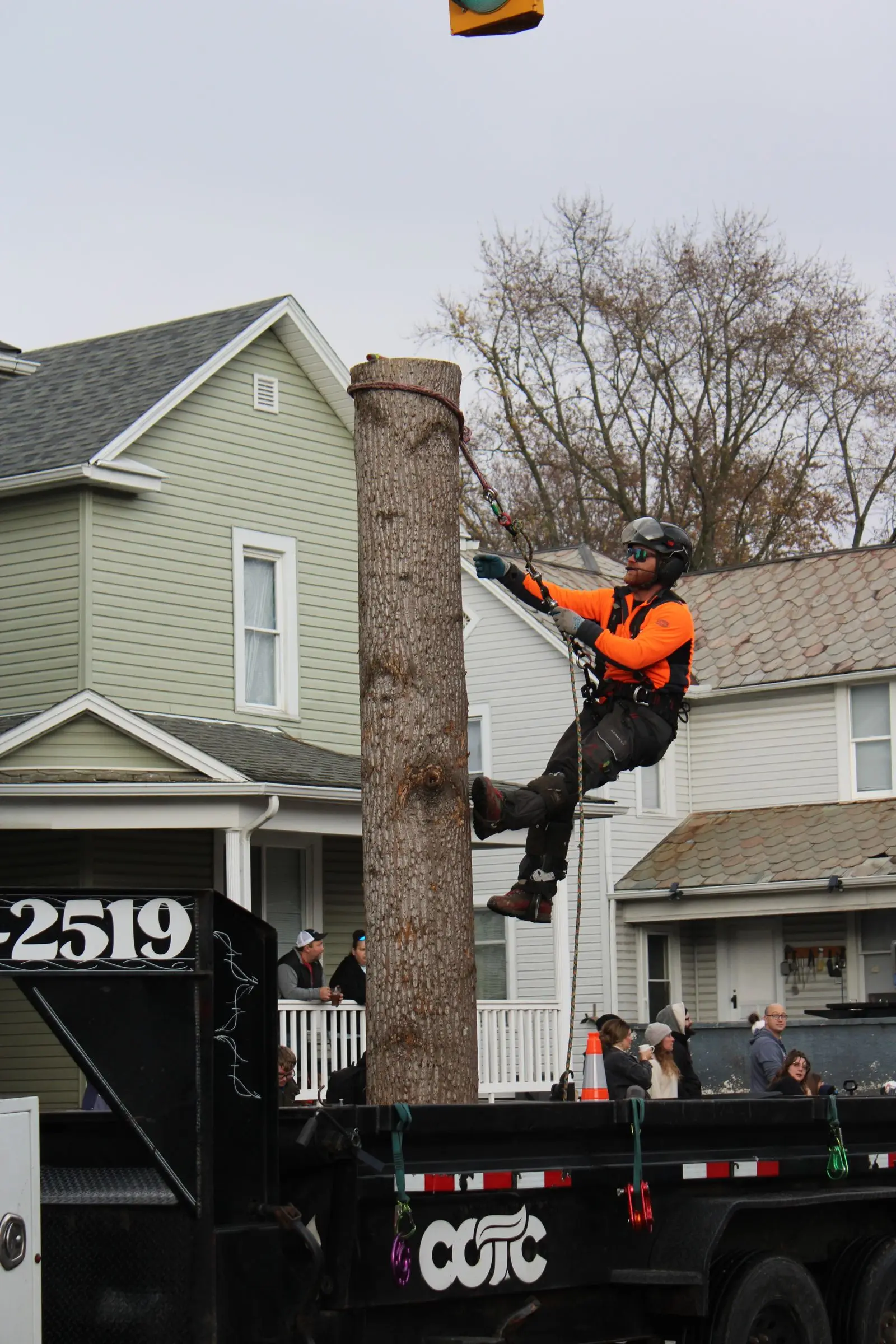
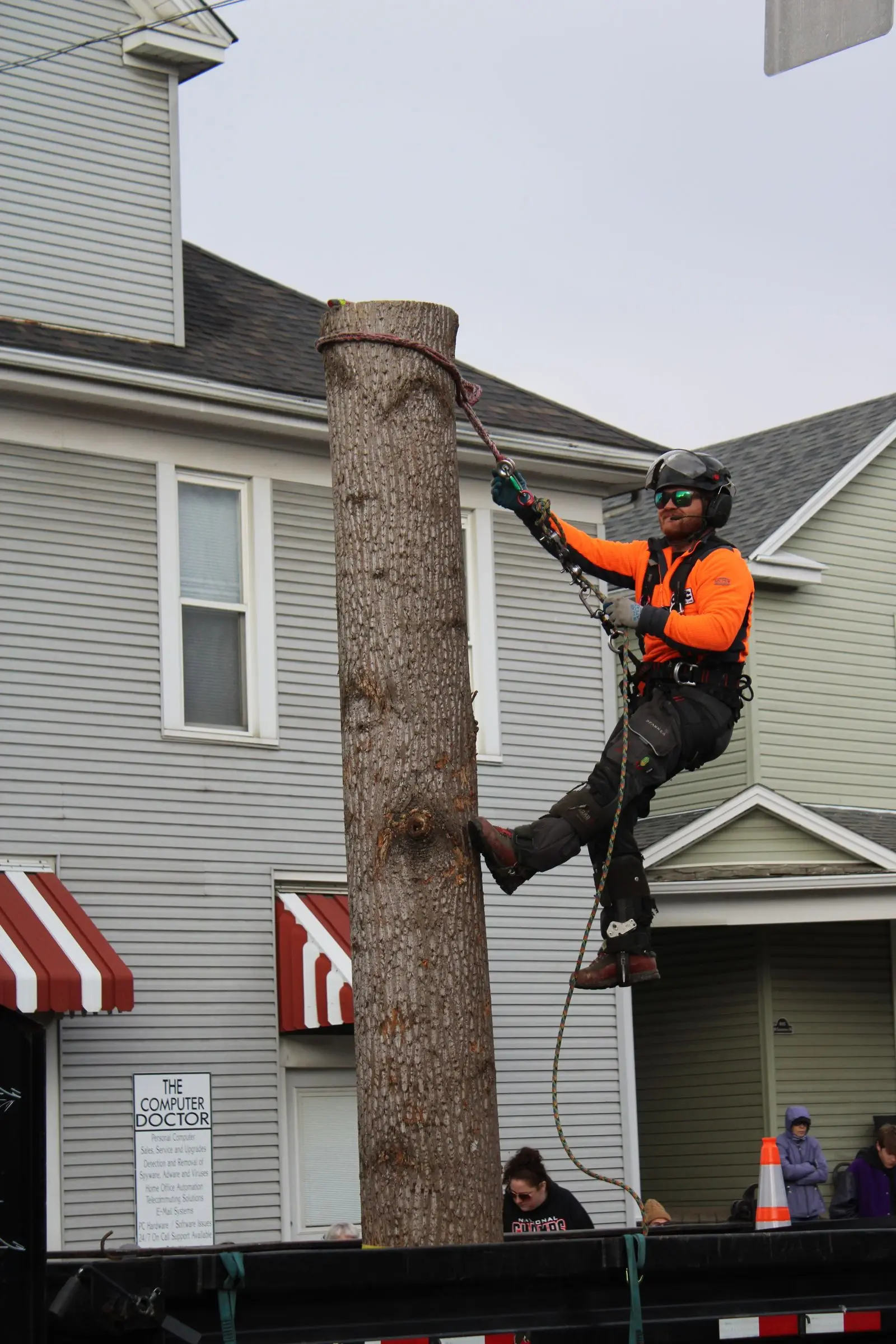
A bucket truck cannot get there. The choices are a climber rigging every piece down on ropes, or a crane in the driveway or street lifting sections over the house. Cranes are common here for exactly that reason, and they shorten the job.
Ask how wood leaves the yard. On steep lots, logs may be carried up by hand or by a compact tracked loader, and that labor is a real part of the price. Georgia Power service drops and old sewer lines under the yard should be pointed out before work starts.
What Atlanta removals cost more for
Height-based national ranges are in the tree removal cost guide. Local conditions push many Atlanta jobs toward the upper end.
- Tree size
- Many removals here involve trees above the top band of national price charts.
- Slope and access
- No machine access means every piece is moved by hand.
- Crane and street closure
- A crane day plus traffic control where the street is used.
- Permit handling
- Some companies include filing. Others charge for it or leave it to you.
- Hollow trunks
- Decayed water oaks cannot be climbed and need a crane or lift.
After the tree is down
- Stump
- Grinding is the norm. On slopes, leaving roots in place helps hold soil. See stump grinding.
- Erosion
- Bare clay on a slope washes. Mulch the area with the chips or replant promptly.
- Replanting
- Required for some permits. Even when it is not, an oak planted now starts replacing lost canopy.
- The neighbors' trees
- Trees that stood behind the one removed are newly exposed to wind. Have them looked at.
- Records
- Keep the permit approval and photos with your house file.
Atlanta removal questions
How long does an Atlanta tree permit take?
DDH permits for clearly dead or hazardous trees are often approved within days to a couple of weeks, depending on inspection workload. Healthy tree permits take longer because of the posting and appeal period.
Can I remove a tree immediately if it is about to fall?
An imminent hazard can be addressed without waiting. Photograph the condition thoroughly and notify the Arborist Division promptly, since you may be asked to document why it could not wait.
Do small trees need a permit?
Hardwoods under 6 inches and pines under 12 inches in diameter are below the ordinance's threshold on private property.
Does the tree company get the permit?
Many do as part of the job. Confirm in writing who files, and ask to see the approval before work begins.
Tree Removal help in Atlanta
Call to be connected with an independent tree company that works in Atlanta, GA, or request a callback.
(888) 555-0142Call availability varies by area and time of day
Limbwright is a referral service. Your call or request goes to an independent tree service company that sets its own prices and schedule. Ask for proof of insurance and a written scope before work starts. How this works
Request a callback
Leave a number and a tree service provider in your area will call you.