
Commercial
Commercial Tree Services
Commercial tree service covers pruning, removal, storm response and inspections on property where the public, tenants or members are present. The tree work is the same as at a home. The documentation, scheduling and liability exposure are not.
Call availability varies by area and time of day. Calls are answered by an independent tree service provider.
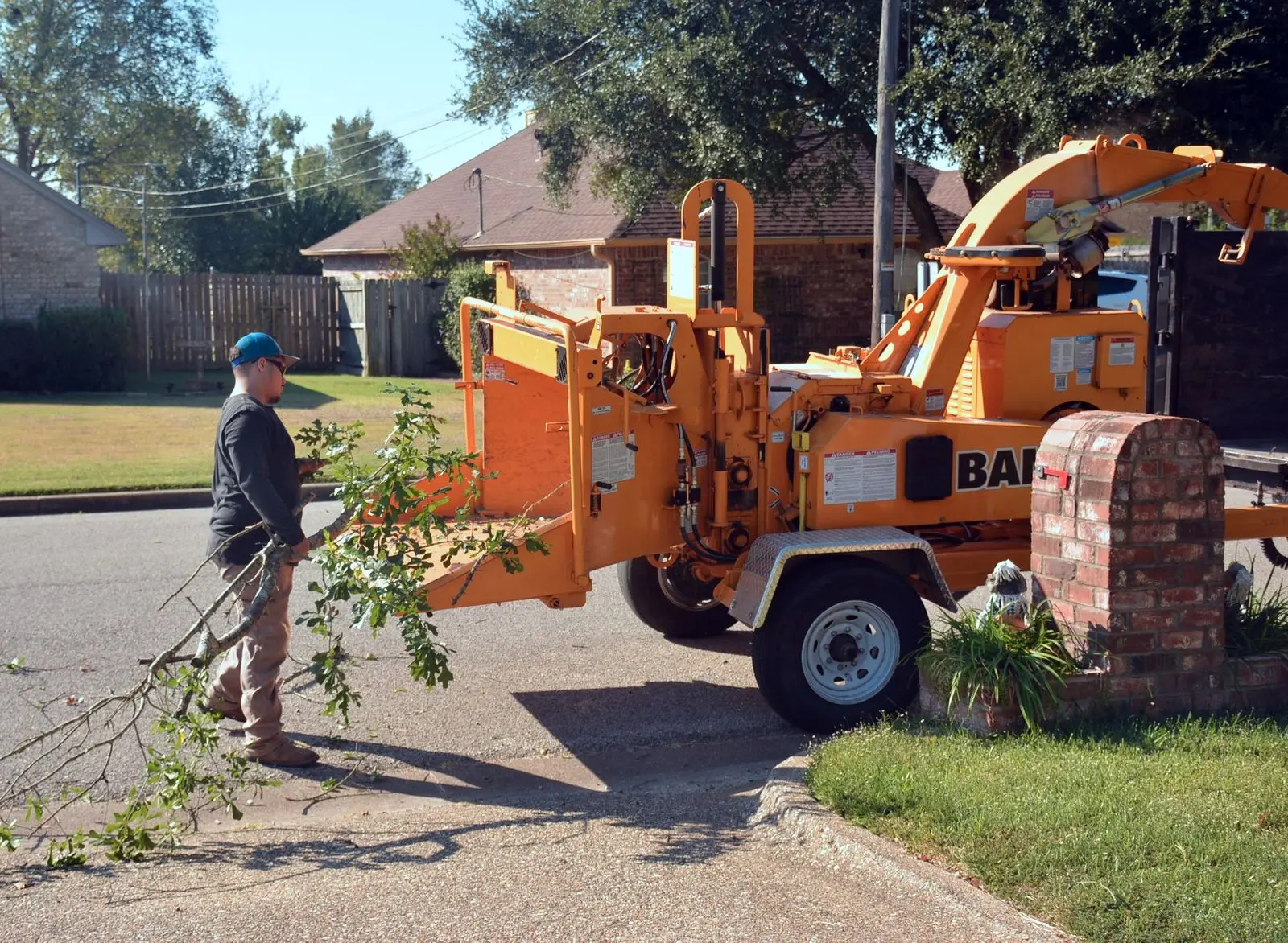
How commercial tree work differs
A homeowner decides about one yard. A property manager answers to a board, tenants, an insurer and sometimes the city, for dozens or hundreds of trees over parking lots, walkways and buildings.
That changes what matters. Paperwork comes before pricing: certificates of insurance naming the owner, a written scope per tree, proof of workers' compensation. Scheduling has to work around business hours, school pickup and resident parking. And every decision should leave a record, because the first question after a limb lands on a car is what the owner knew and when.
Calls through Limbwright are routed to independent tree companies. For commercial work, say so at the start so you reach one equipped for it.
Work commonly bundled into a commercial scope
- Tree inventory
- A count and condition rating of every tree, often a Level 1 risk assessment.
- Cyclical pruning
- Clearance over drives, walks, signage, lighting and buildings on a multi-year rotation. See pruning types.
- Priority removals
- Dead and high-risk trees first, with stump grinding to remove trip hazards.
- Storm response
- An agreed call-out arrangement so the property is not at the back of the queue after a regional storm.
- Lot and line-of-sight clearing
- Visibility at entrances, signs and security cameras.
Documents to request before work starts
| Document | What to check |
|---|---|
| Certificate of general liability insurance | Issued by the insurer or agent, current dates, with the owner and manager named as additional insured |
| Workers' compensation certificate | Covers the crew actually on site. Tree work has a high injury rate, and an uninsured injury can become the owner's problem. |
| Commercial auto coverage | For trucks, chippers and cranes on your lot |
| W-9 and business license | Where the city or state licenses tree contractors, the license number |
| Written scope by tree or zone | Species, location, pruning type or removal, stump handling, debris disposal |
| Site safety and traffic plan | Cones, signage, pedestrian detours and work hours |
How a commercial scope comes together
Walk the site with a map
Trees are numbered or grouped by zone so the board, the manager and the crew all mean the same tree.
Rank by risk
Dead trees and defects over occupied areas go to the top. Appearance work goes last.
Phase the budget
Urgent items this quarter, the rest across one to three years.
Set the schedule
Off-hours for retail, notice periods for residents, tow-away signs for parking areas.
Close out in writing
A completed-work list with dates becomes part of the property's maintenance record.
Parking lots, sidewalks and the duty to inspect
Commercial owners are generally held to a duty of reasonable inspection for property open to the public. That does not mean every tree needs an annual report. It does mean dead limbs over a parking row should not sit for two years after a tenant emailed about them.
A simple routine covers most exposure: a documented walk-through once a year and after major storms, prompt action on anything rated high, and a file showing both.
Clearance is the other recurring issue. Many municipal codes set minimum branch heights over sidewalks and streets, commonly about 8 feet over walks and 14 feet over roadways, and the abutting owner may be responsible for meeting them. Check local code, since figures vary.
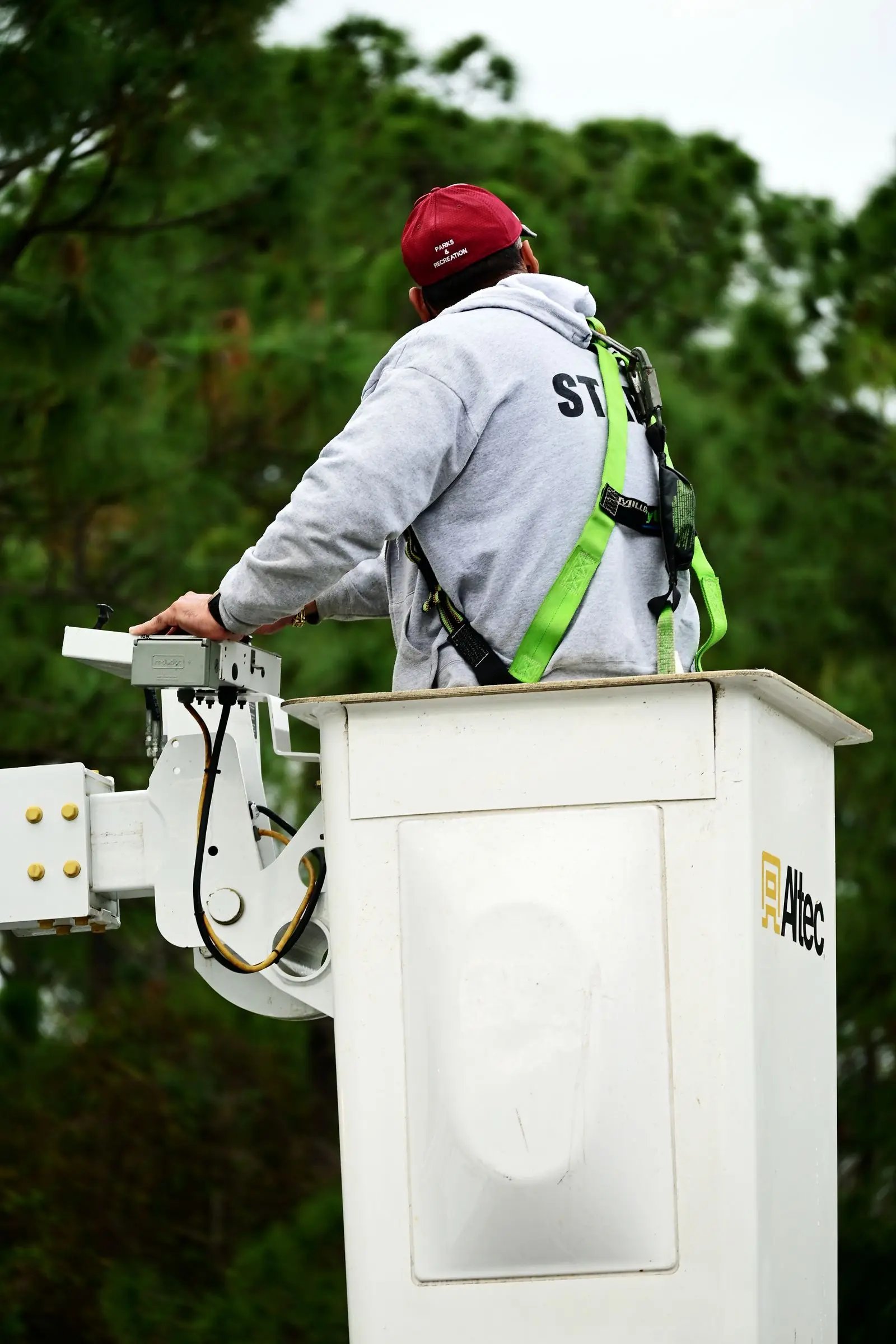
How commercial tree work is priced
- Per tree
- Clear and easy to audit. Best for removals and defined pruning lists.
- Crew day rate
- A set price per day for a crew and equipment. Efficient for large sites with many small tasks.
- Annual contract
- Scheduled visits at a fixed yearly cost, which smooths the budget.
- Time and materials for storms
- Hourly crew and equipment rates agreed ahead of time, before demand spikes.
- Disposal
- On large jobs, chips can often stay on site as mulch, which lowers hauling cost.
Prioritizing a limited tree budget
- Act now
Dead trees or large dead limbs over parking, walks, play areas or buildings
Fund first. This is the highest liability and usually a modest cost.
- Act now
Trees flagged high risk in an assessment
Mitigate within the time frame given in the report.
- This week
Branches blocking signs, lights, cameras or required clearances
Schedule in the current cycle.
- This week
Young trees with poor structure
Structural pruning now is cheap and prevents removals later.
- Plan it
Thinning or shaping for appearance
Do it last, or fold it into the next cyclical visit.
Commercial tree service questions
Does an HOA need a permit to remove trees in common areas?
Often, yes. Many tree ordinances are stricter for commercial and multi-family property than for single-family lots, and trees shown on an approved landscape plan may have to be replaced. Check with the city's urban forestry or planning office first.
Can work be done outside business hours?
Many tree companies will schedule early mornings or weekends for retail and office sites. Local noise ordinances limit how early chainsaws and chippers may run, so start times vary by city.
Who is responsible for a tree on the line between two properties?
A tree whose trunk straddles the boundary is generally owned jointly, and neither owner may remove it without the other's consent. Put any agreement in writing.
How often should commercial property trees be inspected?
A documented visual inspection once a year and after severe weather is a common baseline. Higher-traffic areas and older trees justify closer attention.
Talk to a commercial tree services provider
Call to be connected with an independent tree service company near you, or leave your number and one will call back.
(888) 555-0142Call availability varies by area and time of day
Limbwright is a referral service. Your call or request goes to an independent tree service company that sets its own prices and schedule. Ask for proof of insurance and a written scope before work starts. How this works
Request a callback
Leave a number and a tree service provider in your area will call you.