
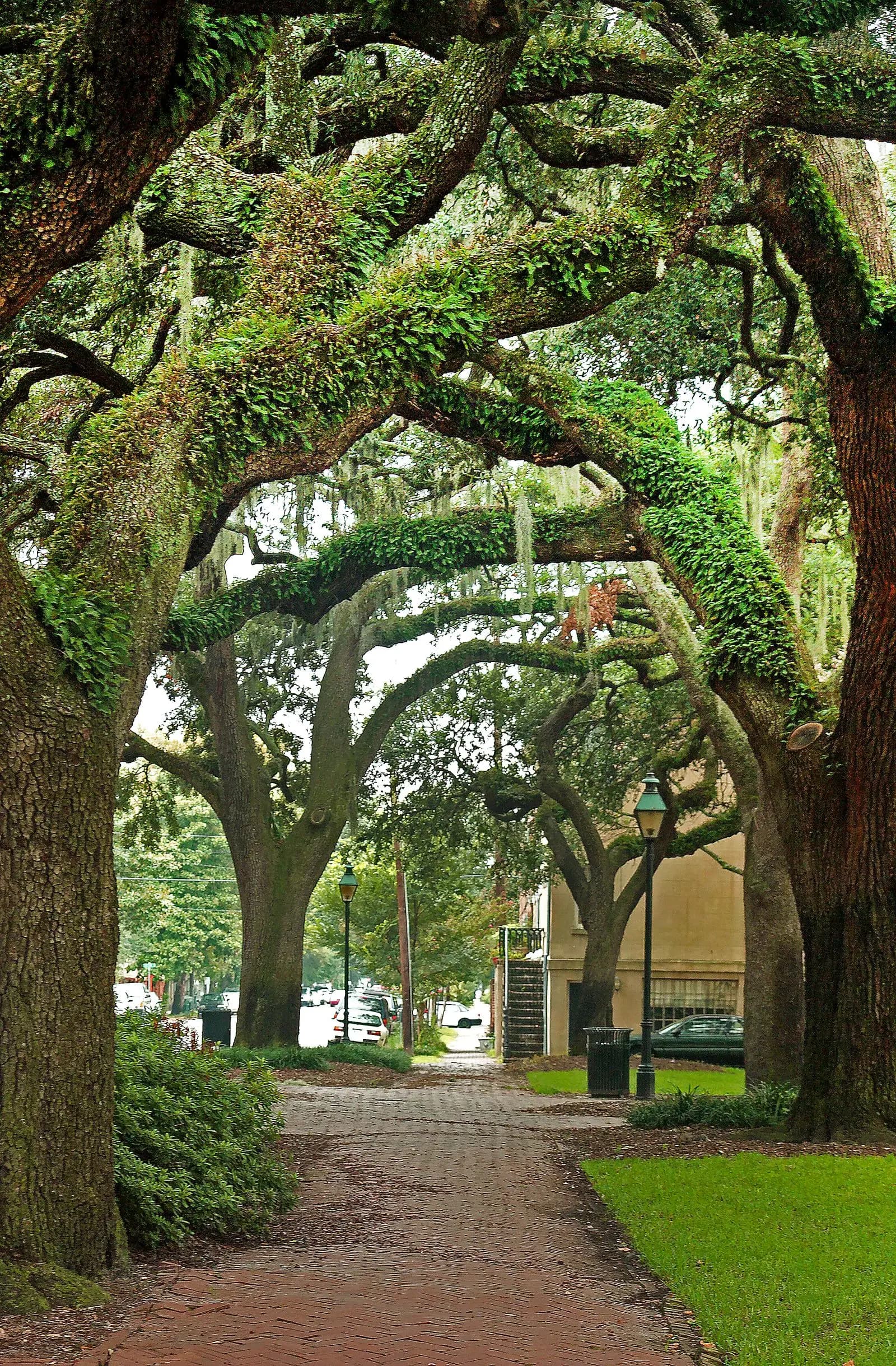
New Orleans, Louisiana
Tree Removal and Tree Service in New Orleans
New Orleans has some of the most valued live oaks in the country and some of the hardest growing conditions: soft, subsiding soil, a high water table, a termite that eats living trees, and hurricanes. Tree work here must be done by a Louisiana-licensed arborist.
- Parish
- Orleans
- Public tree permits
- Department of Parks and Parkways
- Key rule
- Louisiana arborist license required for paid tree work. Permit needed for any tree in the public right-of-way.
- Electric utility
- Entergy New Orleans
- Main hazards
- Hurricanes, Formosan termites, soft saturated soil
Trees on sinking ground
Most of New Orleans is drained swamp and river sediment. The soil is soft, compressible and wet a short distance down, and large parts of the city have subsided since they were drained.
Roots respond by staying shallow and spreading wide. That works for live oaks, which develop broad buttressed bases. It works less well for tall, narrow trees such as water oaks and pines, which tip when the soil is saturated.
Shallow roots also collide with the built city. They lift sidewalks and driveways, wrap around old clay sewer pipes and reach under raised houses. Many removal and root-pruning requests start with a cracked walk or a blocked drain, not with the tree's health.
Who regulates which tree
The Department of Parks and Parkways has authority over trees on public property, including neutral grounds and the strip between the sidewalk and the street in front of a house. Planting, pruning or removing one of those trees requires a tree work permit, and the work must be done by a licensed arborist.
Trees wholly on private property have historically had far less protection under city law, although historic district rules and proposed ordinance changes can apply. Check with the city before removing a large tree in a historic district.
State law is clear either way. Anyone paid to do tree work in Louisiana must hold an arborist license from the Department of Agriculture and Forestry. Ask for the number.
Is that tree hollow from termites?
Formosan subterranean termites are heavily established in New Orleans and nest inside live trees. Oaks, ash, cypress and others can be hollowed from the inside.
Dried mud in old pruning cuts
Carton nest material sealing a wound.
Mud tubes on the bark
Often running up from the soil line.
Swarms in May and June
Winged termites leaving the trunk at dusk.
Soft or papery wood under intact bark
Found when a limb breaks or a cut is made.
A limb that snapped on a calm day
With galleries visible in the break.
Katrina, Zeta and Ida
Katrina's flooding in 2005 killed trees that the wind had spared. Weeks of standing brackish water wiped out magnolias, pines and many other species across Lakeview, Gentilly and the Lower Ninth Ward. The city has been replanting ever since.
Zeta passed directly over New Orleans in October 2020, and Ida struck in August 2021 with sustained hurricane-force wind and left the whole city without power. Both brought down water oaks and pecans in large numbers and broke major limbs from live oaks.
Live oaks that lost limbs in those storms need follow-up. Torn wounds on a tree that size take many years to close, and termites use them as entry points.
New Orleans trees, briefly
- Live oak
- The avenue tree of St. Charles, Esplanade and the parks. Pruned conservatively and seldom removed.
- Water oak
- Short-lived and decay-prone. Often the tree that needs to come down.
- Bald cypress
- Handles wet soil and wind. Its knees and roots can trouble lawns.
- Pecan
- Common in older yards. Brittle and frequently storm-damaged.
- Crape myrtle
- The most common small street tree. Routinely over-pruned.
- Chinese tallow
- Invasive and weak. Worth removing, with the stump ground.
Hiring tree work in New Orleans, in order
Work out who owns the tree
If it stands between the sidewalk and the street or on a neutral ground, it is the city's, and Parks and Parkways must approve work.
Verify the license
Get the company's Louisiana arborist license number and confirm it with the state.
Ask about termites
A hollow tree changes the removal method. A lift or crane may be needed in place of climbing.
Plan the access
Shotgun lots, side alleys three feet wide and overhead lines are normal here. Cranes often set up in the street, which may need a city permit.
Settle the stump and roots
Grinding is standard. Roots under slabs and sidewalks are usually cut at the edge and left.
Services New Orleans owners use
- Tree trimming and pruningConservative live oak pruning and clearance over roofs.
- Hazardous tree removalHollow and leaning trees near houses.
- Emergency tree removalAfter hurricanes and summer squalls.
- Tree risk assessmentDecay testing in termite-suspect trees.
- Louisiana overviewLicensing, species and hurricane preparation.
New Orleans tree questions
Who is responsible for the oak in front of my house?
If it stands in the public right-of-way between the sidewalk and the street, the city is, through Parks and Parkways. You need a permit to have it pruned, and you may not remove it without approval.
Can tree roots be cut to fix my sidewalk?
Sometimes. Cutting large roots close to the trunk can destabilize or kill the tree. For a public tree it requires city approval. An arborist can advise how far out a cut is tolerable.
Do termites in a tree spread to the house?
They can. A Formosan colony in a tree near the house is a risk to the structure, and treating the tree is part of protecting the building. Talk to a licensed pest control operator as well as an arborist.
How do I check an arborist's license?
Ask for the Louisiana arborist license number and verify it with the Department of Agriculture and Forestry's Horticulture Commission.
Reach a tree service in New Orleans
Call to be connected with an independent tree company that works in the New Orleans area, or leave your number and one will call you back.
(888) 555-0142Call availability varies by area and time of day
Limbwright is a referral service. Your call or request goes to an independent tree service company that sets its own prices and schedule. Ask for proof of insurance and a written scope before work starts. How this works
Request a callback
Leave a number and a tree service provider in your area will call you.