
Stumps · Excavation
Stump Removal
Stump removal means excavating the whole stump and its main root mass, leaving clean soil instead of buried wood. It is the right choice when you plan to pour concrete, set a footing or replant in the same place, and it is more work than grinding in every respect.
Call availability varies by area and time of day. Calls are answered by an independent tree service provider.
What full removal involves
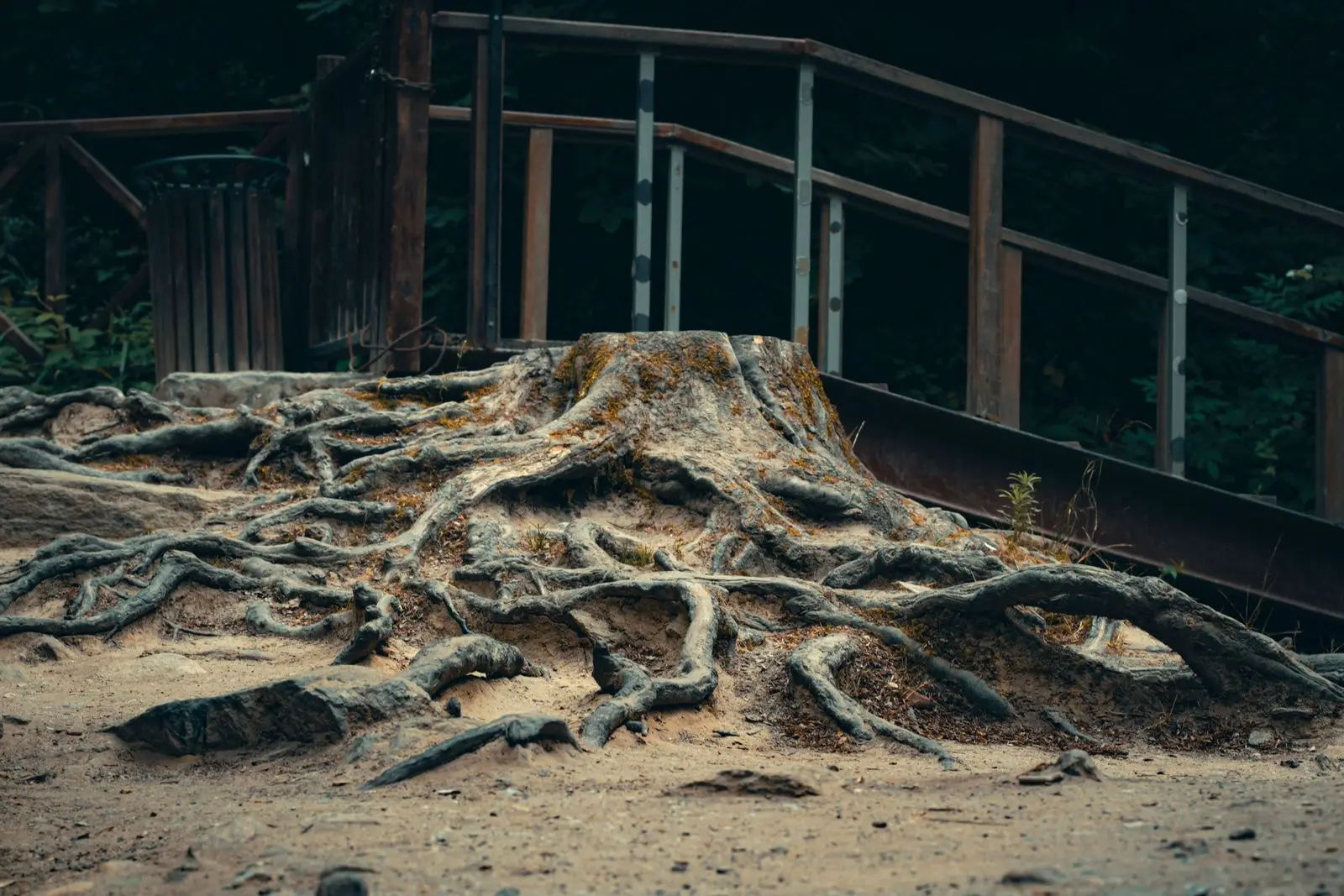
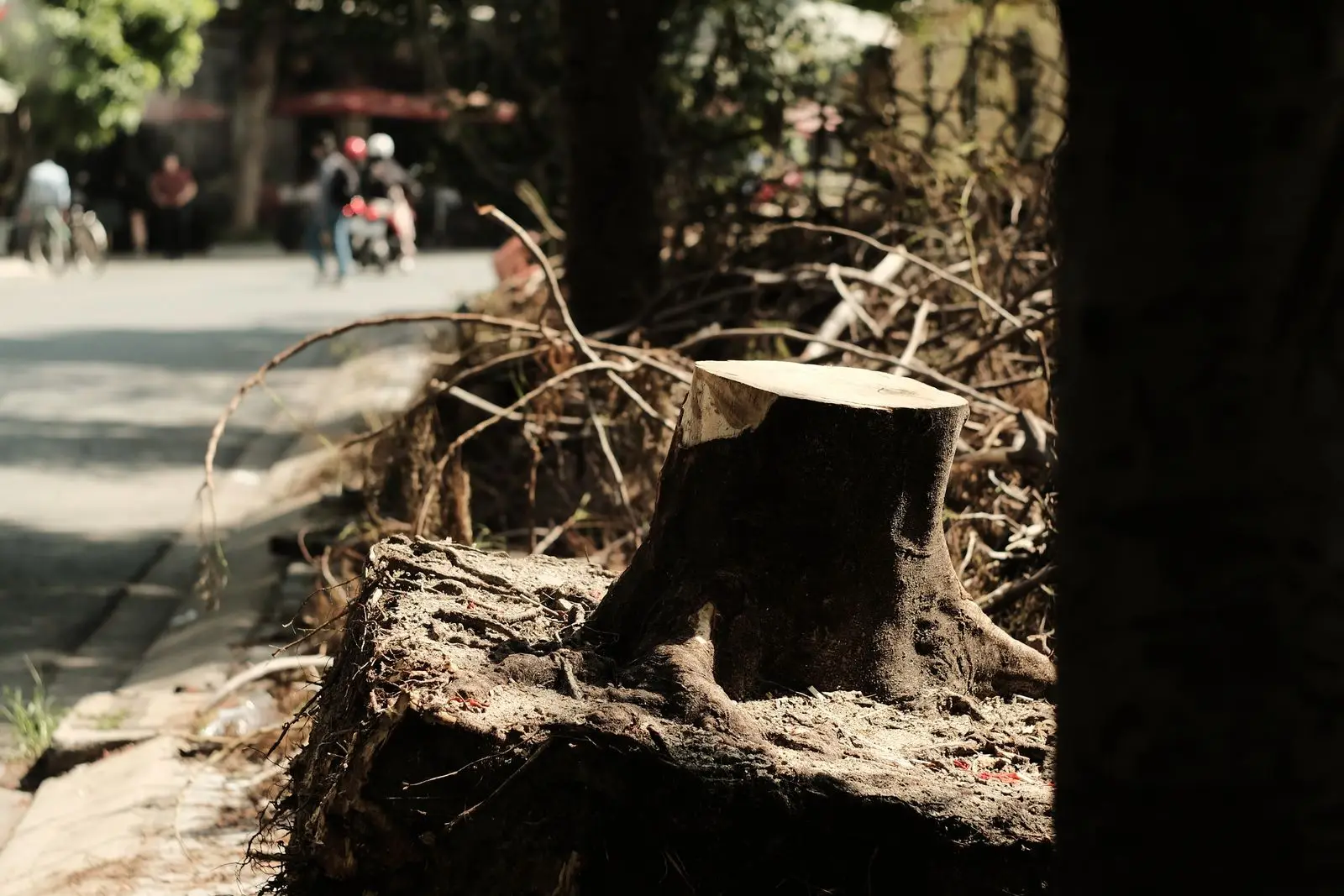
People use "stump removal" for two different jobs. Stump grinding shaves the stump to below the surface and leaves everything underneath. Full removal takes out the stump, the root crown and the large structural roots radiating from it.
On a mature tree that is a serious mass. The root ball of a 24-inch tree can be eight feet wide, three feet deep and well over a ton. Getting it out takes an excavator or backhoe, a truck to carry it away and several cubic yards of fill to close the hole.
Fine roots farther out are left to decay. No practical method removes every root.
When excavation is worth it
If none of these apply, grinding will do the job for less.
- Act now
A slab, driveway, patio or building footing will go over the spot
Excavate. Buried wood rots, leaves voids and lets the surface crack and sink.
- This week
You want a new tree in exactly the same place
Excavate and bring in fresh soil, or shift the planting a few feet and grind.
- This week
The site is being regraded or lowered
Excavate. A cut in grade would expose whatever a grinder left behind.
- This week
A storm tipped the tree and the root plate is already out of the ground
Removal is mostly done. The plate is cut free and hauled as part of fallen tree removal.
- Plan it
You only want lawn or a flower bed
Grind it. Excavation would cost more and tear up more yard for no benefit.
How a stump is dug out
Locate utilities
An 811 ticket is required before mechanical digging in every state. Lines are marked, and private lines are flagged by the owner.
Trench around the stump
The operator digs a ring to expose the lateral roots.
Sever the roots
Roots are cut with the bucket, a saw or a root rake. Tearing them out risks pulling up pipes and paving tangled in them.
Lift and load
The stump is rocked free, lifted out and loaded. Large ones are split first.
Backfill in layers
Fill soil goes in a foot or so at a time and is compacted, then topped with soil suited to what comes next.
Four ways to get rid of a stump, compared
| Method | Time | Ground disturbance | Notes |
|---|---|---|---|
| Grinding | Under an hour | Low | Leaves roots. Suits most yards. |
| Excavation | Half a day | High | Removes the root mass. Needed before construction. |
| Chemical rotting (potassium nitrate) | Many months to years | None | Speeds decay of a drilled stump. Slow, and the stump still has to be broken up. |
| Burning | Days | Low to moderate | Banned or permit-only in many towns. Roots can smolder underground. Seldom recommended. |
The hole is half the job
A removed stump leaves a crater, and how it is filled decides whether the area stays level. Loose soil dumped in one lift will settle for years.
For lawn, compacted fill topped with six inches of topsoil is enough. For paving or a structure, the engineer or builder may specify the fill material and compaction, and it is worth telling the tree company that requirement before work starts.
Access damage is the other cost. An excavator crossing a lawn leaves tracks, and the spoil pile and truck need room. Ask for ground protection mats and get lawn repair addressed in the quote.
What drives the price of excavation
Full removal typically costs several times what grinding the same stump would. See the comparison in the stump grinding cost guide.
- Stump diameter and species
- Wide-spreading hardwoods have far larger root plates than conifers of the same trunk size.
- Machine access
- A mini-excavator needs about four to five feet of clear width. Tight sites mean hand digging.
- Disposal
- Stumps are heavy, dirty and unwelcome at many yard-waste sites. Tipping fees are real.
- Fill and compaction
- Imported soil and compaction to a builder's spec add material and time.
- What is nearby
- Working beside a foundation, wall or utility slows everything down.
What is under the stump besides roots
Roots grow along trenches because the soil there is loose and moist. Expect them to be wrapped around something.
Gas, electric and telecom lines
Marked through 811. Hand digging is required close to the marks.
Water and sewer laterals
Older clay and cast-iron sewer pipes are often already invaded by roots and break when the stump moves.
Irrigation and low-voltage wiring
Not covered by 811. Mark heads and valve boxes yourself.
Septic components
Tanks, lids and drain lines can be crushed by equipment or disturbed by digging.
Foundations and slabs
Roots running under concrete should be cut cleanly at the edge, not pulled.
Stump removal questions
Is stump removal the same as stump grinding?
No. Grinding chips the stump to a few inches below ground and leaves the roots. Removal excavates the stump and root ball. Many companies say "stump removal" when they mean grinding, so confirm which one a quote covers.
Can roots left in the ground damage my foundation?
Dead roots do not grow or push. As they decay they leave small voids, which matters under paving or footings but not under lawn.
How long before I can build on the spot?
Right away if the stump was fully excavated and the fill was compacted in layers to the builder's requirement. Over a ground stump, expect settling for several years.
Can I pull a stump out with a truck?
It is not advisable. Chains and straps break under load and whip back, and a stump with intact roots will stall or damage most vehicles. Small shrubs are the exception.
Talk to a stump removal provider
Call to be connected with an independent tree service company near you, or leave your number and one will call back.
(888) 555-0142Call availability varies by area and time of day
Limbwright is a referral service. Your call or request goes to an independent tree service company that sets its own prices and schedule. Ask for proof of insurance and a written scope before work starts. How this works
Request a callback
Leave a number and a tree service provider in your area will call you.