
Oregon
Tree Removal and Tree Service in Oregon
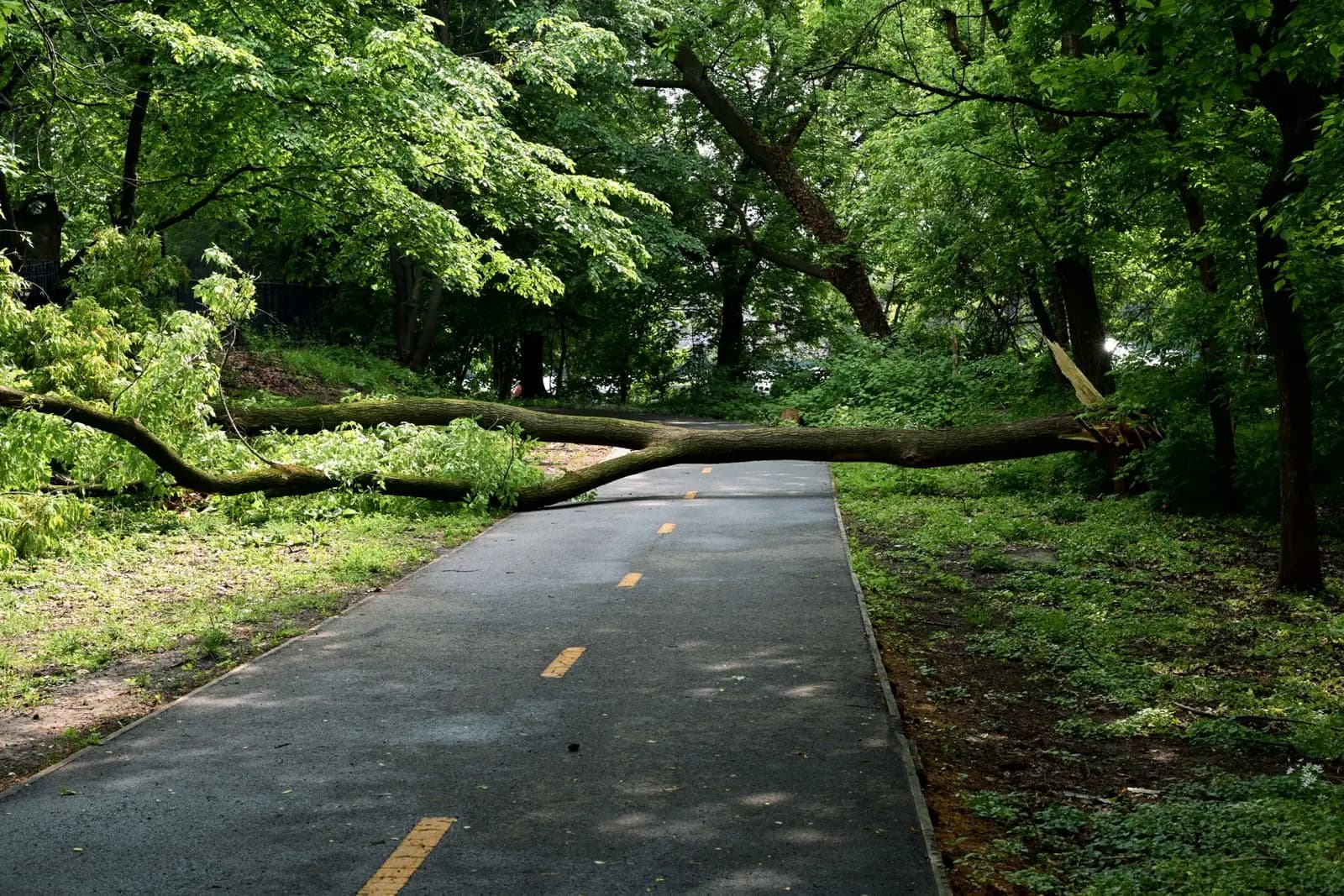
In western Oregon, ice is the event that breaks the most trees at once. The February 2021 and January 2024 storms each left the Willamette Valley and the Portland area with weeks of cleanup. Tree service businesses here must hold a state contractor license, which gives owners something concrete to check.
Cold air from the Gorge, rain from the Pacific
Western Oregon's ice storms follow a set pattern. Cold, dry air drains west through the Columbia River Gorge and pools in the Portland basin and the Willamette Valley. A Pacific storm then rides over it, and rain falls into freezing air at the surface.
In February 2021 that produced more than an inch of ice in parts of the valley and one of the largest power outages in Oregon's history. In January 2024, strong east wind arrived together with snow and ice, and trees fell on houses and cars across the Portland area.
East wind matters independently. Trees are braced against the prevailing south and west winds, and gusts from the opposite side load roots and limbs that have never been tested.
Willamette Valley hazards through the year
| Season | Hazard | Result |
|---|---|---|
| December to February | Freezing rain, east wind, wet snow | Mass limb failure. Conifers uproot on saturated soil. |
| March to May | Late wind events, wet ground | Delayed failure of trees damaged over winter |
| June to September | Dry summers and heat | Drought stress and dieback in cedar, maple and fir |
| October to November | First storms on newly soaked soil | Blowdown of root-diseased conifers. Leaf-on hardwood breakage. |
Oregon trees and their typical problems
- Douglas-fir
- The state tree. Sound specimens are wind-firm. Root disease and new exposure are the usual causes of failure.
- Oregon white oak
- Slow-growing, long-lived and protected in several cities. Brittle under heavy ice.
- Bigleaf maple
- Huge limbs and extensive decay. A frequent source of limbs on roofs.
- Western redcedar
- Suffering dieback after hot, dry summers. Dead tops are common.
- Oregon ash
- A native of wet ground, now threatened by emerald ash borer.
- Birch
- Widely planted and widely killed by bronze birch borer.
Emerald ash borer has reached Oregon
Emerald ash borer was confirmed in Forest Grove, west of Portland, in June 2022. It was the first detection on the West Coast. The insect has killed ash across the eastern half of the country, and Oregon's native ash has shown no meaningful resistance.
State agencies have quarantined affected counties to slow the movement of ash wood. Expect the infested area to grow over the coming years.
For owners the choices are the same as in the Midwest: protect healthy, valued ash with insecticide, or plan for removal. Dead ash turns brittle unusually fast and gets more expensive to take down the longer it stands. The reasons are covered under dead tree removal.
Licensing and local permits
Oregon requires businesses performing tree service to be licensed with the Construction Contractors Board (CCB), which involves a bond and liability insurance. You can look up a license number on the CCB website before hiring.
Permits are local. Portland's Title 11 requires a permit to remove a tree 12 inches in diameter or larger on private property, and that applies to dead, dying and dangerous trees as well. See the Portland page.
Other cities, including Lake Oswego, Beaverton, Eugene and Salem, have their own tree codes with different thresholds.
Worried about a tall conifer? What helps and what does not
Not recommended
- Topping, which causes decay and weak new leaders
- Stripping inner branches to "let the wind through"
- Removing only the lower two-thirds of the limbs
- Cutting roots to install paving or a wall close to the trunk
Recommended
- A ground-level risk assessment of roots, trunk and crown
- Removing dead wood and correcting specific defects
- Keeping groups of trees intact so they shelter one another
- Removal when root disease or structural failure is confirmed
A healthy conifer is best left structurally alone. Intervene when a defect has been identified, not because of height.
Oregon tree service questions
Does a tree service need a license in Oregon?
Yes. Tree service businesses must be licensed with the Oregon Construction Contractors Board, which requires a bond and insurance. Ask for the CCB number and verify it online.
Do I need a permit to remove a tree in Portland?
For most private trees 12 inches in diameter or larger, yes. Dead, dying and dangerous trees still need a permit, though the process is simpler. Street trees always need one.
Should I remove my ash tree because of emerald ash borer?
Not necessarily yet. A healthy ash outside the infested area can be monitored or treated. If you are in or near a quarantined county, discuss treatment or planned removal with an arborist.
Will my tree recover from ice damage?
Many do. A tree that kept its leader and at least half its crown usually recovers with proper pruning. See can a storm-damaged tree be saved?
Tree service in Oregon, by phone
Call to be connected with an independent tree company serving your part of Oregon, or leave your number for a callback.
(888) 555-0142Call availability varies by area and time of day
Limbwright is a referral service. Your call or request goes to an independent tree service company that sets its own prices and schedule. Ask for proof of insurance and a written scope before work starts. How this works
Request a callback
Leave a number and a tree service provider in your area will call you.