
Minneapolis, Minnesota
Tree Removal and Tree Service in Minneapolis
In Minneapolis the Park and Recreation Board, not the city council, runs the urban forest. It owns the boulevard trees and has the power to condemn diseased ash and elm on private land. Most other private trees are the owner's to manage.
- County
- Hennepin
- Tree authority
- Minneapolis Park and Recreation Board (MPRB), Forestry
- Key local rule
- Infested ash and diseased elm on private property can be condemned, with a deadline to remove
- Electric utility
- Xcel Energy
- Main hazards
- Emerald ash borer, summer windstorms, heavy wet snow
A forest run by the Park Board
Minneapolis has an independently elected Park and Recreation Board, and its Forestry Department plants, prunes and removes the trees on every boulevard, the strip between sidewalk and curb. Residents do not hire work on those trees.
The Board's reach extends onto private property in one respect. Its inspectors look for Dutch elm disease, oak wilt and emerald ash borer citywide, and they can condemn an infected tree in a private yard. More than 18,000 private ash trees have been condemned since 2013.
For a healthy tree on your own lot, there is generally no permit. The decision and the cost are yours.
If your tree is condemned
The notice is not optional, and ignoring it is the expensive choice.
Notice arrives
The tree is marked and you receive written notice identifying the tree and the reason.
The clock starts
Owners are given a deadline, typically 60 days, to have the tree removed.
Choose who removes it
Hire your own registered tree company, or let the Park Board's contractor do it.
Pay or be assessed
If the Board's contractor does the work, the cost can be assessed to your property taxes and paid over time.
Ask about help
Cost-share and relief programs for low-income homeowners have been funded in recent years. Check current availability with MPRB.
Rules that apply to Minneapolis tree work
Tree companies working in Minnesota must be on the Department of Agriculture's Tree Care Registry. Ask for the registration and for certificates of insurance.
Ash wood is regulated. Hennepin County is inside the state's emerald ash borer quarantine, and ash material should not be moved out of the quarantined area. Reputable companies take it to approved disposal sites.
Oaks should not be pruned from April through mid-July because of oak wilt. If a storm breaks an oak in that period, the wound should be sealed immediately. St. Paul, Edina, St. Louis Park and other neighboring cities run their own forestry programs with similar but separate rules.
Summer wind and the 2011 tornado
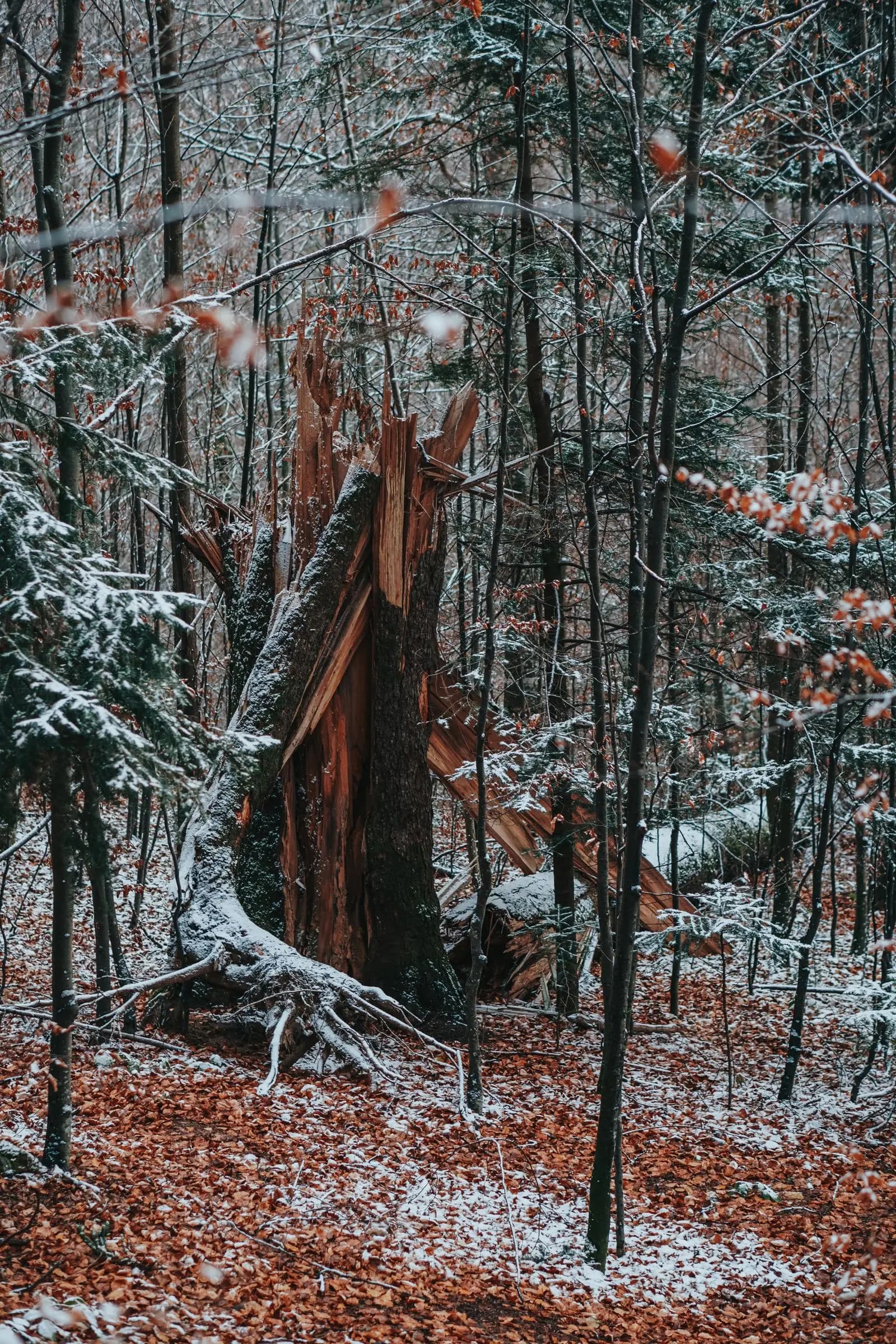
On May 22, 2011, a tornado cut through North Minneapolis and took down or destroyed thousands of trees, stripping blocks that had been fully shaded that morning.
Two years later, in June 2013, a line of storms with heavy rain and straight-line wind toppled thousands of public trees across the south side of the city, many of them boulevard trees whose roots were confined between curb and sidewalk.
Those are the two patterns to expect: an occasional tornado, and far more often a summer squall on wet ground. Late-season snow on leafed-out trees is the third, breaking limbs in April and October storms.
Alleys, garages and overhead wires
Most Minneapolis blocks have alleys, with detached garages at the back of narrow lots and power and communication lines strung along the alley. Backyard trees grow up through all of it.
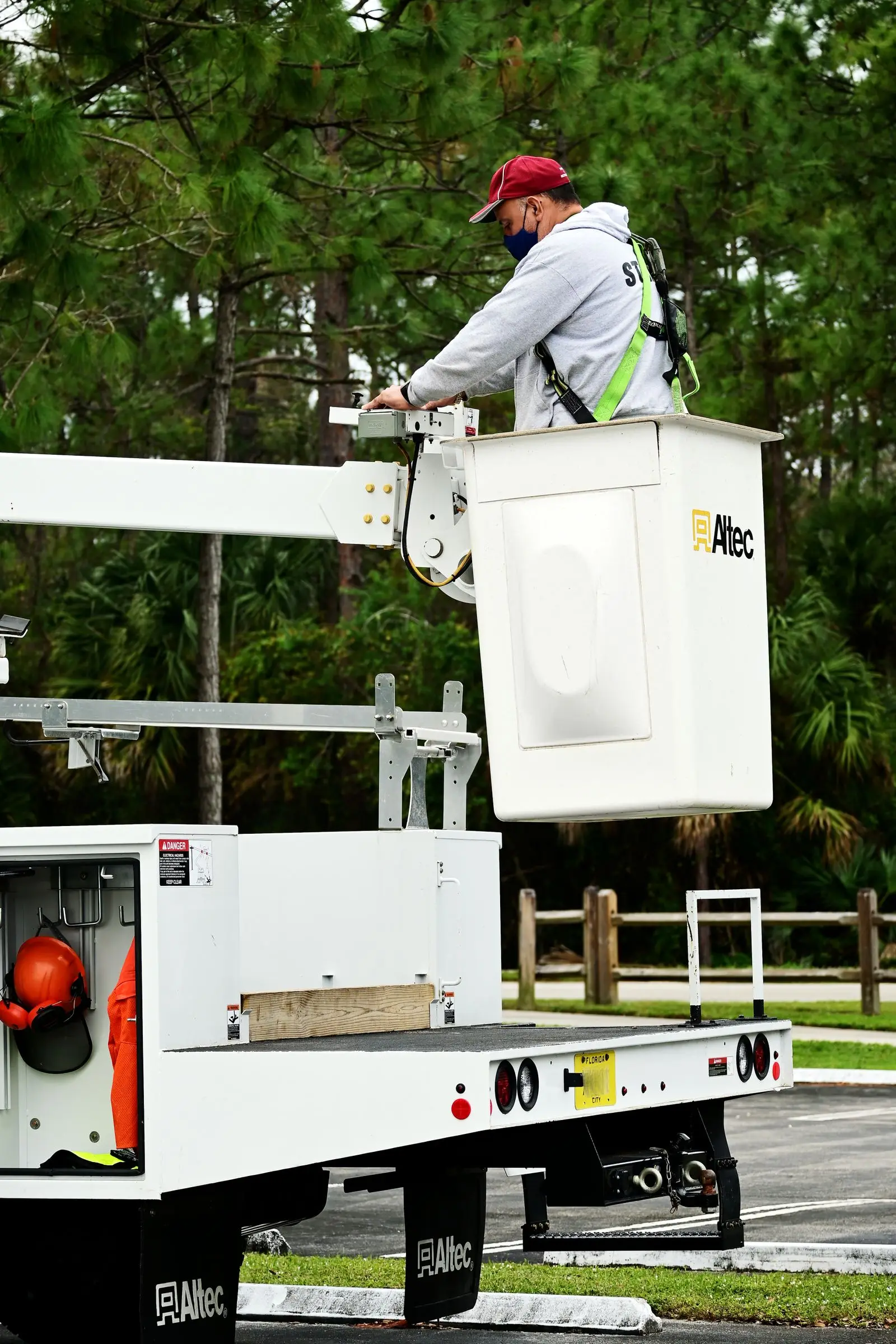
That geometry shapes removals. A bucket truck can often reach from the alley, but the service drop to the house and the alley lines limit where wood can be lowered. Crews frequently rig pieces between a garage roof, a fence and wires.
Winter helps. Frozen ground lets equipment cross a yard without tearing it up, and with no leaves the work goes faster. Many Minneapolis owners deliberately book removals for January and February.
What is growing on Minneapolis lots
- Green ash
- Planted heavily after the elms died. Now being removed by the thousand.
- American elm
- Survivors remain and are monitored every summer for Dutch elm disease.
- Silver maple
- Very large, fast and brittle. Common in backyards and often hollow.
- Bur oak and red oak
- The long-lived natives. Red oaks are highly vulnerable to oak wilt.
- Boxelder and Siberian elm
- Volunteers along fences and alleys. Weak and frequently removed.
- Colorado spruce
- Declining across the metro from needle cast and canker diseases.
Services Minneapolis owners request
- Dead tree removal in MinneapolisCondemned and dead ash, elm and oak.
- Stump grindingIncluding winter grinding.
- Tree trimming and pruningScheduled around oak wilt and elm disease seasons.
- Storm damage tree removalAfter summer windstorms and wet snow.
- Minnesota overviewPest reference table and pruning calendar.
Minneapolis tree questions
Who is responsible for the tree on the boulevard?
The Minneapolis Park and Recreation Board. It prunes and removes boulevard trees at no direct charge. Report a problem to MPRB Forestry and do not hire private work on it.
Do I need a permit to remove a tree in my yard?
Generally no, for a healthy tree on a private residential lot. Condemned trees must be removed by the deadline on the notice.
Can I treat my ash tree instead of removing it?
Yes, if it is still healthy. Trunk-injected insecticide every two to three years protects ash effectively. A tree that is already infested and condemned must come down.
Will Xcel Energy trim trees in my alley?
Xcel's contractors prune for clearance around its distribution lines on a multi-year cycle. The line from the pole to your house is the owner's responsibility to keep clear.
Reach a tree service in Minneapolis
Call to be connected with an independent tree company that works in the Minneapolis area, or leave your number and one will call you back.
(888) 555-0142Call availability varies by area and time of day
Limbwright is a referral service. Your call or request goes to an independent tree service company that sets its own prices and schedule. Ask for proof of insurance and a written scope before work starts. How this works
Request a callback
Leave a number and a tree service provider in your area will call you.