
Oklahoma
Tree Removal and Tree Service in Oklahoma
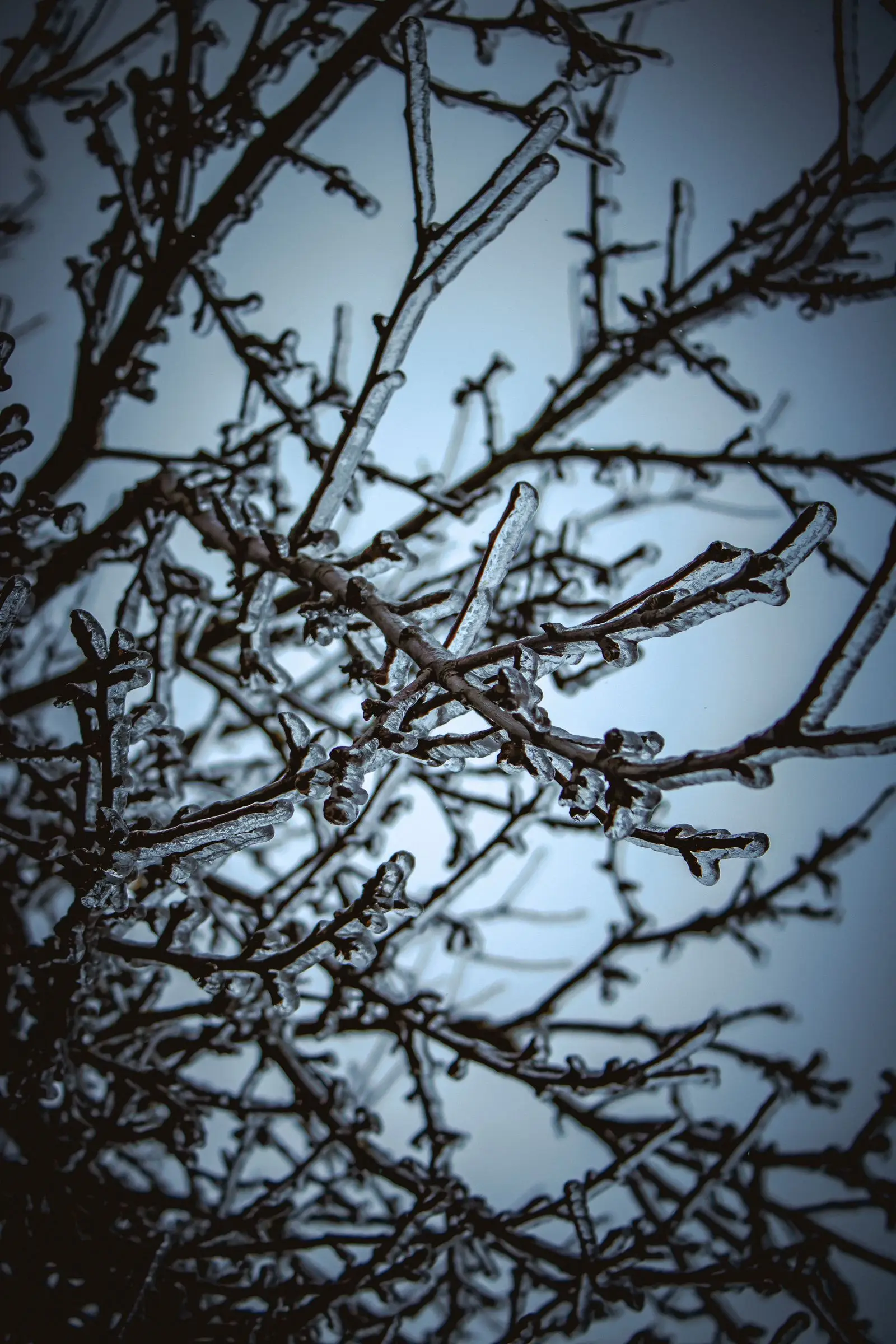
Oklahoma trees take ice in winter, tornadoes in spring and drought in summer. The ice storms do the widest damage. A single event can break limbs in nearly every yard across several counties, and the cleanup runs for months.
The ice storms people still talk about
In December 2007 an ice storm across central and northeastern Oklahoma cut power to hundreds of thousands of homes, most of it from trees and limbs on lines. In late October 2020 it happened again, and this time the trees were still in full leaf.
Leaves were the difference. A bare winter tree has limited surface for ice to grip. A tree in leaf has many times more, and the load in 2020 tore apart healthy mature trees that had survived every earlier storm. Oklahoma City and its suburbs were hauling limbs for months.
Many trees that lost large limbs in those storms are still standing with torn wounds and weak regrowth. They are a large part of today's removal and corrective pruning work.
What ice thickness means for trees
Forecasts give freezing rain in inches of flat accumulation. This is roughly what each level does.
| Ice accumulation | Effect on trees | What to do |
|---|---|---|
| Under 1/4 inch | Twigs and small weak branches break | Normal cleanup |
| 1/4 to 1/2 inch | Limbs several inches thick begin to fail. Pear, elm and maple split. | Stay out from under trees. Expect scattered outages. |
| 1/2 to 1 inch | Major limb loss on most species. Tops snap out of pines and cedars. | Widespread damage. Crews triage for weeks. |
| Over 1 inch | Whole crowns collapse and trunks split | Regional disaster. See storm damage tree removal. |
Wind during or after icing makes every level worse.
Which Oklahoma trees break first
- Bradford pear
- The most ice-damaged tree in most neighborhoods. Narrow branch angles split to the ground.
- Siberian elm
- Brittle, fast-growing and common on older lots. Sheds limbs in every storm.
- Silver maple
- Long, weakly attached limbs and frequent decay.
- Pecan and hackberry
- Large spreading limbs with heavy end weight.
- Eastern redcedar
- Catches ice across its whole crown and bends or snaps.
- Post oak and blackjack oak
- The native Cross Timbers oaks are compact and comparatively tough in ice.
Tornadoes and straight-line wind
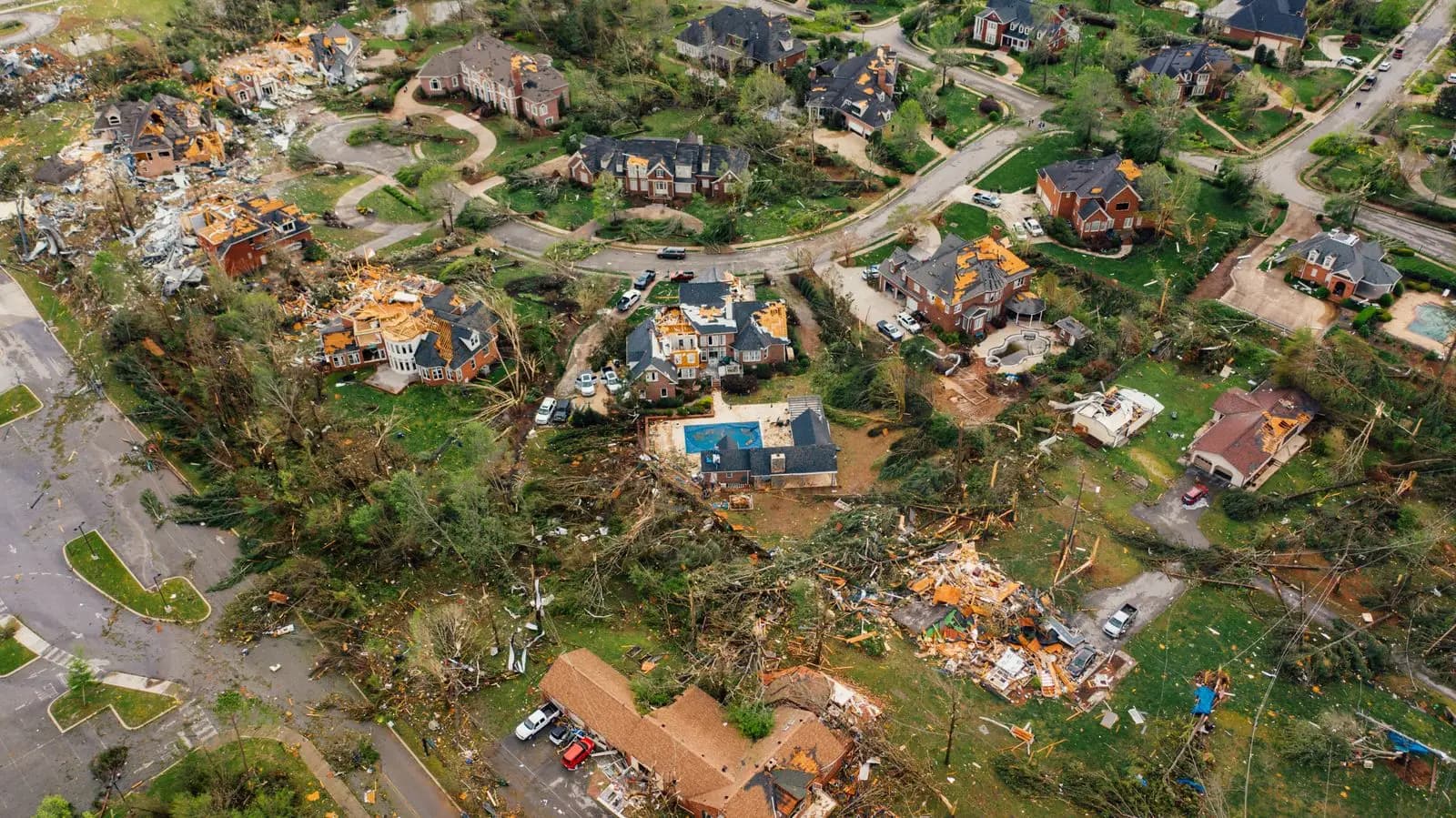
Central Oklahoma sees more violent tornadoes than almost anywhere else. In a direct hit, trees are stripped, debarked or simply gone, and tree work is one small part of a larger recovery.
Far more properties are affected at the edges of a tornado path and by the straight-line winds that come with severe thunderstorms. There the damage is ordinary but serious: trunks snapped at mid-height, crowns twisted so that limbs crack lengthwise, and trees pushed into a lean with roots half broken.
Twisted and leaning trees are the ones to have checked. They often look intact from the street and fail weeks later. A risk assessment after a close call is money well spent.
Drought, disease and slow decline
Oklahoma's dry spells kill trees gradually, often through secondary diseases.
- Hypoxylon canker
- A fungus that takes over drought-stressed oaks. Bark sloughs off, revealing tan, then silver-gray or black crusty patches. Affected trees die and turn brittle fast.
- Pine wilt
- Kills Scots and Austrian pines within a season. Dead trees should be removed and destroyed before spring.
- Emerald ash borer
- Detected in the state and spreading. Ash trees should be watched.
- Redcedar encroachment
- Eastern redcedar spreads into unmanaged land and is a wildfire fuel near homes on acreage.
Permits and rules
Oklahoma has no statewide law requiring a permit to remove a tree on private residential property, and Oklahoma City generally leaves private trees to the owner. Work on trees on public property or in the street right-of-way is a different matter and needs city approval.
Some neighborhoods have HOA covenants or historic preservation rules covering trees. Utility easements are also common, and the utility may trim or remove trees within them.
After a federally declared disaster, cities often run curbside debris pickup with specific sorting and placement rules. Check your city's announcement before paying to haul brush.
Oklahoma tree service questions
Should I knock ice off my tree's branches?
No. Frozen wood is brittle, and hitting or shaking branches breaks them. Stay clear and wait for the thaw. Bent limbs frequently recover without help.
My tree lost a third of its limbs to ice years ago. Is it safe?
It depends on how the wounds were treated. Torn stubs and dense sprout regrowth are weak points. Corrective pruning can rebuild structure in many trees. Large trunk wounds with decay may mean removal.
Does Oklahoma require a permit to cut down a tree?
The state does not. Cities decide, and Oklahoma City generally leaves trees on private residential lots to the owner. Work on public property and in the right-of-way needs city approval.
When is the best time for tree work in Oklahoma?
Late fall and winter suit most pruning and planned removals. Avoid pruning oaks in spring, when the beetles that spread oak wilt are active.
Tree service in Oklahoma, by phone
Call to be connected with an independent tree company serving your part of Oklahoma, or leave your number for a callback.
(888) 555-0142Call availability varies by area and time of day
Limbwright is a referral service. Your call or request goes to an independent tree service company that sets its own prices and schedule. Ask for proof of insurance and a written scope before work starts. How this works
Request a callback
Leave a number and a tree service provider in your area will call you.