
Downed power line, fire, gas smell or someone hurt? Call 911 first and stay at least 35 feet from any wire.
Urgent
Emergency Tree Removal
If a tree has hit your house, is blocking your only way out, or is splitting and about to fall, get everyone clear of it first. Then call. You will be connected with an independent tree company serving your area that handles urgent work.
Call availability varies by area and time of day. Calls are answered by an independent tree service provider.
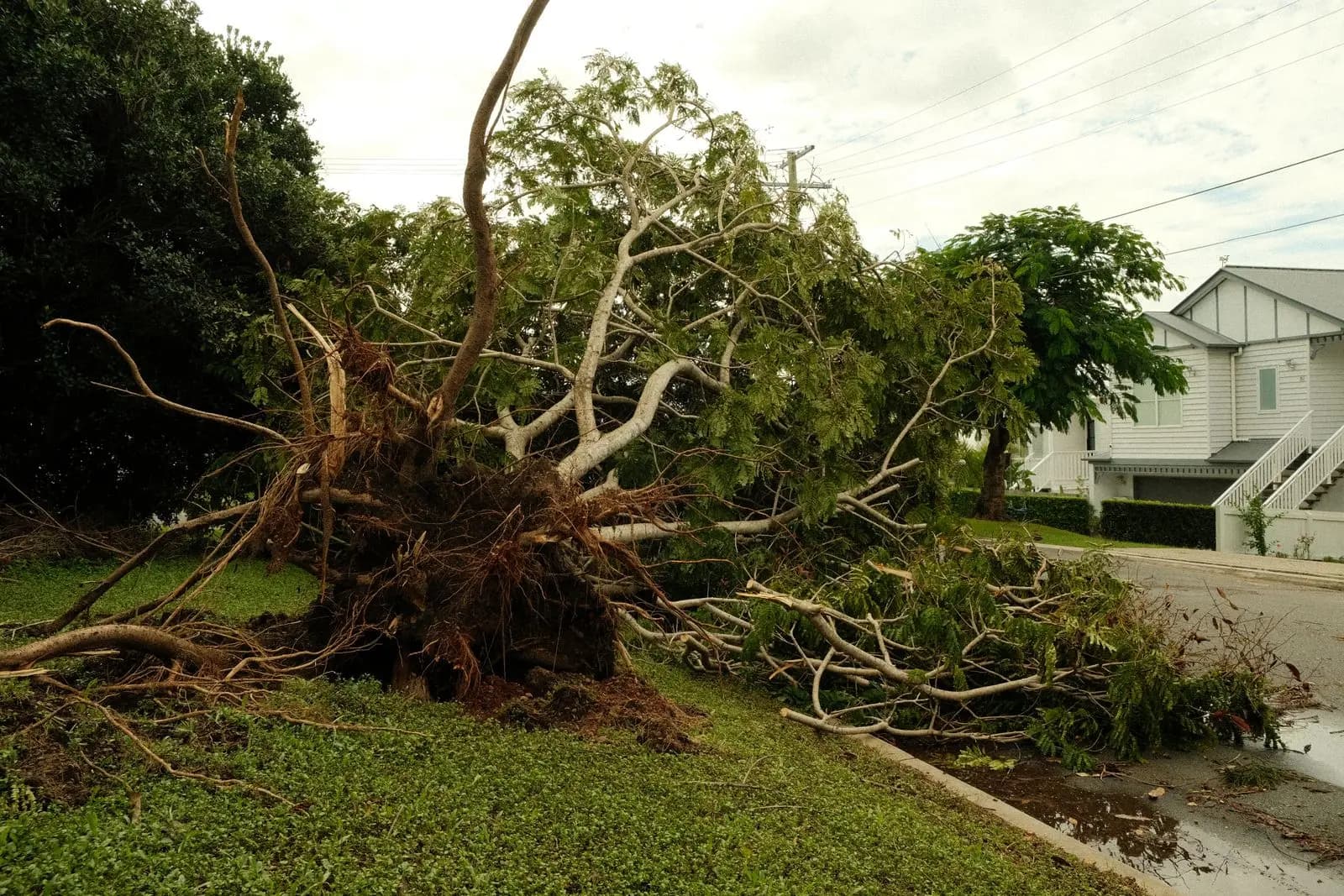
First hour: match your situation to the right move
Find the row that fits. The left column is what you see, the right column is what to do before anyone starts a saw.
- Act now
A tree or limb is touching a power line, or a line is down
Stay at least 35 feet back, keep others away and call 911 and your electric utility. No tree crew can start until the utility confirms the line is dead.
- Act now
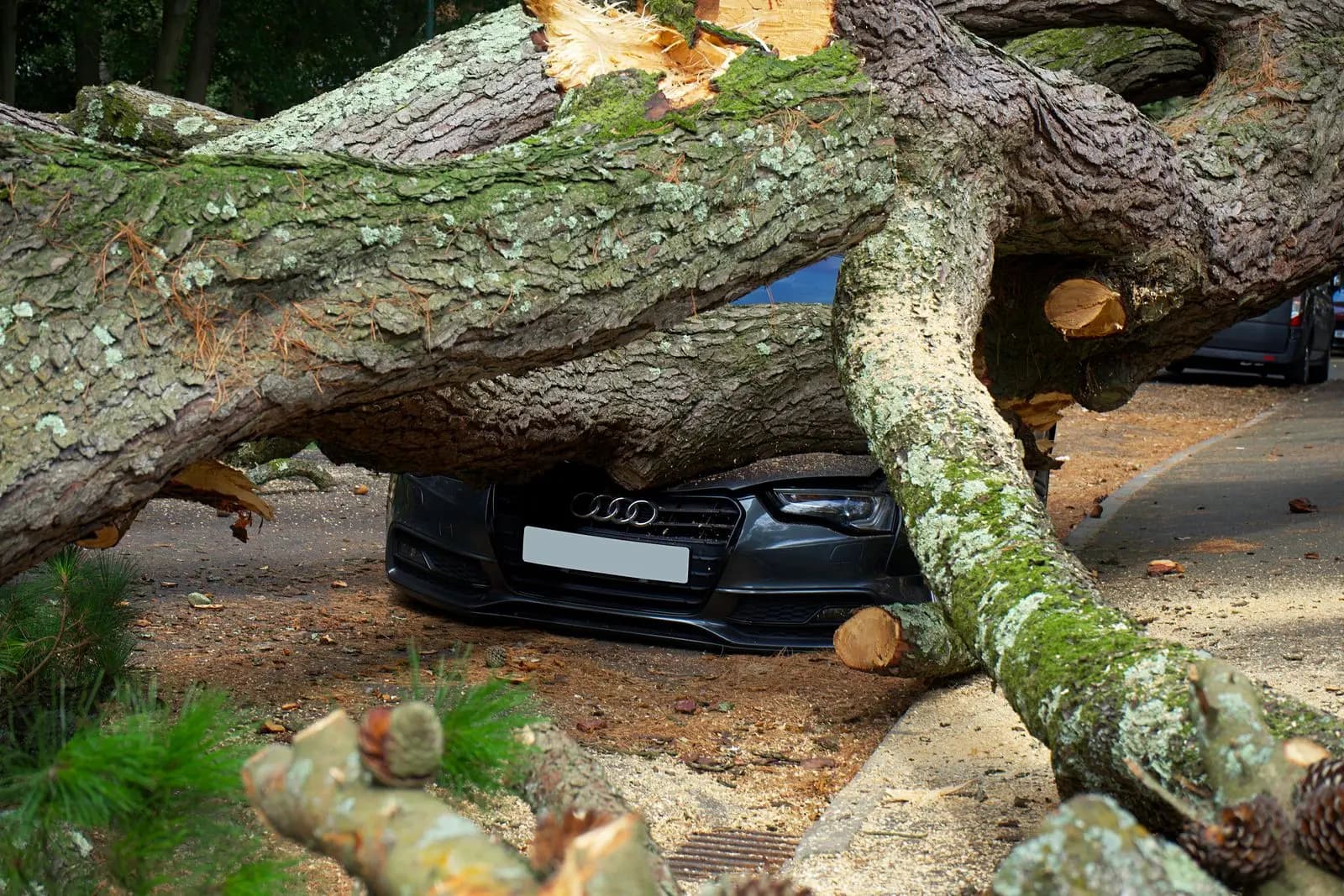
A tree has come through the roof or wall
Get everyone out of the damaged rooms. If you smell gas or see sparking, leave the house and call 911. Then call your insurer and a tree service.
- Act now
Someone is trapped or hurt
Call 911. Do not try to cut or lift the tree.
- Act now
A tree is cracking, or the ground at its base is lifting
Clear the area under it, including cars if you can do so safely, and call for emergency removal.
- This week
A tree is blocking the only driveway or exit
Call for removal and say that access is blocked. That detail raises the priority and can matter for insurance.
- Plan it
A tree is down in the yard and touching nothing
This is not an emergency. Book fallen tree removal at regular rates.
What counts as an emergency, and what can wait until morning
Tree companies charge more for night, weekend and mid-storm work. Published guides put the premium at 50 to 100 percent over standard pricing. Knowing which calls are true emergencies saves money without adding risk.
An emergency involves ongoing danger or ongoing damage: weight still resting on a roof, rain entering the house, a blocked exit, a trunk that is actively failing over a target. A tree lying across the lawn at 2 a.m. is neither. It will be in the same place at 8 a.m., when a crew can see what it is doing.
Many emergency visits are split in two. The first trip makes things safe: lift the tree off the structure, clear the driveway, take the weight off a failing limb. Full cleanup, hauling and stump work follow in daylight at normal rates.
How an emergency crew makes a site safe
Size-up
The crew lead walks the scene looking for lines, gas meters, hanging limbs and where the tree's weight is bearing. Photos are taken before anything moves.
Stabilize
Straps, a crane or a second rope hold the tree so it cannot roll or drop farther when cutting starts.
Relieve the load
Limbs and trunk sections are removed from the outside in. On a roof, pieces are lifted away so no extra weight comes down.
Hand off to the roofer
Once the tree is off the structure the opening can be tarped. Some tree companies tarp, and many leave it to a roofer or restoration firm.
Return for cleanup
Brush chipping, log removal and stump work are scheduled as a second visit unless you ask for everything at once.
Why this is not a do-it-yourself job
Storm cleanup injures and kills people every year, mostly homeowners with chainsaws. These are the specific hazards.
Wood under tension
A bent trunk or pinned limb stores energy. Cut in the wrong place and it whips or the trunk kicks sideways.
Root plates that stand back up
When weight is cut off an uprooted tree, the root ball can snap upright in a second.
Hidden lines
A wire tangled in branches may be energized even when the neighborhood is dark, especially where generators are running.
Hangers overhead
Broken limbs lodged in the crown fall without warning while people work beneath.
Unstable structures
A roof carrying a tree may be the only thing holding the tree up. Removing weight in the wrong order collapses both.
Who handles which part
| Problem | Call | Why |
|---|---|---|
| Injury, fire, gas smell, live wire | 911 | Life safety comes first, and responders can order the power cut. |
| Tree on utility lines pole to pole | Electric utility | Only the utility or its line-clearance contractor may work near energized conductors. |
| Tree on the line from pole to your house | Utility first, then a tree service | The utility disconnects it. Clearing the tree and repairing the mast is usually the owner's job. See tree on a power line. |
| Tree on house, garage, fence or car | Tree service and your insurer | Removal from a covered structure is typically part of the claim. |
| Tree across a public street | City or county public works | Right-of-way clearing is a government function. |
| Open roof after the tree is lifted | Roofer or restoration company | Tarping stops water damage while repairs are arranged. |
What emergency removal costs
Published 2026 figures put emergency removals at about $450 to $3,000 in common cases, and $1,500 to $5,000 or more when a crane or utility coordination is involved. The emergency tree removal cost guide explains the ranges.
- Timing
- Nights, weekends, holidays and the first days after a regional storm carry the highest rates.
- What the tree is on
- Lifting a trunk off a roof needs a crane or careful rigging. Clearing a driveway needs a saw and a truck.
- Tree size
- Weight determines the equipment.
- Make-safe versus full cleanup
- Limiting the first visit to essentials keeps premium-rate hours low.
- Regional demand
- After a hurricane or ice storm every crew is booked. Prices rise and waits lengthen.
Protect the insurance claim while you wait
Photograph everything before it is moved: the whole tree, the base or break, each point of contact with the building, and the interior damage. Short videos help.
Call your insurer early. Policies generally require you to prevent further damage, and reasonable emergency costs such as lifting the tree off the roof and tarping are usually part of a covered claim. Keep every receipt.
Coverage for the tree work itself is often capped, commonly around $500 per tree and $1,000 per event, and usually applies only when the tree hit an insured structure or blocks a driveway. The insurance guide explains the usual rules and limits.
Emergency tree removal questions
Is emergency tree service available at night?
Many tree companies take urgent calls after hours, but availability depends on the area, the weather and how many crews are already out. Work near structures in the dark is slower and riskier, so some companies stabilize at night and finish at first light.
Should I call my insurance company or a tree service first?
If water is entering the house or the structure is unstable, call a tree service first, then the insurer. You are expected to limit further damage. Otherwise, a quick call to the insurer first can clarify what documentation they want.
Can I remove a protected tree without a permit in an emergency?
Most tree ordinances allow immediate removal of a tree that poses an imminent danger, with notice or paperwork afterward. Take photos showing the hazard before work starts and check your city page for the local rule.
A tree fell on my house. What should I do first?
Get everyone out of the affected rooms, stay away from any wires, and call 911 if there is a gas smell, sparking or injury. The step-by-step list is in the tree fell on house guide.
Need a crew to look at it today?
Call and describe what the tree is on and whether lines are involved. You are connected with an independent tree company that handles urgent work in your area.
(888) 555-0142Call availability varies by area and time of day
Limbwright is a referral service. Your call or request goes to an independent tree service company that sets its own prices and schedule. Ask for proof of insurance and a written scope before work starts. How this works
Request a callback
Leave a number and a tree service provider in your area will call you.