
Tree care
Tree Trimming and Pruning
Tree trimming and pruning both mean selectively removing branches. Done to the industry standard, it takes out dead and weak wood, clears buildings and lines, and improves structure without removing more than about a quarter of the live crown in a year.
Call availability varies by area and time of day. Calls are answered by an independent tree service provider.
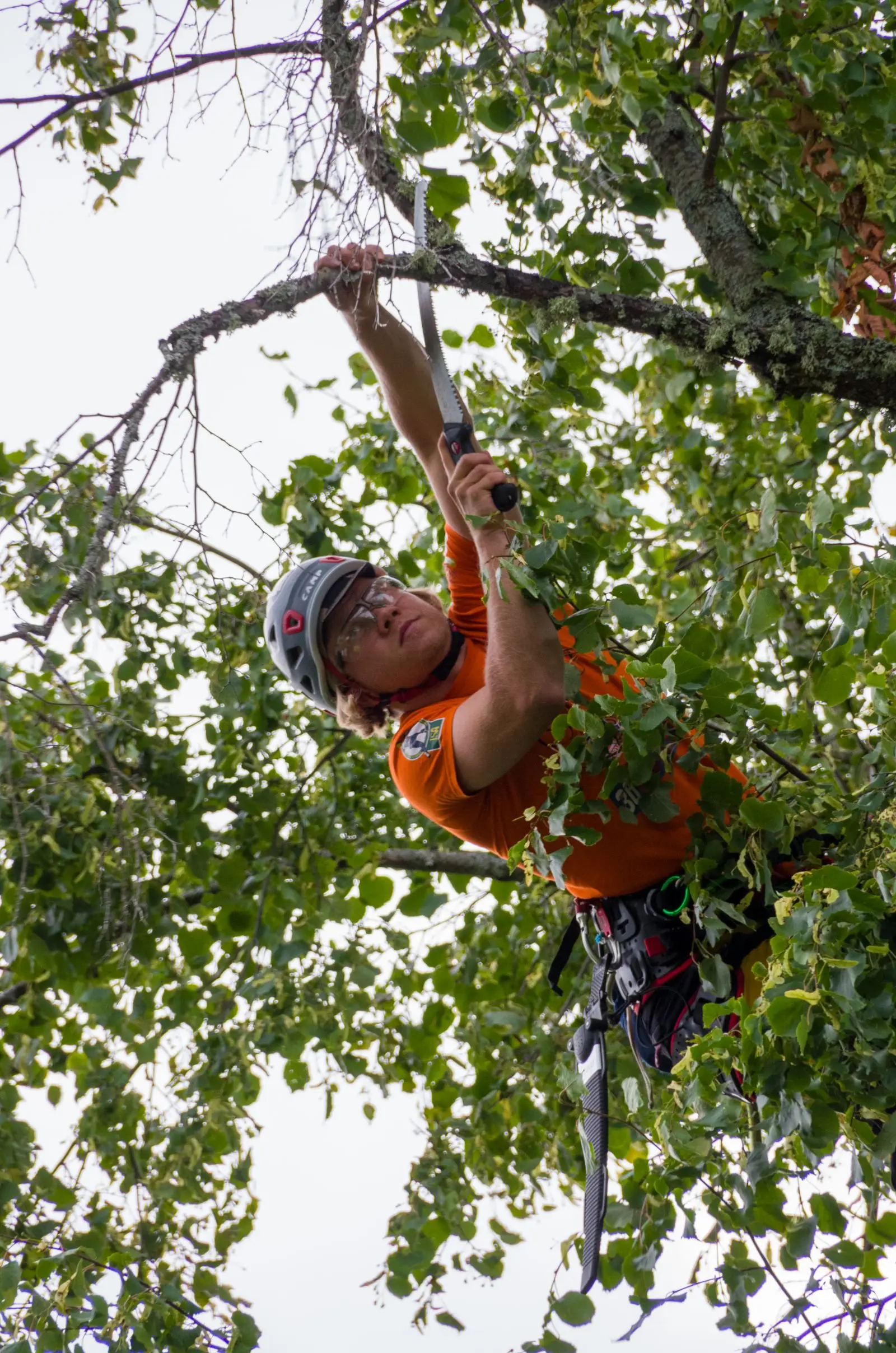
Is tree trimming different from tree pruning?
In practice, no. Homeowners say trimming, arborists say pruning, and both describe cutting selected branches for a stated purpose. The standard that governs the work in the U.S. is ANSI A300.
- How people use the words
- "Trimming" often implies shaping and clearance. "Pruning" often implies health and structure. A written quote should name the objective either way.
- What a quote should state
- The pruning type, the branch size range and roughly how much of the crown will be removed.
- What it should never include
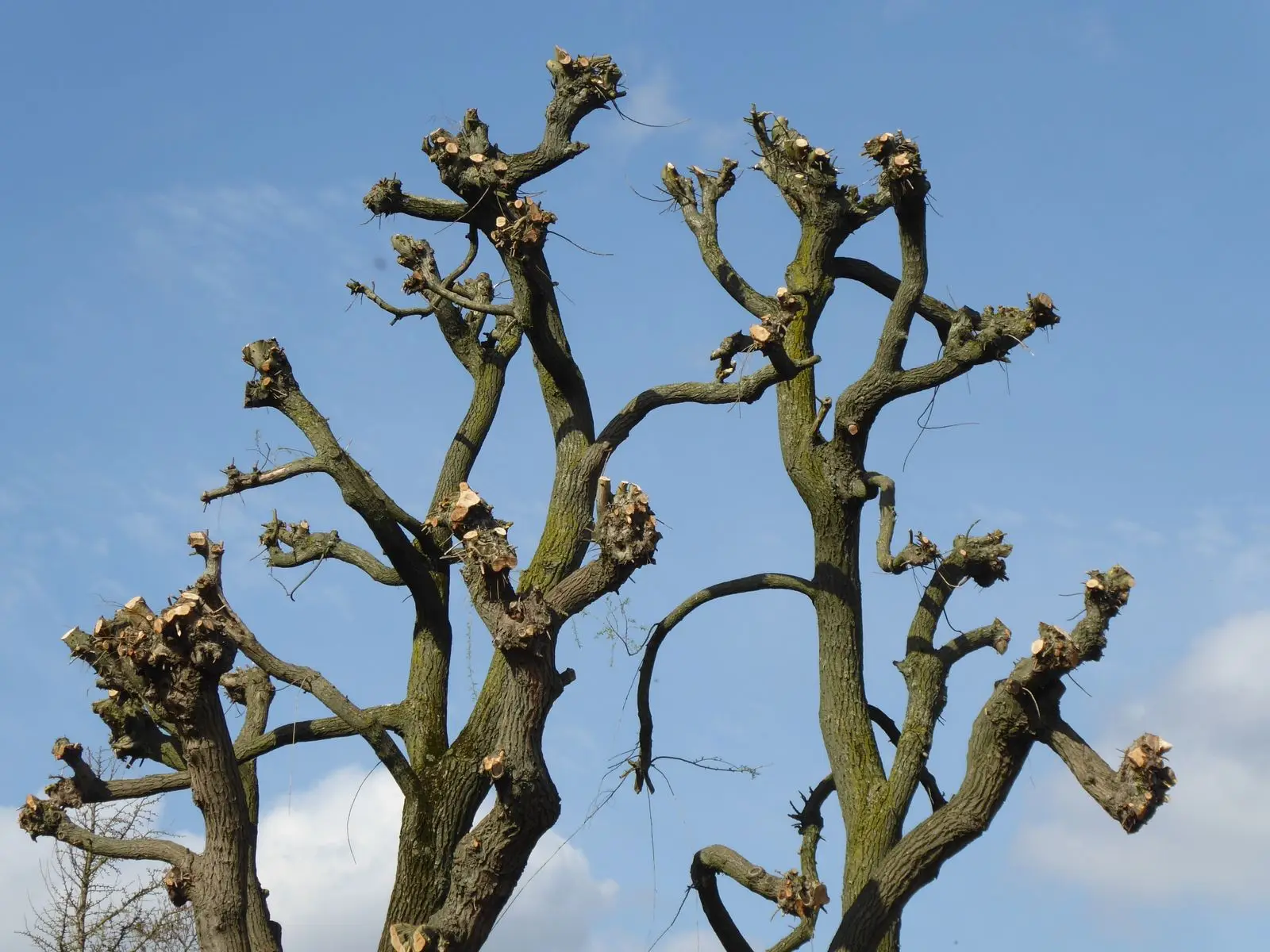
- Topping, meaning cutting main limbs back to stubs. ANSI A300 treats it as an unacceptable practice.
The standard pruning types and what each is for
| Type | What is cut | Purpose |
|---|---|---|
| Crown cleaning | Dead, dying, broken and diseased branches | Safety and health. The most common residential request. |
| Crown thinning | Selected live branches throughout the crown | Lets wind and light through. Kept light, since over-thinning weakens limbs. |
| Crown raising | Lowest branches | Clearance over driveways, sidewalks, roofs and sight lines. |
| Crown reduction | Branch ends, cut back to smaller side branches | Lowers height or spread, or takes weight off a long limb. The proper alternative to topping. |
| Structural pruning | Competing leaders and poorly attached limbs on young trees | Builds a strong frame early and prevents expensive failures later. |
| Clearance pruning | Branches near buildings, lights, signs and service lines | Keeps a set distance from a structure. |
What bad pruning looks like
Poor work can shorten a tree's life by decades. These are the marks to watch for, and reasons to turn down a quote.
Topping
Large limbs cut to stubs. The dense sprouts that follow are weakly attached and grow fast, so the tree becomes more hazardous and needs cutting again sooner.
Lion-tailing
Every inner branch stripped, leaving foliage only at the tips. Weight shifts outward and limbs snap.
Flush cuts
Cutting into the branch collar, the swollen ring where the branch meets the trunk. The collar is what seals the wound.
Climbing spikes on a live tree
Spurs puncture bark with every step. They are for removals only.
Taking too much
More than roughly 25 percent of live foliage in one season starves the tree.
When to prune common yard trees
Dead and hazardous branches can come off in any month. For live wood, timing depends on the species and the diseases active in your region.
| Tree | Preferred window | Reason |
|---|---|---|
| Oaks in oak wilt areas (Texas, Upper Midwest) | Mid-summer through winter. Avoid February to June in Texas and April to July in the Upper Midwest | Sap beetles that carry the fungus are drawn to fresh spring wounds. |
| Elms | Late fall and winter | Avoids the flight season of the beetles that spread Dutch elm disease. |
| Maples, birches, walnuts | Mid-summer, or late fall after leaf drop | They bleed sap heavily in late winter. Harmless, but messy. |
| Spring-flowering trees (dogwood, redbud, cherry) | Right after bloom | Next year's flower buds form in summer. |
| Most other deciduous shade trees | Late winter, while dormant | Structure is visible and wounds begin closing with spring growth. |
| Pines and other conifers | Late winter. Dead branches at any time | Fresh cuts in warm months attract bark beetles in some regions. |
| Palms | When fronds are fully brown | Removing green fronds weakens the palm. The "hurricane cut" does not protect it. |
Branches over the roof, the drive and the wires
Most trimming calls start with a specific branch: one scraping shingles, one hanging over the cars, one tangled in the line to the house.
Roof clearance of a few feet stops abrasion, keeps squirrels and raccoons from an easy bridge, and lets shingles dry. A large limb over the house is not a problem if it is sound and well attached. Removing it leaves a big wound and may unbalance the tree, so reducing its length is often the better fix.
Wires are different. The line from the pole to your house is generally the owner's responsibility to keep clear, but it is still energized. Pruning within about 10 feet of power lines is restricted to qualified line-clearance workers. Read tree on a power line before anyone goes near it, and call the utility about any branch on the pole-to-pole lines.
What changes a trimming quote
National guides put typical residential pruning at a few hundred dollars per tree, rising past $1,000 for very large trees. The tree trimming cost guide lists ranges by size.
- Tree height
- Height determines whether the job needs a climber, a bucket truck or only a pole saw.
- Scope
- Deadwood removal across a big crown takes far longer than raising a few low limbs. Multi-tree sites are priced differently, as described under commercial tree services.
- Targets and access
- Branches over a roof are lowered on ropes. Branches over lawn are dropped.
- Time since last pruning
- A neglected tree has years of dead wood and crossing limbs to sort out.
- Debris
- Chipping and hauling are usually included, but confirm it.
What a pruning visit looks like
Agree on the objective
You and the crew lead walk the tree and agree on which limbs and why: clearance, dead wood, weight reduction.
Access without spikes
The climber goes up on rope and saddle, or the work is done from a bucket.
Cut to the collar
Each branch is removed at its union or shortened to a side branch large enough to take over. Big limbs get a three-cut sequence so bark does not tear.
Lower what could do damage
Anything above a roof, fence or planting is roped down.
Check from the ground
The crown should look like a slightly lighter version of the same tree, not a different shape.
Trimming and pruning questions
How often should trees be trimmed?
Mature shade trees generally need attention every three to five years, young trees every two to three years for structure, and fast growers near buildings more often. Inspect after any major storm.
Can I trim my neighbor's tree where it hangs over my yard?
In most states you may cut branches back to the property line at your own expense, provided the work does not kill or seriously harm the tree. Going past the line or damaging the tree can make you liable. Talk to the neighbor first.
Should pruning cuts be painted or sealed?
Generally no. Research shows wound dressings do not help closure. The exception is oaks in oak wilt regions, where painting fresh cuts right away keeps sap beetles off.
Will trimming make my tree safer in a storm?
Proper pruning helps. Removing dead wood and reducing overextended limbs lowers the chance of breakage. Topping and heavy thinning do the opposite. For a tree with a known defect, get a risk assessment first.
Talk to a tree trimming provider
Call to be connected with an independent tree service company near you, or leave your number and one will call back.
(888) 555-0142Call availability varies by area and time of day
Limbwright is a referral service. Your call or request goes to an independent tree service company that sets its own prices and schedule. Ask for proof of insurance and a written scope before work starts. How this works
Request a callback
Leave a number and a tree service provider in your area will call you.