
Inspection
Tree Risk Assessment
A tree risk assessment is a systematic inspection, normally by an arborist holding the ISA Tree Risk Assessment Qualification (TRAQ), that rates the likelihood of a tree or branch failing, the chance it hits a target and how serious that would be. The result is a risk rating and a list of options, not just an opinion.
Call availability varies by area and time of day. Calls are answered by an independent tree service provider.
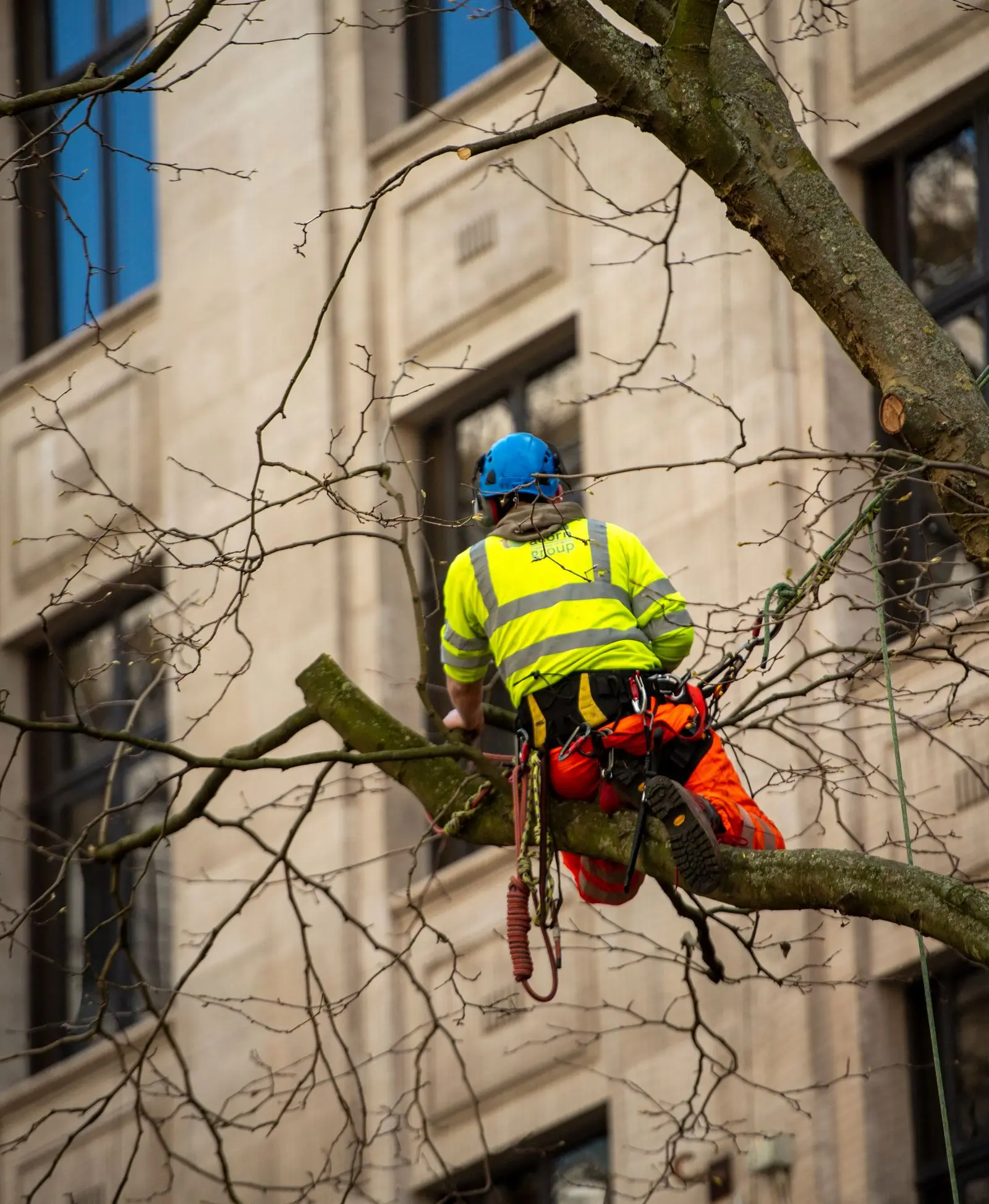
What does a tree risk assessment tell you?
It tells you how much risk a specific tree poses to specific targets over a stated time frame, and what would reduce that risk. It does not promise the tree is safe.
- A rating
- Low, moderate, high or extreme, for each tree part of concern.
- The reasoning
- The defects found, the targets within reach and how often they are occupied.
- Options
- Pruning, cabling, moving the target, monitoring or removal, with the risk remaining after each.
- A time frame
- Commonly one to three years. Trees change, so a rating expires.
The three levels of assessment
The levels come from the ISA's best management practices. Agree on the level before the visit, because it sets the price and the depth.
| Level | What is done | Used for |
|---|---|---|
| Level 1: Limited visual | A walk-by or drive-by looking for obvious defects | Screening many trees, such as an HOA, campus or street inventory. See commercial tree services. |
| Level 2: Basic | A full 360-degree ground inspection of roots, trunk and crown with simple tools | The standard for a single tree at a home. Most permit and insurance requests. |
| Level 3: Advanced | Climbing or aerial inspection, decay testing with a resistance drill or sonic tomography, root excavation | High-value trees, or when Level 2 finds something that cannot be judged from the ground |
What the assessor examines
A Level 2 inspection works from the ground up, then outward to the surroundings.
- Site
- Recent grading, trenching, new pavement, drainage changes and exposure to prevailing wind.
- Root zone and flare
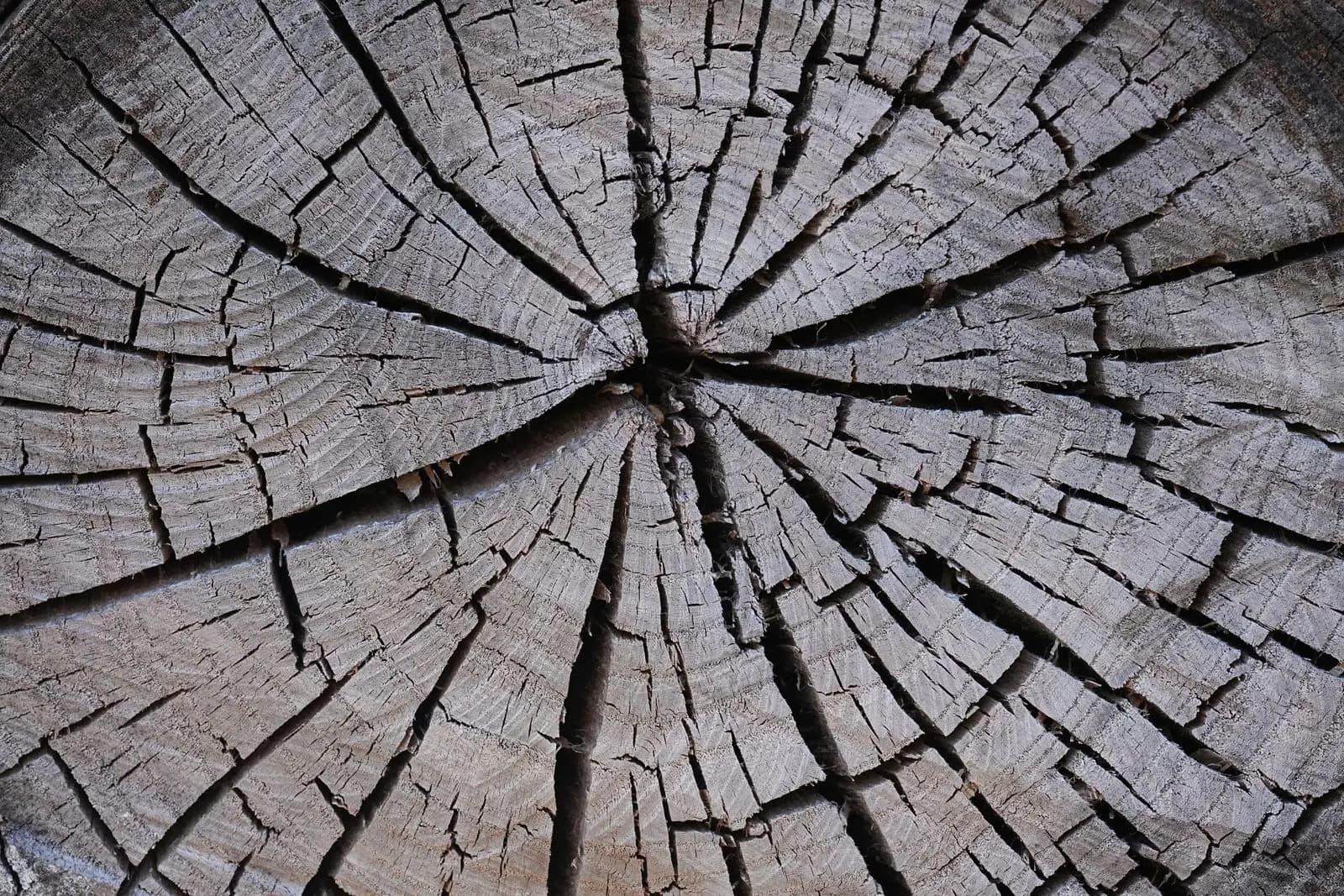
- Heaving, cut roots, girdling roots, fungal fruiting bodies and whether the flare is buried.
- Trunk
- Cracks, cavities, cankers, bulges, lean and the sound of the wood when tapped.
- Branch unions
- Included bark, codominant stems, old wounds and previous failures.
- Crown
- Dead wood, dieback, leaf size and color, and end-heavy limbs.
- Targets
- What is within reach, its value, and how many hours a day people are there.
Tools that see inside a tree
Most assessment is done with eyes, a mallet and a probe. Sound wood rings when struck and decayed wood thuds. A thin probe pushed into a cavity shows how far it goes.
When the amount of sound wood decides whether a tree stays, Level 3 tools come out. A resistance drill pushes a needle a few millimeters wide through the trunk and charts how hard the wood pushes back, exposing hollows and soft zones. Sonic tomography times sound waves between sensors placed around the trunk and maps the cross-section. An air spade blows soil away from roots without cutting them, so root decay and girdling can be inspected directly.
These tests add cost and are worth it mostly for large trees over high-value targets, or for protected trees where the city requires evidence before allowing removal.
When an assessment is worth paying for
- Act now
The ground at the base is lifting, or the trunk has a new crack
Do not wait for a report. Keep clear and call about emergency removal.
- This week
Mushrooms or conks have appeared on the trunk or roots
Book a Level 2 assessment. Decay extent decides the outcome.
- This week
A storm took out large limbs but the tree is standing
Have the remaining structure inspected before deciding to keep it.
- This week
Your city or state requires documentation to remove a tree
Get the report first. Florida's residential exemption, for example, depends on a signed assessment, as the Orlando page explains.
- Plan it
You are buying a house with large trees near it
Add an arborist's inspection to the due-diligence period. Home inspectors do not assess trees.
- Plan it
Construction or trenching is planned near a mature tree
Assess before work starts so root protection can be designed in.
What the written report is, and is not
A written assessment identifies the tree, the date, the level of inspection, the defects found, the targets, the rating and the recommended options. It should name the assessor and their credential. Florida law, for instance, requires the document to be signed by an ISA Certified Arborist or a Florida-licensed landscape architect.
It is a snapshot. The rating assumes normal weather and holds for the stated time frame. Any healthy tree can fail in a severe enough storm, and no arborist can certify otherwise.
Keep the report with your property records. It supports a permit application, shows an insurer or neighbor that you acted responsibly, and gives the next assessor a baseline.
A formal assessment versus an opinion during an estimate
Opinion from a removal estimator
- Usually no charge, as part of quoting the work
- Verbal, or a line on the quote
- Useful for obvious cases: dead, split, uprooted
- Comes from someone who earns money if the tree is removed
Formal Level 2 or 3 assessment
- A paid service with a written, signed report
- Follows a published method and a standard form
- Accepted for permits, HOA requests and disputes
- Can be ordered from a consulting arborist who does not sell removals
For a clearly dead tree the free opinion is enough. For a living tree where the answer is not obvious, or where a permit or a neighbor is involved, pay for the report.
After the assessment
- Hazardous tree removalWhen the rating is high and mitigation will not bring it down.
- Pruning to reduce riskDead wood removal and weight reduction on defective limbs.
- Leaning tree guideHow to tell a harmless lean from a failing root plate.
- Florida tree rulesHow the state's documentation exemption works for homeowners.
Talk to a tree risk assessment provider
Call to be connected with an independent tree service company near you, or leave your number and one will call back.
(888) 555-0142Call availability varies by area and time of day
Limbwright is a referral service. Your call or request goes to an independent tree service company that sets its own prices and schedule. Ask for proof of insurance and a written scope before work starts. How this works
Request a callback
Leave a number and a tree service provider in your area will call you.