
Removal · Risk
Hazardous Tree Removal
A hazardous tree is one with a defect likely to cause failure and a target within reach: a house, a driveway, a line, a place people sit. Removal is the answer when pruning, cabling or moving the target cannot bring that risk down to an acceptable level.
Call availability varies by area and time of day. Calls are answered by an independent tree service provider.
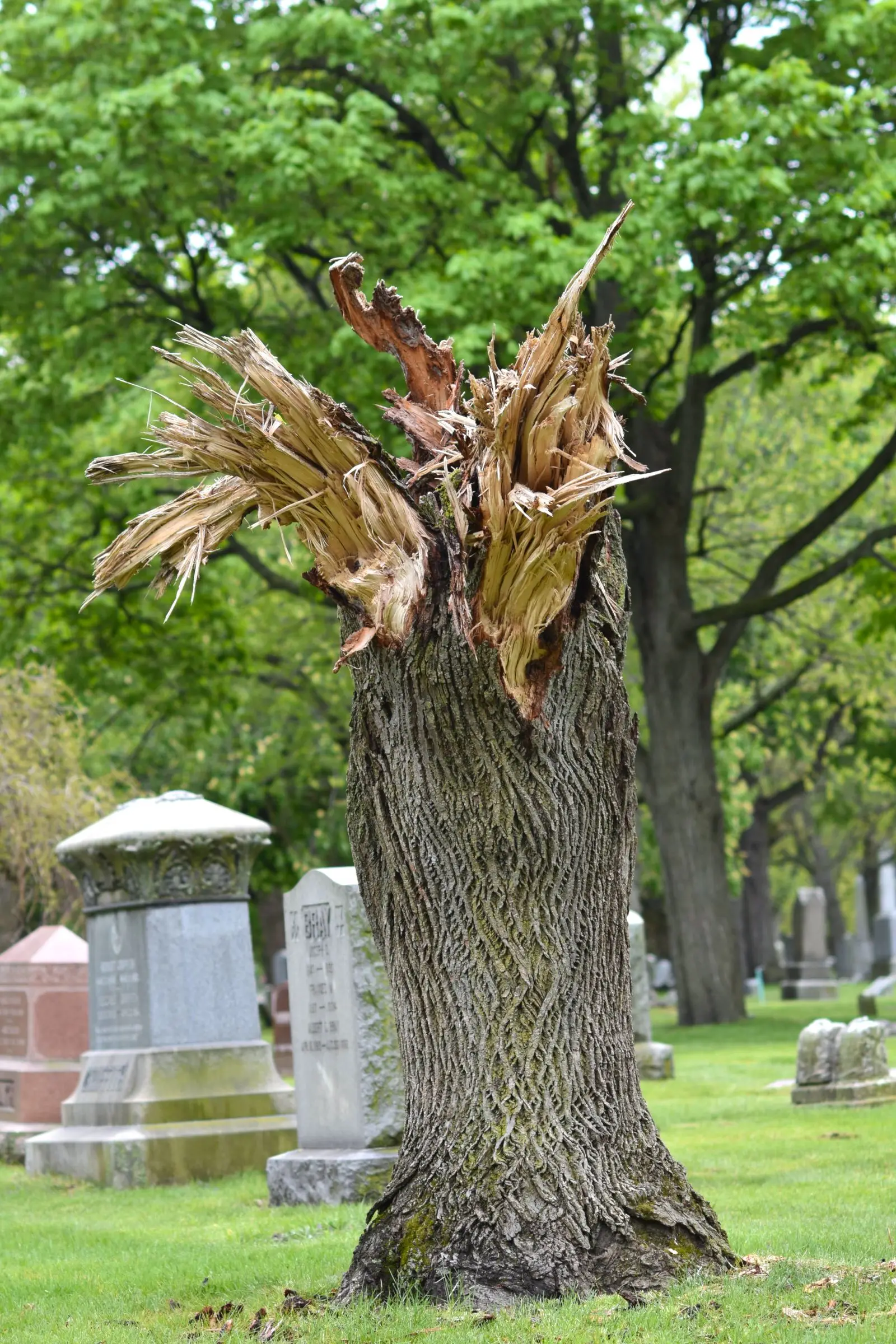
Defect plus target: what makes a tree a hazard
Every tree will fail eventually. Arborists call a tree hazardous only when two things are true together: some part of it is likely to fail, and that part would land on something that matters.
A hollow oak in the back corner of five wooded acres is a habitat tree. The same oak beside a bedroom is a hazard. That is why the first question an assessor asks is not "how bad is the tree?" but "what is under it, and how often?"
The pairing also explains why removal is not the only fix. Reduce the defect, or move the target, and the risk changes.
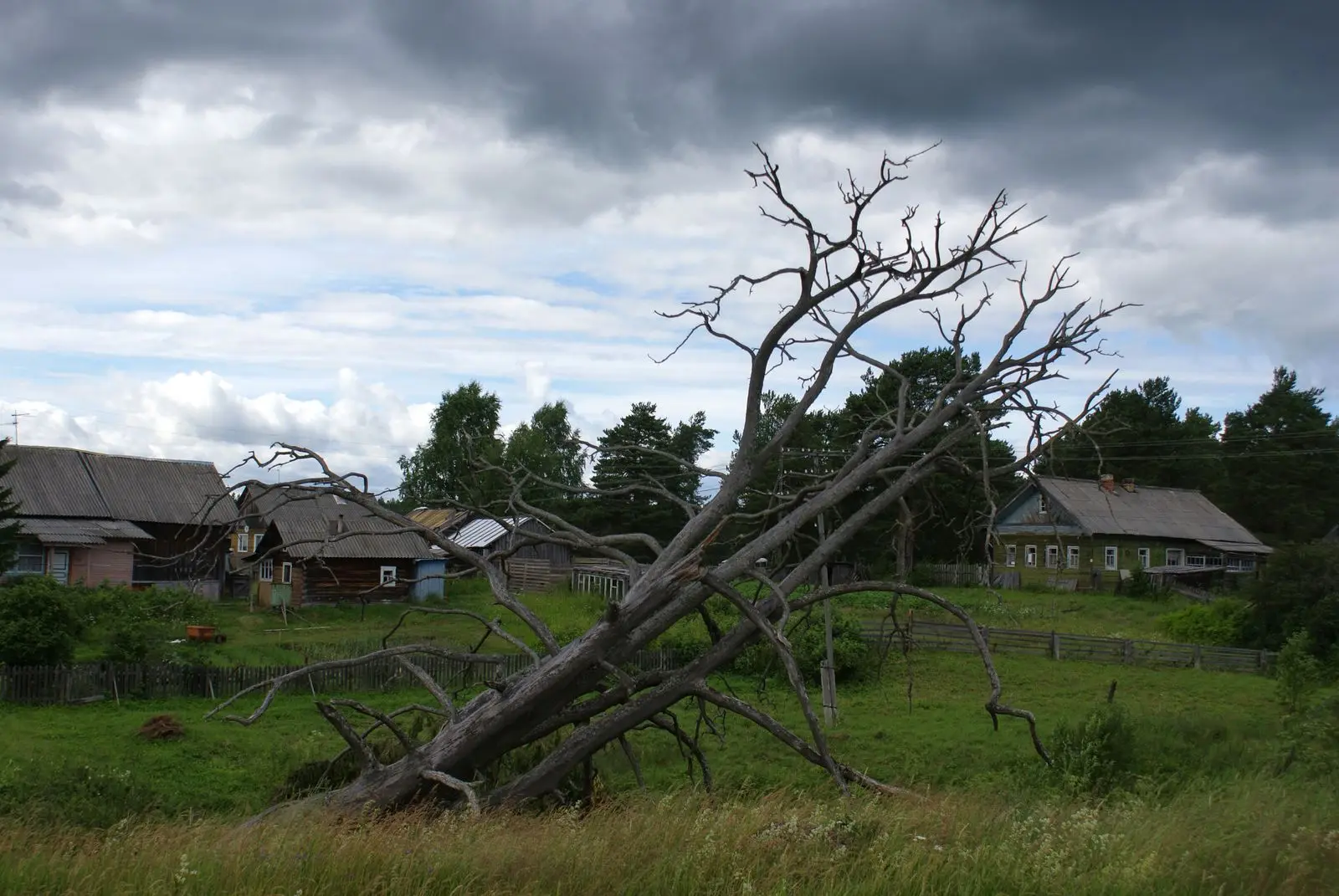
Structural defects worth a phone call
Any one of these on a tree that could reach a building, vehicle or line deserves a professional look.
Cracks in the trunk
Especially a vertical crack that goes through the stem, or two cracks on opposite sides.
Soil lifting or cracking at the base
A mound or gap on the side opposite the lean means the root plate is moving.
A new or increasing lean
Trees that grew crooked are usually stable. Trees that recently shifted are not.
Codominant stems with included bark
Two trunks joined in a tight V with bark pinched between them split under load.
Cavities and soft wood
A hollow base, open cavity or wood you can push a screwdriver into.
Fungal conks
Shelf fungi on the trunk or roots are the fruiting bodies of decay already inside.
Large dead limbs or hangers
Dead branches over two inches in diameter, or broken limbs lodged in the crown.
How arborists rate tree risk
The ISA method combines how likely a failure is to hit the target with how severe the result would be. The rating guides the response and its urgency.
| Rating | What it means | Usual response |
|---|---|---|
| Low | Failure is unlikely, or would cause minor damage. | No action beyond routine inspection. |
| Moderate | Failure is possible and consequences are noticeable. | Monitor, or mitigate at the owner's discretion. |
| High | Failure is likely with significant consequences, or possible with severe ones. | Mitigate soon: prune, cable, restrict access or remove. |
| Extreme | Failure is imminent and would be severe. | Keep people away and act immediately. This is an emergency removal. |
Ratings apply to a stated time frame, usually one to three years, and to normal weather. A formal rating comes from a tree risk assessment.
Can a leaning tree be dangerous?
Yes, when the lean is new, increasing, or paired with soil movement or root damage. A tree that has leaned the same way for decades and has grown extra wood to compensate is often stable.
- Root movement
- Heaved or cracked soil on the high side, or exposed roots that were buried before, signal active failure.
- Soil
- Saturated ground after days of rain loosens root grip, and many leaning trees go over in the first wind afterward.
- Trunk defects
- A crack, cavity or decay on the compression side under the lean concentrates stress where the wood is weakest.
- Recent storms
- A lean that appeared after wind means some roots have already broken.
- Natural lean
- A curved trunk with an upright top grew toward light and has adapted to its shape.
- Professional assessment
- Angle alone does not settle it. The leaning tree guide explains what an assessor checks.
Mitigation short of removal
Removal eliminates the risk and the tree. These options reduce one and keep the other.
Options that keep the tree
- Remove the defective limb or reduce end weight on overextended branches
- Install a cable between codominant stems, with a brace rod where needed
- Move the target: shift a play set, parking spot or bench out of the fall zone
- Reinspect on a schedule and after major storms
When they are not enough
- Decay or cracking involves the lower trunk or root flare
- The root plate is moving
- The target is a house and cannot be moved
- The tree would need so much cut away that little sound crown remains
Cables and reduction pruning need follow-up inspections. Skipping those turns a managed tree back into an unmanaged risk.
What knowing about the hazard means for you
In most states a property owner is expected to act once they know, or reasonably should know, that a tree is dangerous. A healthy tree that falls in a storm is generally treated as an accident. A visibly dead or defective tree that falls after a neighbor's written warning is treated very differently.
Practical steps: photograph the defect with the date, get an arborist's opinion in writing, and act on it. If the tree belongs to a neighbor, send a polite dated letter with photos. The neighbor's tree guide covers how responsibility usually divides.
This is general information, not legal advice. Liability rules vary by state.
From phone call to a cleared yard
Describe what you see
Lean direction, cracks, what is underneath. If failure looks imminent, say so, because it changes how fast a company responds.
On-site evaluation
The company confirms the defect and whether the tree is safe to climb or needs a lift or crane.
Permit check
In regulated cities a hazardous tree usually qualifies for a faster or no-fee permit, but documentation is still needed.
Controlled dismantling
Weight is taken off the defect first. Sections are kept small because damaged wood behaves unpredictably.
Stump and follow-up
Decay in the stump shows how far the problem went and whether nearby trees share it.
Where to go from here
Talk to a hazardous tree removal provider
Call to be connected with an independent tree service company near you, or leave your number and one will call back.
(888) 555-0142Call availability varies by area and time of day
Limbwright is a referral service. Your call or request goes to an independent tree service company that sets its own prices and schedule. Ask for proof of insurance and a written scope before work starts. How this works
Request a callback
Leave a number and a tree service provider in your area will call you.