
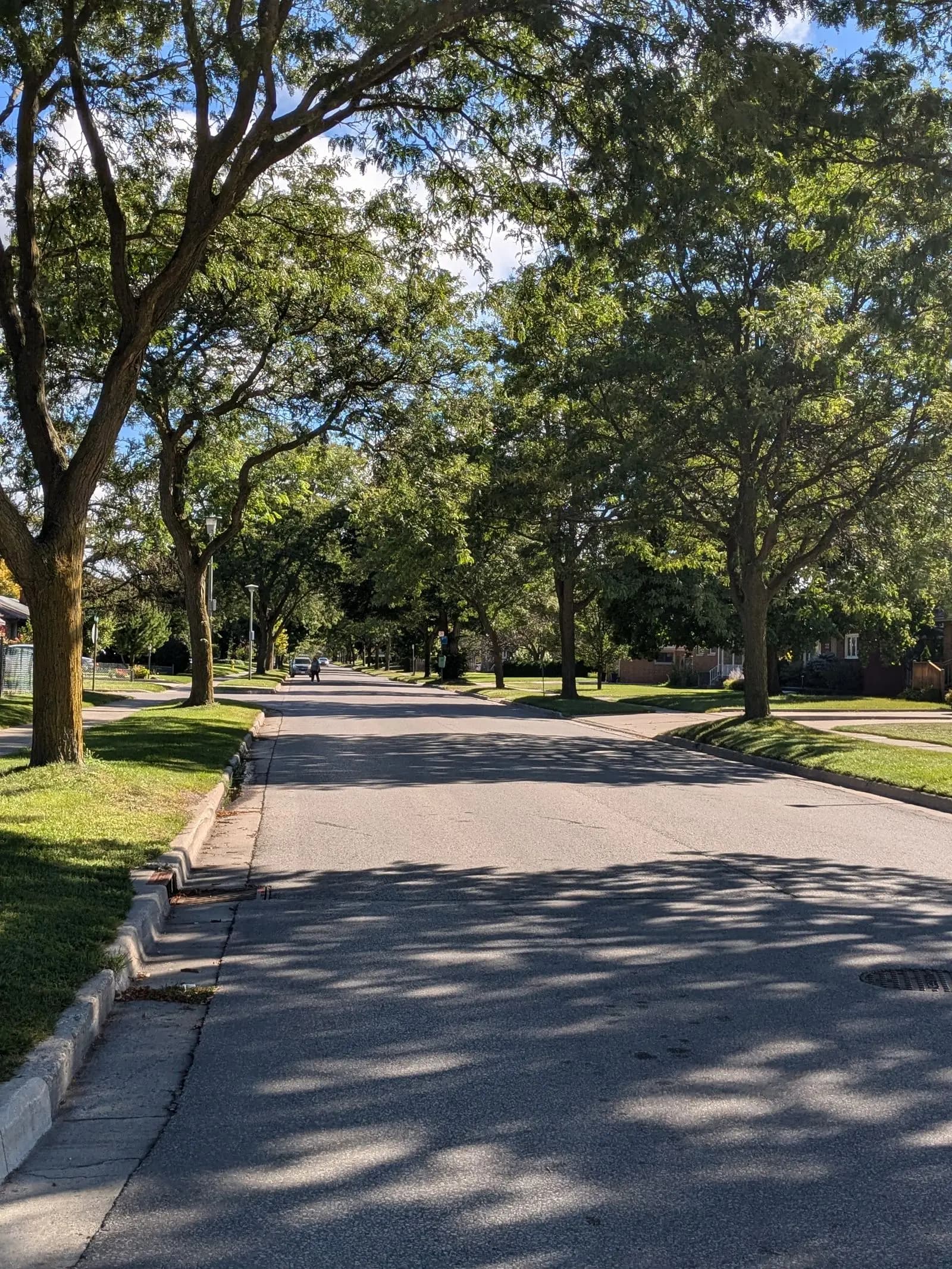
Raleigh, North Carolina
Tree Removal and Tree Service in Raleigh
Raleigh calls itself the City of Oaks, and it is equally a city of tall loblolly pines. On an existing single-family lot the city generally does not require a permit to remove a tree, though street trees and historic districts are exceptions.
- County
- Wake
- Tree rules
- City of Raleigh Urban Forestry for street trees. UDO tree conservation for development sites.
- Key local rule
- Street trees are city property. Private trees on existing single-family lots are generally unregulated.
- Electric utility
- Duke Energy
- Main hazards
- Hurricanes, ice storms, tornadoes, summer thunderstorms
Do you need a permit to remove a tree in Raleigh?
Usually not, for a tree on your own existing single-family lot. Raleigh's tree conservation rules are aimed at new development, not at homeowners.
- Street trees
- Any tree in the public right-of-way belongs to the city. Pruning or removing one requires permission from Urban Forestry.
- Historic districts
- In Oakwood, Boylan Heights and other historic overlay districts, removing a large tree can require a Certificate of Appropriateness.
- Conservation overlays and recorded tree areas
- Some newer subdivisions have tree conservation areas on the plat that cannot be cleared.
- Neighboring towns
- Cary, Apex, Wake Forest and Garner each have their own ordinances.
Fran, the 2011 tornado and the ice
Hurricane Fran came inland on the night of September 5, 1996 and reached Raleigh with gusts near 80 miles per hour after days of rain. The city lost a staggering share of its mature trees in a few hours, and many houses were hit by more than one.
On April 16, 2011, a tornado tracked from the south side through downtown's eastern edge and northeast Raleigh, snapping pines and uprooting oaks along a narrow path.
Ice storms fill in the gaps between. December 2002 was the worst in recent memory, and smaller glaze events arrive every few winters. Pines carry the load on their needles and fail first.
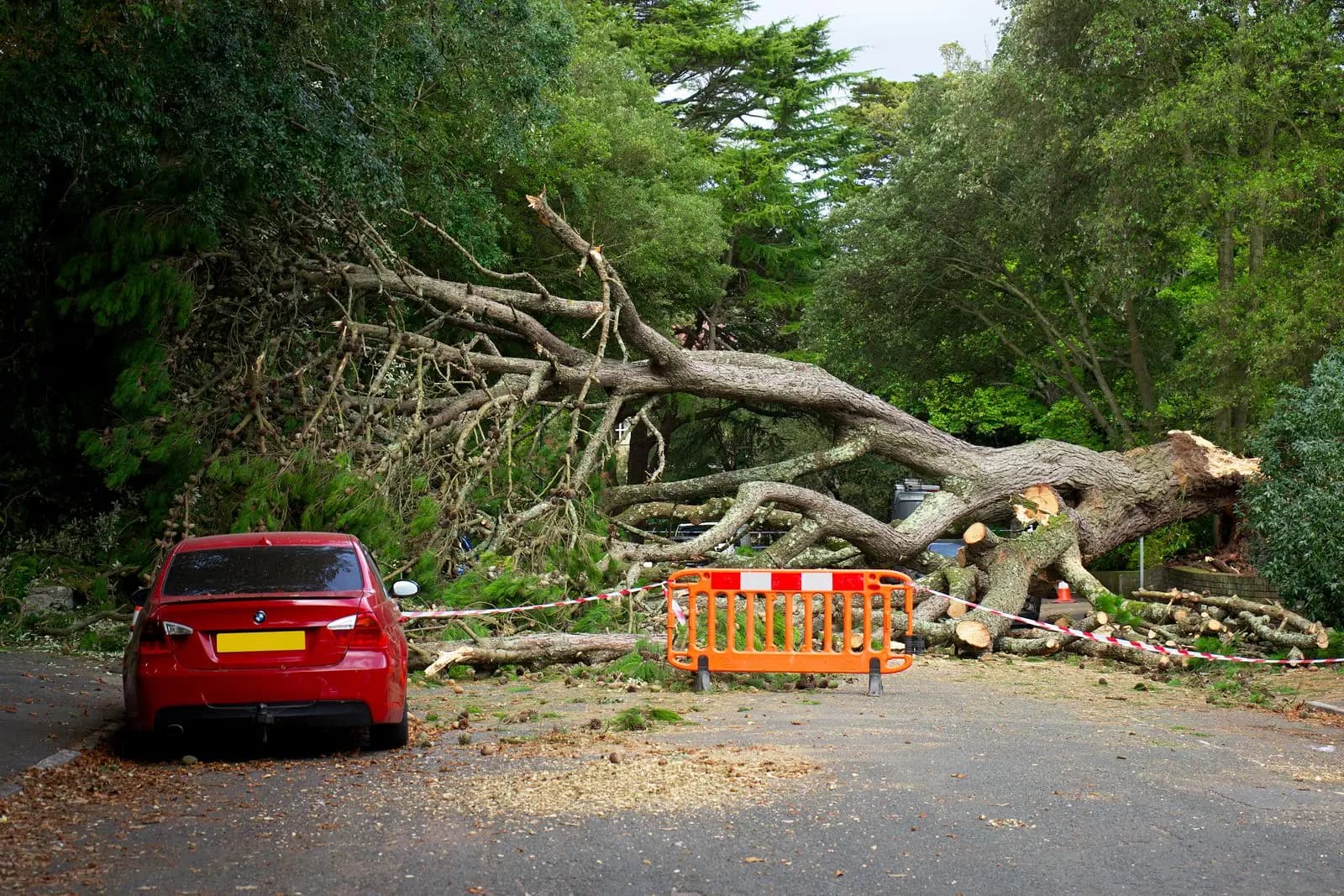
Pines and oaks: how each one fails
Loblolly pine
- Snaps partway up the trunk in high wind
- Loses its top under ice
- Dies in groups from bark beetles after drought or lightning
- Usually falls in the direction of the wind, which makes the risk easier to read
Willow, water and red oaks
- Uproot when soil is saturated, taking the root plate
- Drop very large limbs without the whole tree failing
- Hide root and butt rot behind a green crown
- Do far more damage per tree because of their weight
Neither is a reason to clear a lot. A healthy tree of either kind is an asset. The ones to act on are damaged, leaning, decayed or newly exposed.
Inside the Beltline and beyond it
Inside the I-440 Beltline, in Five Points, Hayes Barton, Cameron Park and Mordecai, lots are modest and oaks are enormous. Removals are crane or heavy-rigging jobs, often with a street setup. Teardown construction is also common there, and trees left beside a new, larger house frequently decline from root damage within a few years.
North Raleigh and the suburbs built from the 1970s onward were carved out of pine and mixed hardwood forest. Builders left strips and clusters of tall, thin trees that had grown in a stand. Exposed at the edge of a yard, those trees are less stable than open-grown ones and account for a lot of storm failures.
Wake County soils are clay over weathered rock. Stump grinding is straightforward in most yards, though rock is shallow in spots.
Where Raleigh's rules do apply
The city's Urban Forestry Division manages trees on public property and in street rights-of-way under the City Tree Manual. Residents may not prune, remove or plant in the right-of-way without a permit.
The Unified Development Ordinance requires tree conservation areas on larger development sites. Once recorded, those areas stay protected after the houses are sold. If the back of your lot is a dense, undisturbed strip of woods in a newer subdivision, check your plat before cutting.
North Carolina has no state license for tree services. Ask for insurance certificates directly.
Deciding about the pines along the back fence
- This week
A pine has a fading crown, pitch tubes or a lightning scar
Remove it soon, before beetles spread and before it turns brittle.
- Act now
A pine leans toward the house and the lean is new
Treat it as urgent. See hazardous tree removal.
- Plan it
A row of healthy pines stands together
Leave the group intact. Thinning it exposes the rest.
- This week
One tall, thin pine was left alone after clearing
Have it assessed. Stand-grown trees left isolated are a known risk.
Services Raleigh owners ask for
Raleigh tree questions
Can I cut down a tree in my own yard in Raleigh?
In most cases, yes, without a permit. Exceptions are street trees, historic overlay districts, and tree conservation areas recorded on a subdivision plat.
Why do builders' leftover trees die a few years after construction?
Grading, trenching and heavy equipment cut and compact roots. The tree lives on stored energy for a few years, then declines. Fencing off the root zone before construction is the only reliable prevention.
How do I report a damaged street tree?
Contact the City of Raleigh's Urban Forestry Division. Do not hire private work on a tree in the right-of-way without the city's permission.
Does Duke Energy remove trees near power lines?
Duke Energy's contractors prune and sometimes remove trees that threaten its lines. Wood is often left on site. The service line to the house is generally the owner's to keep clear.
Reach a tree service in Raleigh
Call to be connected with an independent tree company that works in the Raleigh area, or leave your number and one will call you back.
(888) 555-0142Call availability varies by area and time of day
Limbwright is a referral service. Your call or request goes to an independent tree service company that sets its own prices and schedule. Ask for proof of insurance and a written scope before work starts. How this works
Request a callback
Leave a number and a tree service provider in your area will call you.