
Problem guide
A Tree Fell on the House: What to Do
Updated · Limbwright editorial
Short answer
Get everyone out of the damaged part of the house, stay away from any wires, and call 911 if there is a gas smell, sparking, fire or an injury. Once people are safe, photograph the damage, call your insurer and call a tree service.
The first ten minutes
Account for everyone
People and pets. Move them to the side of the house farthest from the tree, or outside if the structure seems unstable.
Look and smell
Gas odor, the sound of hissing, sparks or smoke mean get out and call 911 from outside.
Find the wires
If the tree brought down a line or is touching one, assume it is live. Stay at least 35 feet away.
Shut off utilities if safe
If you can reach the main breaker and gas valve without passing through damage, turn them off. If not, leave them.
Do not go up
Stay off the roof and out of the attic. The tree may be all that is holding damaged framing in place.
The first hour: calls to make
| Call | When | What to say |
|---|---|---|
| 911 | Injury, fire, gas, live wires, or anyone trapped | A tree is on the house, and the specific danger |
| Electric utility | Any contact with lines or the service mast | Tree on lines or service drop at your address |
| Your insurer | As soon as people are safe | Date, time, cause such as wind, and visible damage. Ask about emergency repairs. |
| A tree service | Right after the insurer, or before if water is coming in | Tree on structure, its approximate size, any lines, and how a truck can reach it |
| A roofer or restoration company | Once removal is scheduled | You need tarping after the tree is lifted |
What to photograph
Do this before anything is moved. It takes five minutes and can decide the claim.
- The whole scene
- From several angles, showing the tree and the house together.
- The base of the tree
- The root plate or the break. This shows why it fell, which matters if a neighbor's tree is involved.
- Each point of impact
- Roof, walls, gutters, windows, fence, vehicles.
- Inside
- Ceilings, walls, floors and belongings, including water coming in.
- The weather
- A screenshot of the weather alert or radar helps establish wind as the cause.
How the tree comes off the roof
A tree resting on a house cannot simply be cut up where it lies. Each cut shifts weight, and the trunk can drop farther into the structure or roll.
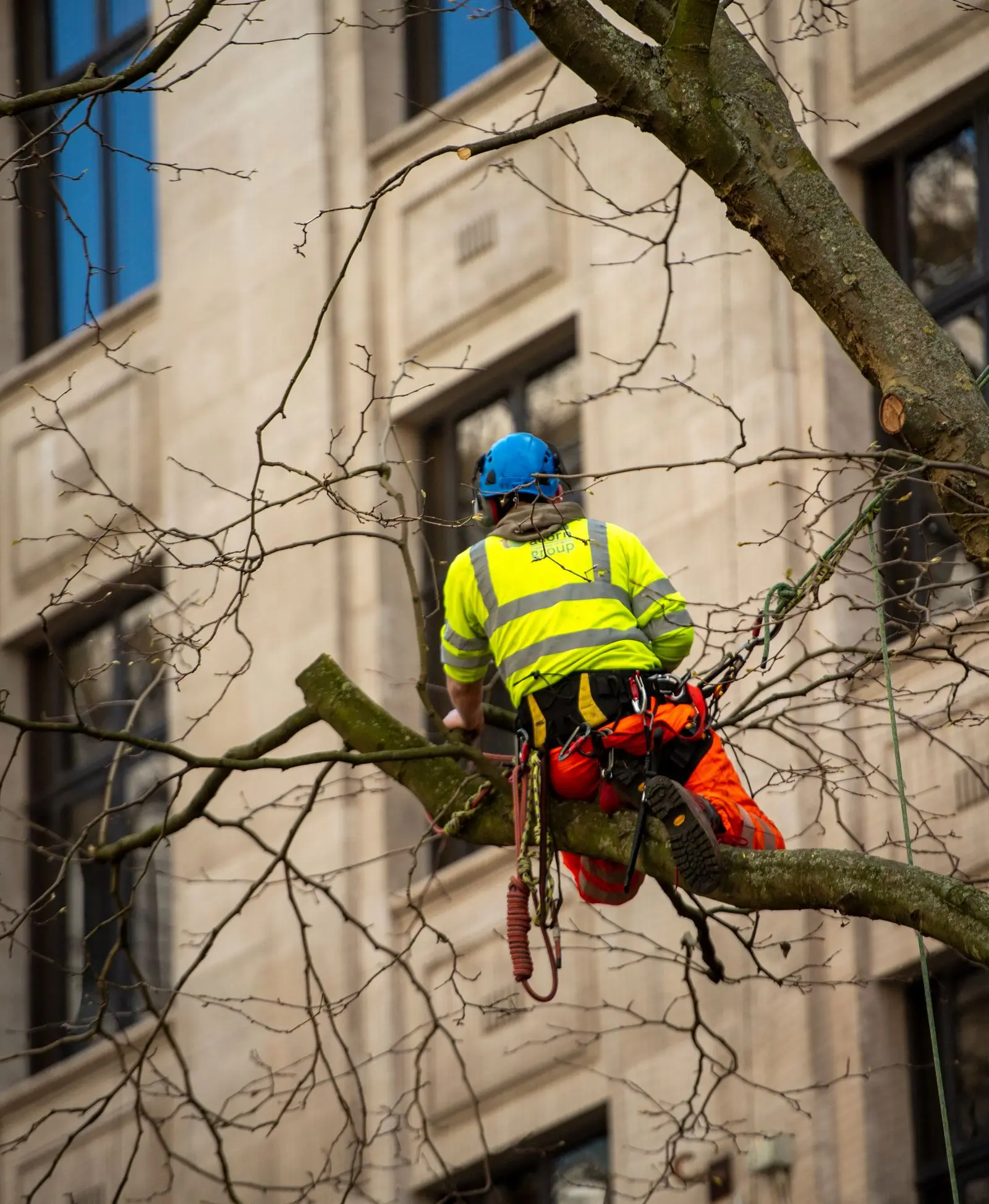
The crew first secures the tree with a crane, straps or rigging lines from another anchor. Sections are then cut and lifted away from the outside in, so the load on the roof goes down with every piece. With a crane this is often quick. Without one it is slower and depends on what the crew can anchor to.
When the roof is clear, the opening is tarped. Interior drying and repairs belong to the restoration contractor and roofer. The step-by-step emergency process is described under emergency tree removal.
Mistakes that make it worse
Cutting the tree yourself
Wood under tension and unstable footing are how homeowners get badly hurt after storms.
Starting repairs before the insurer has documentation
Emergency protection is expected. Permanent repairs before the adjuster has photos or has inspected can cause disputes.
Signing with the first person at the door
Check insurance and get the scope in writing, even in a hurry.
Throwing away damaged items
Keep them, or photograph them thoroughly, until the claim is settled.
Assuming the house is safe to sleep in
Structural or electrical damage may not be visible. Ask the fire department or a contractor.
Common questions after a tree hits the house
Does homeowners insurance cover a tree falling on my house?
In most cases yes, when the cause is a covered event such as wind, lightning or the weight of ice and snow. The policy pays to repair the structure and to remove the tree from it, subject to the deductible and limits. See does insurance cover tree removal.
What if it was my neighbor's tree?
Your own policy still responds first. The neighbor is generally liable only if they knew the tree was dead or dangerous. Read neighbor's tree fell in my yard.
How long does removal take?
The removal itself is typically a few hours once a crew and any crane are on site. After a regional storm, the wait for a crew is the longer part.
Can we stay in the house?
Only if the damage is clearly limited and utilities are safe. A tree through a roof or wall can compromise framing, wiring and gas lines. When in doubt, stay elsewhere. Policies often include additional living expense coverage.
This guide is general information, not professional, legal or insurance advice. Tree conditions, local rules and policy terms vary. Have a qualified arborist inspect the tree, and confirm regulations and coverage with your city and insurer.
Want someone to look at the tree?
Call to be connected with an independent tree service company in your area, or leave your number for a callback.
(888) 555-0142Call availability varies by area and time of day
Limbwright is a referral service. Your call or request goes to an independent tree service company that sets its own prices and schedule. Ask for proof of insurance and a written scope before work starts. How this works
Request a callback
Leave a number and a tree service provider in your area will call you.