Florida
Tree Removal and Tree Service in Florida
Florida tree work is shaped by hurricanes, sandy soil over a high water table, and a state law that lets homeowners remove a documented dangerous tree without a local permit. Call to reach an independent tree company serving your part of the state.
Wind, sand and water: why Florida trees fail
Atlantic hurricane season runs from June 1 to November 30, and the peninsula has taken repeated hits in recent years: Ian in 2022, Idalia in 2023, then Helene and Milton within two weeks of each other in 2024.
The ground makes it worse. Much of Florida is sand over a shallow water table, so roots spread wide and stay shallow. When several inches of rain soak that sand and wind pushes on the crown for hours, whole trees tip over with the root plate attached.
Development adds a third factor. Trees left standing on new lots often have roots cut by driveways, utilities and fill, and they fail years later in the first major storm.
Which Florida trees hold up in hurricanes
University of Florida researchers surveyed tree survival after multiple hurricanes. These are the broad patterns they report.
| Wind resistance | Species | What tends to happen |
|---|---|---|
| Highest | Live oak, sabal palm, bald cypress, southern magnolia | Lose leaves and small branches but usually stay standing |
| Medium | Slash pine, longleaf pine, sweetgum, red maple | Break or lean in stronger storms. Pines may die months later from hidden damage. |
| Lowest | Laurel oak, water oak, sand pine, Chinese elm, Bradford pear, queen palm | Uproot, snap or shed major limbs. Laurel and water oaks are often hollow by 50 years. |
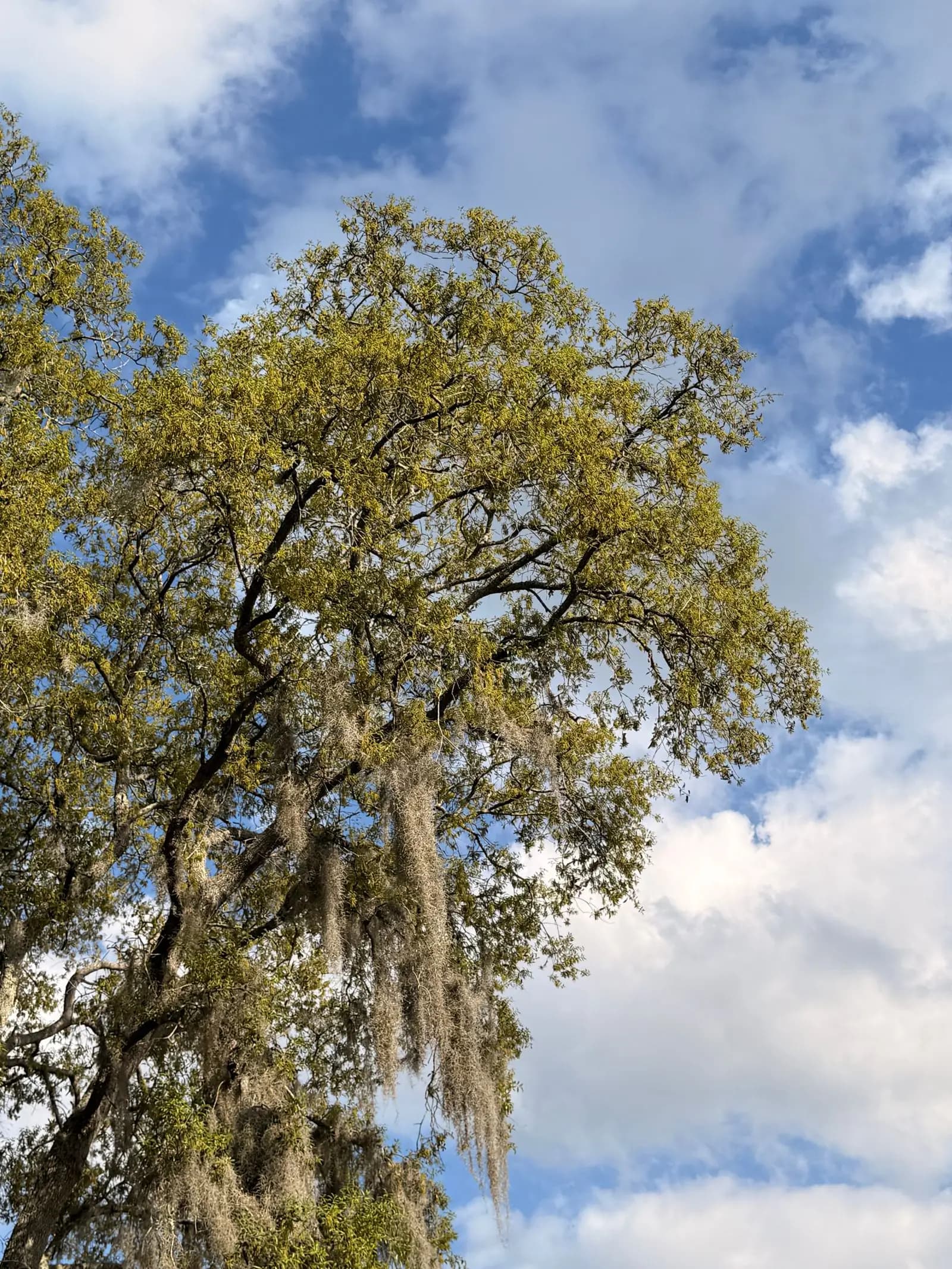
Laurel oak is easy to mistake for live oak. An older laurel oak near the house is worth a risk assessment before storm season.
Florida's residential tree law in plain terms
Section 163.045 of the Florida Statutes limits what local governments can require when a tree on residential property is dangerous. If the owner holds documentation from an ISA Certified Arborist or a Florida-licensed landscape architect showing the tree poses an unacceptable risk, the city or county may not require a notice, application, permit, fee or replacement planting for pruning or removing it.
The 2022 amendment tightened the wording. The documentation must be an on-site assessment following the ISA's tree risk assessment best practices, signed by the professional, and removal must be the only practical way to bring the risk below moderate.
The exemption covers residential property only, and it does not cover mangroves. For a healthy tree, local ordinances still apply in full. Tampa, Orlando and Jacksonville each have their own.
A Florida tree-care calendar
| Months | What is happening | Sensible action |
|---|---|---|
| December to April | Dry season, lowest storm risk, slower demand | Best window for inspections, structural pruning and planned removals |
| May | Afternoon thunderstorms return | Finish pruning. Remove dead wood over the roof and drive. |
| June to July | Hurricane season opens. Lightning peaks. | Confirm which trees are laurel or water oak. Clear hangers. |
| August to October | Peak hurricane months | Storm response. Crews are booked for weeks after a landfall. |
| November | Season winds down | Deal with leaning and damaged trees before the next cycle |
Pests and diseases that lead to removals here
- Laurel wilt
- A fungus carried by the redbay ambrosia beetle. It has killed redbay and swamp bay across the state and threatens avocado.
- Lethal bronzing
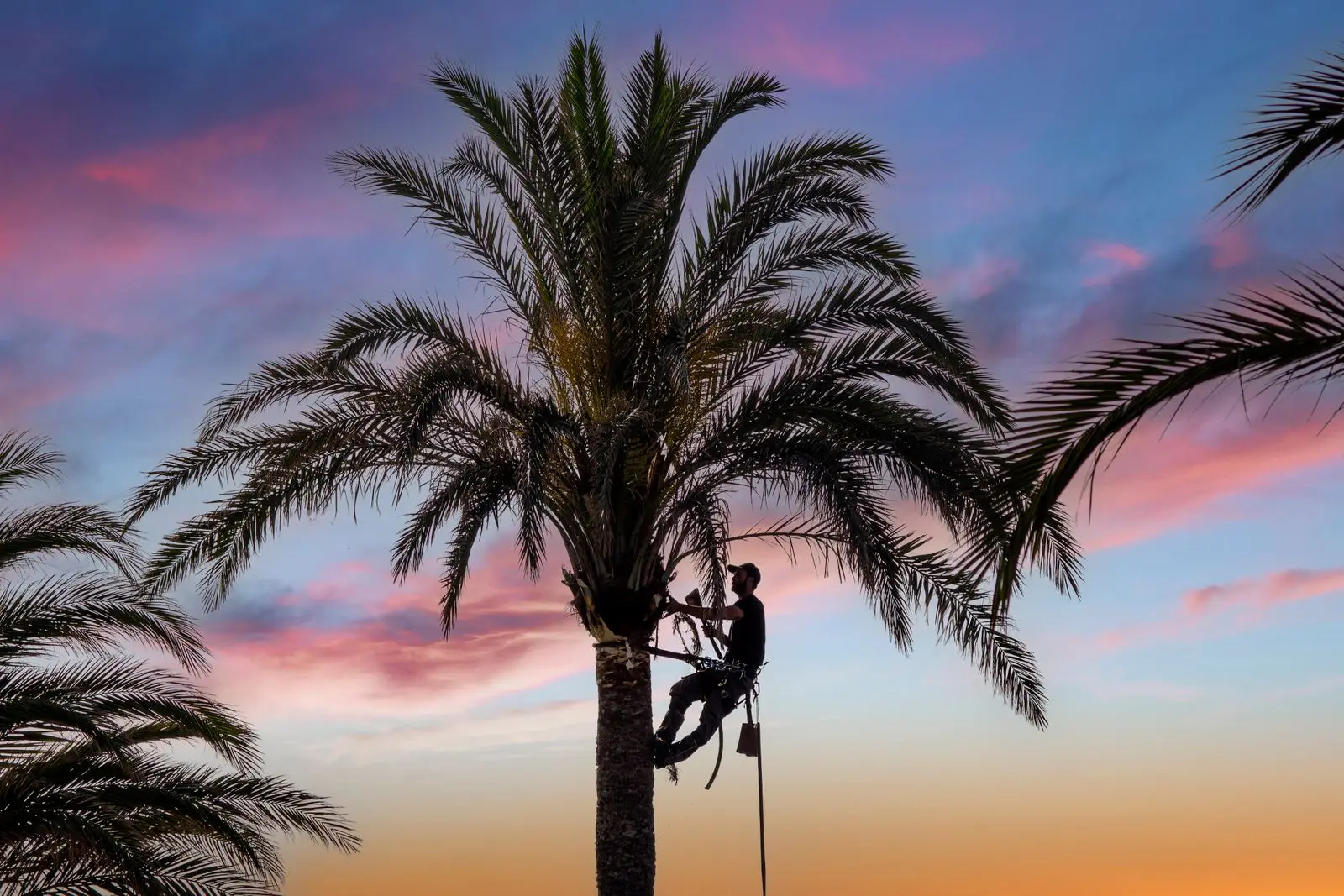
- A bacterial disease of palms, including sabal, queen and date palms. Infected palms are removed to slow spread.
- Ganoderma butt rot
- Decays the lower trunk of palms. A shelf-like conk on the base means the palm will fail and cannot be treated.
- Southern pine beetle
- Attacks stressed pines in groups, often after drought, lightning or storm damage.
- Hypoxylon canker
- Appears on oaks weakened by drought or root loss and signals a tree in terminal decline.
Florida cities with local pages
Each page covers that city's ordinance, common trees and storm history.
Before the next named storm
- Act now
A dead tree or large dead limbs are within reach of the house
Remove now. Crews stop taking non-emergency work once a storm is forecast.
- This week
A mature laurel or water oak stands near the house
Have it assessed. These species account for a large share of oak failures in Florida storms.
- This week
Palms carry brown, hanging fronds and heavy seed stalks
Remove dead fronds and fruit only. Do not strip green fronds.
- Plan it
A healthy live oak has not been pruned in five years or more
Schedule crown cleaning in the dry season.
Florida tree service questions
Do I need a permit to remove a tree in Florida?
It depends on the city or county and on the tree's condition. Local ordinances protect many trees, but under Section 163.045 a homeowner with a signed arborist's assessment showing an unacceptable risk needs no local permit to remove that tree from residential property.
Should palms get a hurricane cut?
No. Removing green fronds weakens the palm and does not improve wind survival. University of Florida guidance is to remove only dead fronds and fruit stalks.
Will my pine survive after a hurricane?
Possibly not, even if it looks fine. Pines that were bent hard often have internal damage or root breakage and can die or be attacked by beetles over the following months. Watch for browning needles and pitch tubes.
How long is the wait for tree service after a hurricane?
Emergency work on structures is handled first, usually within days. Non-urgent removals can wait several weeks in the affected area. See emergency tree removal for how to prioritize.
Tree service in Florida, by phone
Call to be connected with an independent tree company serving your part of Florida, or leave your number for a callback.
(888) 555-0142Call availability varies by area and time of day
Limbwright is a referral service. Your call or request goes to an independent tree service company that sets its own prices and schedule. Ask for proof of insurance and a written scope before work starts. How this works
Request a callback
Leave a number and a tree service provider in your area will call you.