
Downed power line, fire, gas smell or someone hurt? Call 911 first and stay at least 35 feet from any wire.
Tampa · Storm cleanup
Storm Damage Tree Removal in Tampa
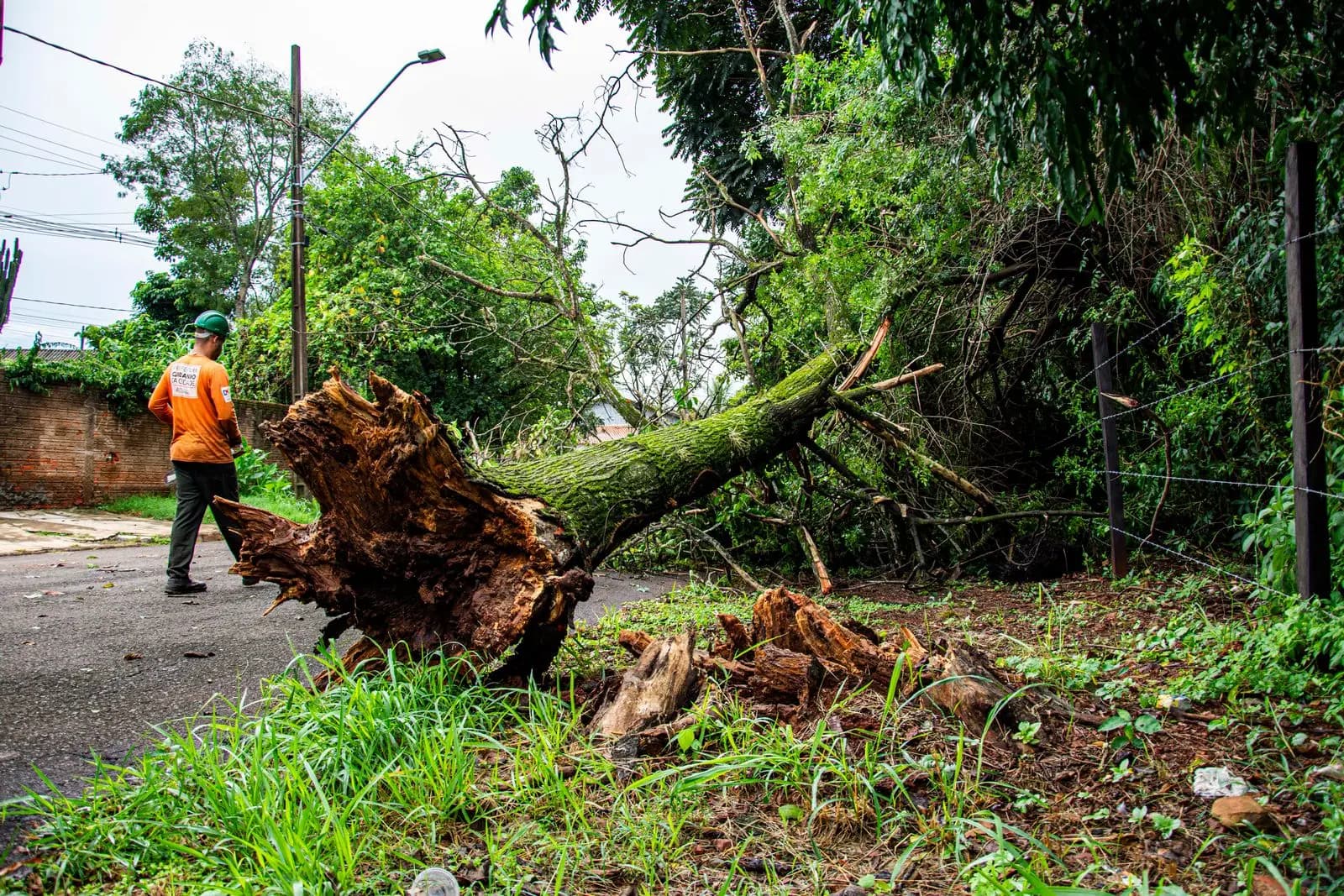
Hurricane damage in Tampa comes in two forms: wind that uproots and breaks trees, and storm surge that poisons roots with salt. Cleanup starts with trees on structures, then moves to deciding which damaged trees can stay.
Call availability varies by area and time of day. Calls are answered by an independent tree service provider.
What Tampa storms do, tree by tree
| Tree | Typical hurricane damage | Outlook |
|---|---|---|
| Laurel oak | Trunk failure at a hollow, or uprooting | Remove. These seldom recover and were near the end of their life. |
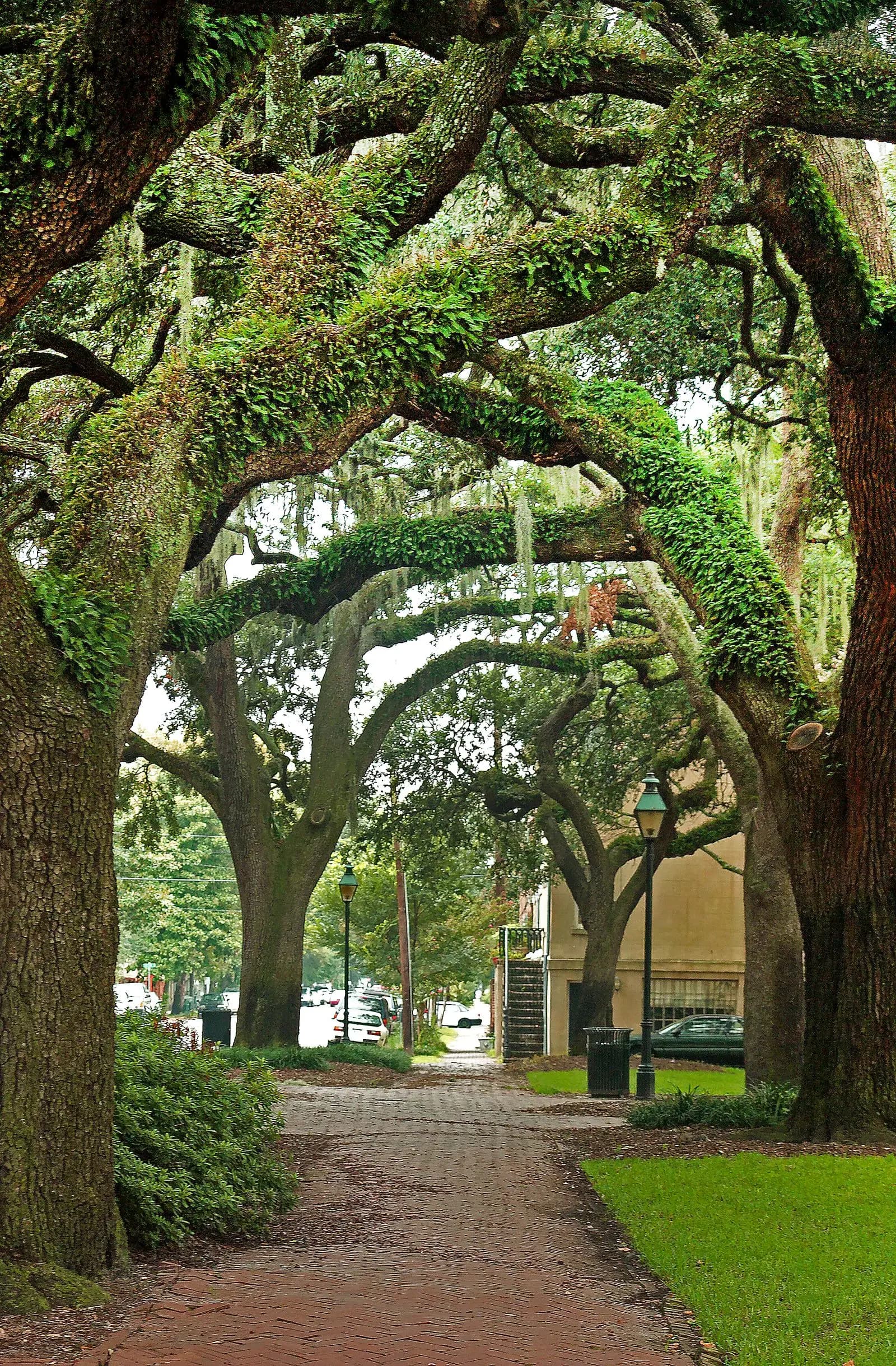
| Live oak | Limb breakage, leaf loss | Usually keep. Prune torn limbs properly. |
| Slash and longleaf pine | Snapped trunks, or hidden bending damage | Watch for six to twelve months. Browning means removal. |
| Sabal palm | Frond loss | Keep. New fronds emerge from the bud if it is intact. |
| Queen palm | Snapped trunk or toppled | Remove if the trunk is broken or the bud is dead |
| Any tree in surge water | Leaf scorch and dieback from salt | Wait a growing season unless it is also unstable |
Surge-flooded trees: wait, then decide
Helene put several feet of Gulf water into parts of South Tampa, Davis Islands and the neighborhoods along the bay in September 2024. Trees there stood in salt water for hours.
Salt damages trees two ways. It burns foliage it touches, and it stays in the soil, where it pulls water away from roots. Symptoms such as brown leaf margins, leaf drop and twig dieback can keep appearing for a year.
Rain flushes salt through Tampa's sandy soil fairly quickly, and deep watering helps. Live oak, sabal palm and southern red cedar tolerate salt better than most. Give a salt-damaged tree until the following summer before condemning it, unless it is leaning or structurally broken as well.
Permits after a storm
Tampa's tree code still applies after a hurricane, but two things make removing a storm-wrecked tree straightforward. A tree that is down or has failed is not a protected tree being removed. It is debris.
For a damaged tree that is still standing, Florida's Section 163.045 lets a residential owner remove it without a city permit when a certified arborist or licensed landscape architect has documented, on site, that it poses an unacceptable risk. Get that signed assessment before the tree is cut, and keep it.
Grand trees, 32 inches and larger, deserve extra care. If a grand live oak lost limbs but is structurally sound, removal is neither necessary nor exempt.
How a Tampa storm cleanup is sequenced
Lines and structures
TECO clears its lines. Trees on houses are lifted off and the roof is tarped.
Access
Driveways and gates are opened so vehicles and equipment can get in.
Hangers and leaners
Broken limbs overhead and partly uprooted trees are brought down.
Assess the survivors
Each remaining tree is judged: keep and prune, watch, or remove.
Debris to the curb
After a declared storm, the city and county run debris collection. Vegetative debris is stacked separately at the curb, away from mailboxes, hydrants and lines.
Checking a tree company after a hurricane
Limbwright connects you with independent companies and does not verify their credentials for you. After a storm, check these yourself.
Insurance certificates
General liability and workers' compensation, sent by the insurer or agent.
A local business tax receipt
Required to operate in Hillsborough County and the City of Tampa.
A written scope and price
Which trees, what is hauled, whether stumps are included.
No large payment up front
A deposit for crane rental is reasonable. Full payment before work is not.
No assignment of your insurance claim
Be wary of anyone asking you to sign over benefits.
Replanting for the next storm
Every storm is also a sorting event. The trees that failed tell you what not to plant again, and University of Florida research after multiple hurricanes points the same way each time.
Live oak, sabal palm, bald cypress and southern magnolia survive best. Trees planted in groups do better than isolated ones. Trees with room for roots do better than those squeezed between a drive and a foundation.
When a lost laurel oak is replaced, give the new tree real soil space, and have it structurally pruned in its first ten years. That early pruning is what produces a wind-firm adult tree.
Tampa storm cleanup questions
Will the city pick up my storm debris?
After major storms the City of Tampa and Hillsborough County have run curbside storm debris collection. Schedules and sorting rules are announced after each event. Contractor-generated debris is sometimes excluded, so ask before the crew hauls or stacks it.
My oak is leaning after the hurricane. Can it be straightened?
A mature tree that has tipped cannot be reset. Its roots are broken. Small, recently planted trees can sometimes be righted and staked.
How long should I wait before removing a salt-damaged tree?
If it is stable, wait through the next growing season. Many trees leaf out again once salt has leached from the soil.
Does hurricane insurance pay for tree removal in Florida?
Typically only when the tree damaged an insured structure or blocks access, and within policy limits. A separate hurricane deductible, often 2 percent or more of the dwelling coverage, usually applies.
Storm Damage Tree Removal help in Tampa
Call to be connected with an independent tree company that works in Tampa, FL, or request a callback.
(888) 555-0142Call availability varies by area and time of day
Limbwright is a referral service. Your call or request goes to an independent tree service company that sets its own prices and schedule. Ask for proof of insurance and a written scope before work starts. How this works
Request a callback
Leave a number and a tree service provider in your area will call you.