
Charlotte · Big trees
Large Tree Removal in Charlotte
Removing a 40-inch willow oak from a Myers Park or Dilworth lot involves a heritage tree permit, a crane in the street and several truckloads of wood. Done well, it takes a day. This page covers what goes into that day.
Call availability varies by area and time of day. Calls are answered by an independent tree service provider.
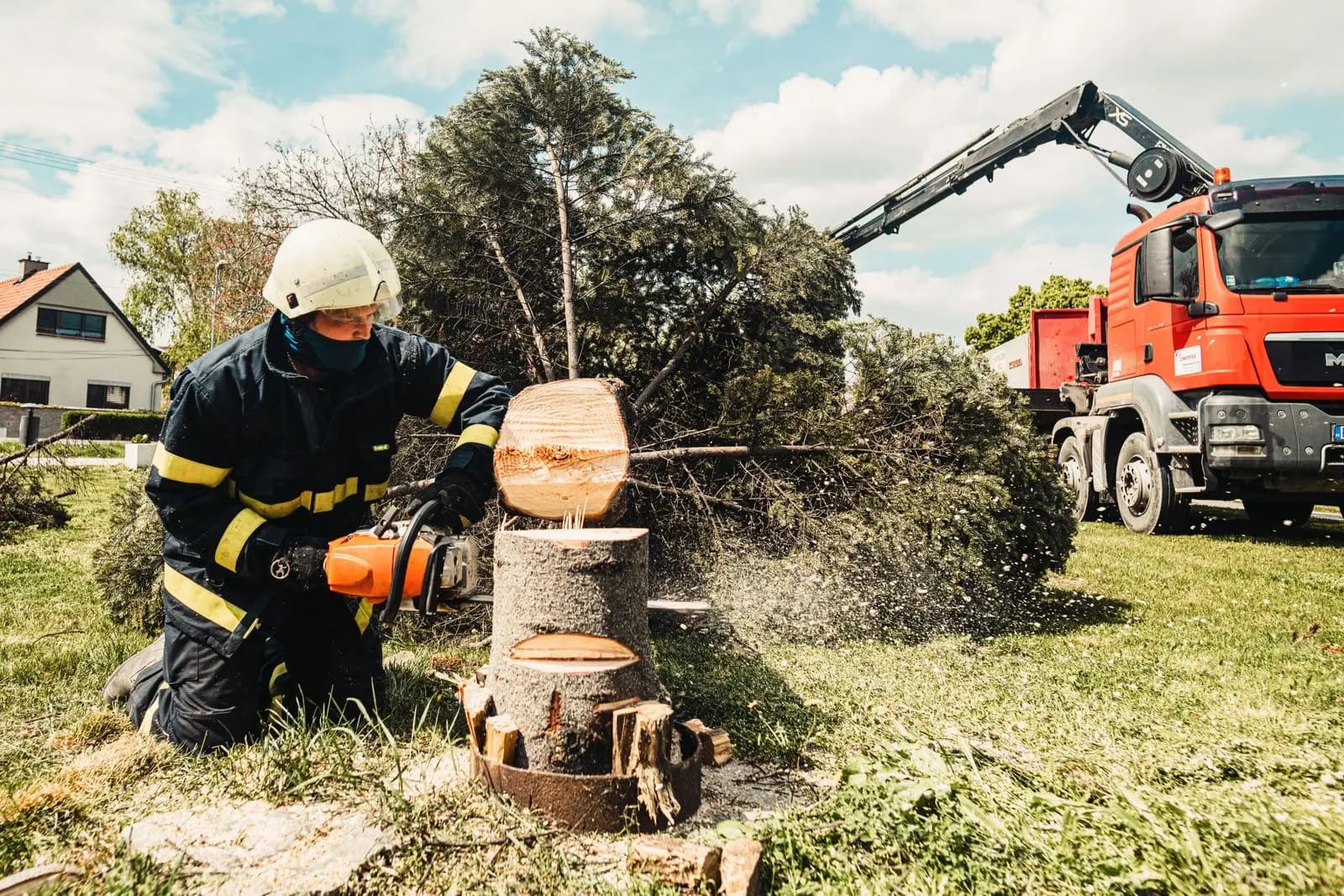
What makes these removals different?
Three things at once: the tree is usually of heritage size and needs a city permit, it is too big and often too decayed to climb and rig conventionally, and it stands on a small lot between houses.
- Size
- Mature willow oaks commonly reach 80 to 100 feet tall with trunks of 36 to 50 inches.
- Condition
- The usual reason for removal is root or butt decay, which makes the tree unsafe as its own rigging point.
- Setting
- Houses on both sides, a sidewalk and street in front, and service lines through the crown.
Permit first
A native tree 30 inches or more in diameter on private property in the city is a heritage tree.
Measure
Circumference at 4.5 feet divided by 3.14. At 30 inches or more, the heritage rule applies if the species is native to North Carolina. Willow oak is.
Document condition
An ISA Certified Arborist's letter or risk assessment describing decay or defects supports the application.
Apply to Urban Forestry
The non-development heritage tree removal permit, with fee and a mitigation choice.
Choose mitigation
Plant replacement trees, pay the mitigation fee, or combine them. Planting more trees lowers the fee.
Schedule after approval
Review generally takes one to two weeks. Book the crane date once the permit is issued.
Why root decay changes the plan
On a sound tree, a climber ties in near the top and uses the tree's own strength to lower pieces. On a willow oak with decayed roots or a hollow base, nobody can be sure how much load the tree will take, and shock from a heavy piece on a rope could bring it down.
The answer is to keep load off the tree. A crane holds each section before it is cut, so the piece lifts away without tugging on the trunk. The climber may be tied to the crane as well, where regulations and the operator's procedures allow.
Before the job, a careful company sounds the base and may drill it to learn how much sound wood remains. That finding sets the pick sizes and the sequence, and is one reason quotes for the same tree can differ.
Street and neighbor logistics
- Street setup
- Cranes usually set up in the street. Closing a lane or the block needs a right-of-way use permit from the city, arranged by the contractor.
- Parking
- No-parking signs go up ahead of time. Tell neighbors the date so cars are moved.
- Service lines
- Duke Energy may need to drop or cover the service line. That is scheduled in advance.
- Driveways
- Older concrete drives may not hold outriggers or a loaded log truck. Pads spread the load.
- The neighbors' side
- Limbs over the property line come off first. Permission to enter a neighbor's yard makes this easier.
A typical removal day
| Time | What happens |
|---|---|
| 7:30 | Crew arrives, cones and signs out, crane positioned and leveled |
| 8:30 | First picks: outer limbs over the houses |
| 10:30 | Crown mostly gone. Chipper running, first log truck loading. |
| 12:30 | Main leaders lifted out in large sections |
| 2:00 | Trunk sections, the heaviest picks of the day |
| 3:30 | Stump cut low, street swept, crane packed |
Times are illustrative. Weather, decay found in the tree and street access change them.
The stump, the roots and the gap
A 45-inch oak leaves a stump five or six feet across at the ground and surface roots running 20 feet or more. Grinding the stump and the main roots is a half-day job on its own and produces a truckload of chips.
The city may require replacement trees on the lot as mitigation. Plant them away from the old stump, where the soil is not full of decaying wood, and choose species suited to the space. Not every lot can take another willow oak.
Expect the house to feel different. Summer sun reaches walls and windows that were shaded for decades, and nearby trees take more wind. Have the remaining large trees checked, since those of the same age share the same soil and often the same decay.
Why the quotes are large
National ranges for big trees are in the tree removal cost guide. Charlotte's large oaks often exceed them.
- Crane and operator
- Billed with a daily minimum.
- Wood volume
- A mature willow oak can yield well over ten tons of wood.
- Permit and mitigation
- The city fee plus replacement trees or the mitigation payment.
- Traffic control
- Right-of-way permit, signs and sometimes flaggers.
- Stump and root grinding
- Substantial at this diameter. See stump grinding cost.
Charlotte large-tree questions
Can a declining heritage oak be saved instead?
Sometimes. If decay is limited and the crown is healthy, deadwood pruning, weight reduction and monitoring can extend its life. Advanced root or butt decay near a house usually ends that option. A risk assessment settles it.
Is the street tree in front of my house my responsibility?
No. Oaks in the right-of-way are city trees. Charlotte's arborist staff inspect and remove them. Report concerns to the city.
How many replacement trees will I have to plant?
The heritage permit offers options that trade planting against a fee. Planting more trees reduces or eliminates the mitigation payment. Check the city's current schedule.
Will the crane damage my yard?
A crane set in the street does not touch the yard. Damage risk comes from log handling and equipment on the lawn, which mats and careful staging limit. Ask how the lawn will be protected.
Large Tree Removal help in Charlotte
Call to be connected with an independent tree company that works in Charlotte, NC, or request a callback.
(888) 555-0142Call availability varies by area and time of day
Limbwright is a referral service. Your call or request goes to an independent tree service company that sets its own prices and schedule. Ask for proof of insurance and a written scope before work starts. How this works
Request a callback
Leave a number and a tree service provider in your area will call you.