
Indiana
Tree Removal and Tree Service in Indiana
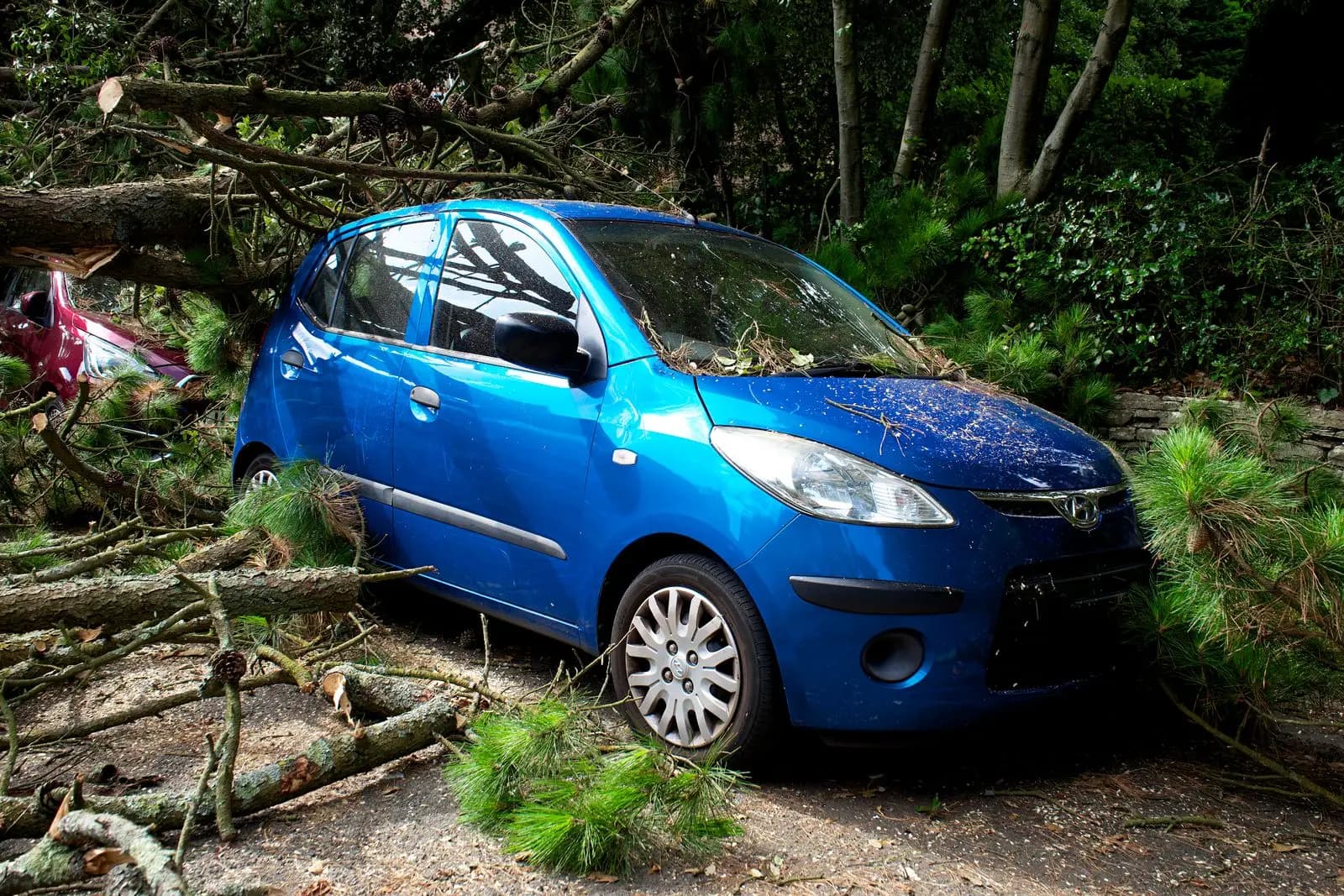
Indiana has no state permit and no arborist license for tree removal, so most decisions rest with the owner. The trees themselves supply the difficulty: dead ash everywhere, brittle silver maples in older towns, and wind events in every season.
Do I need permission to remove a tree in Indiana?
For a tree on your own lot, almost never. For a tree in the public right-of-way, almost always. Cities control the strip along the street even where the homeowner mows it.
- Indianapolis
- Pruning or removing a tree in the right-of-way requires a flora permit from the city.
- Other cities
- Fort Wayne, Bloomington, Carmel and many more have a city forester or tree board that approves street tree work.
- Private lots
- Covenants in some subdivisions and a few local ordinances restrict removal. Read your HOA documents.
Indiana storms by type
- Derechos
- The June 29, 2012 storm formed near Chicago and reached Fort Wayne with a gust of about 90 mph, flattening trees across the northeast.
- Tornadoes
- The March 2, 2012 outbreak destroyed much of Henryville. Indiana records tornadoes in every month.
- Ice
- The late January 2009 storm coated the southern counties and broke hardwoods along the Ohio River.
- Summer thunderstorms
- The routine source of calls. One severe cell can drop dozens of large trees across a few neighborhoods.
Right-of-way permits and what the state does regulate
Indianapolis requires a flora permit for planting, pruning or removing any tree or shrub in the public right-of-way. The permit is obtained through the city's permitting office, and a tree company that works in the city regularly will know the process.
The state does not license arborists. It does license people who apply pesticides for hire, which matters if you are paying for emerald ash borer injections: the applicator needs a current license from the Office of Indiana State Chemist.
The Department of Natural Resources regulates movement of some plant material. Indiana no longer maintains an internal ash quarantine, but moving firewood long distances is still discouraged, and state properties restrict what firewood can be brought in.
Indiana trees and their usual failures
| Tree | Where common | How it fails |
|---|---|---|
| Tulip tree | Statewide. It is the state tree. | Tall, soft-wooded tops break. Large limbs shed in summer. |
| Silver maple | Older neighborhoods and river towns | Multiple trunks split. Decay behind old pruning cuts. |
| White and green ash | Yards, fence rows and woodlots | Dead from borer. Snaps without warning. |
| Callery pear | Subdivisions built since the 1980s | Splits apart. Also invasive, and seedlings spread into fields. |
| Pin oak | Planted widely on clay soil | Yellow, stunted leaves from iron chlorosis on high-pH soil |
Glacial clay in the north, limestone in the south
The northern two thirds of Indiana was flattened by glaciers and left with dense clay till. Water drains slowly, roots stay near the surface, and trees on wet clay tip more easily in a spring windstorm than their size suggests.
South of roughly Bloomington the glaciers never reached. The land is hilly, with thin soil over limestone and sinkholes in the karst belt. Trees anchor into cracks in the rock, and removals often involve slopes and limited truck access.
Soil chemistry matters as well. Pin oak, river birch and red maple planted on limy clay turn yellow and decline over years. Those trees are a steady source of removal work in suburban developments.
Dead ash in Indiana: remove now or wait
Remove soon
- The tree could reach a house, garage, drive or play area
- It has been dead more than a year
- Bark is falling away from the trunk
- A climber could still safely work it this season
Can be left
- It stands in a woodlot away from buildings and paths
- Nothing of value is within its height
- You accept it will fall on its own
- Wildlife use is a goal
A dead ash near a target only gets more expensive. The tree removal cost guide explains why hazardous dead trees are priced higher.
Indiana tree service questions
Does Indiana require a license for tree removal companies?
No. There is no state arborist or tree service license. Anyone applying pesticides for hire, including ash treatments, needs a state applicator license. Verify insurance yourself.
What is a flora permit in Indianapolis?
It is the city's permit for work on trees and shrubs in the public right-of-way. Removal or pruning of a street tree without one can result in fines.
Should I cut down my Bradford pear in Indiana?
It is a reasonable choice. The trees split apart with age and spread seedlings into natural areas. Indiana conservation groups encourage replacing them with native species.
Why is my Indiana pin oak yellow?
Most likely iron chlorosis. Alkaline clay soil locks up iron the tree needs. Treatments help for a time, but a badly affected tree usually keeps declining.
Tree service in Indiana, by phone
Call to be connected with an independent tree company serving your part of Indiana, or leave your number for a callback.
(888) 555-0142Call availability varies by area and time of day
Limbwright is a referral service. Your call or request goes to an independent tree service company that sets its own prices and schedule. Ask for proof of insurance and a written scope before work starts. How this works
Request a callback
Leave a number and a tree service provider in your area will call you.