
Kansas
Tree Removal and Tree Service in Kansas
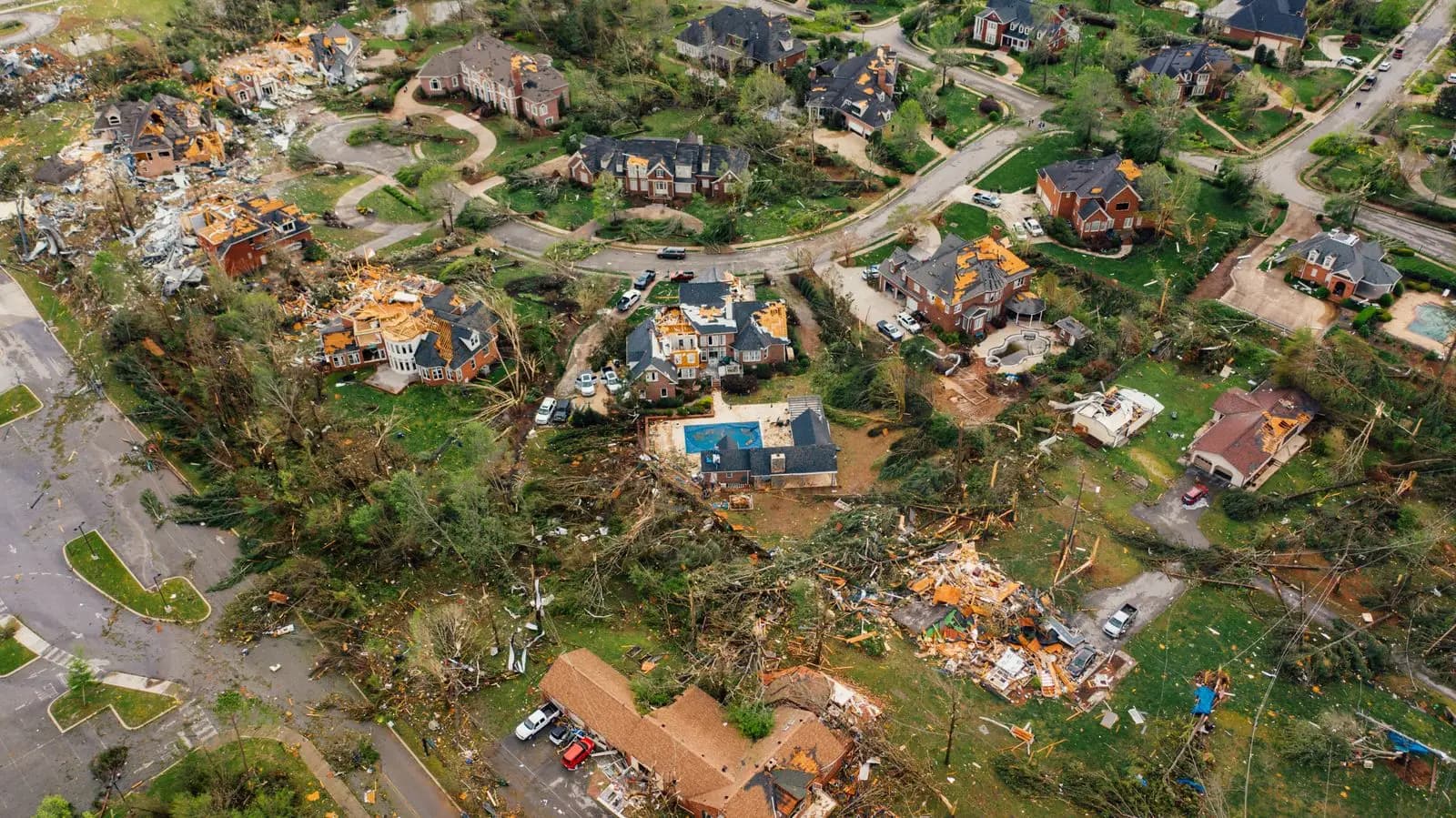
Most Kansas trees were planted by someone, and they grow in a climate that swings from drought to ice within a year. Wind is the constant. The species that tolerate it, such as Siberian elm, are the same ones that drop limbs for decades.
What causes most tree removals in Kansas?
Storm breakage and slow decline from heat and drought. Ice storms do the most damage in a single event, and the wind that follows for years finishes off trees that were cracked or left with poor regrowth.
- East
- More rain, more large hardwoods, and the most ice. Emerald ash borer is established in the northeast.
- Central
- Wichita and Salina. Elm, hackberry and cottonwood under drought and wind stress.
- West
- Few trees outside towns and shelterbelts, and every one of them matters to its owner.
Ice and wind events Kansans remember
- December 2007 ice storm
- Up to two inches of ice across the central and northeast counties, and the largest power outage the state had recorded.
- January 2005 ice storm
- Heavy glaze from Wichita into the Flint Hills. Many of the city's elms and maples lost their tops.
- December 15, 2021 windstorm
- Gusts near 100 mph in the west, with blowing dust and wildfire. Shelterbelts and town trees snapped.
- Spring and summer storm lines
- Gusts of 60 to 80 mph several times a year, enough to break any tree with a weak fork.
Kansas town trees and their problems
| Tree | Why it was planted | What goes wrong |
|---|---|---|
| Siberian elm | Survives drought and poor soil | Brittle. Sheds branches in every wind and ice event. |
| Hackberry | Native and tough | Decay behind old ice injuries. Generally worth keeping. |
| Silver maple | Fast shade | Splits at the forks. Surface roots lift walks. |
| Cottonwood | The state tree. Grows along every creek. | Enormous limbs fall from old trees, sometimes in calm weather |
| Scots and Austrian pine | Windbreaks and yards | Dying from pine wilt across the eastern two thirds of the state |
City licensing and street tree rules
Kansas has no state arborist license or removal permit. Regulation happens in the cities, and it takes two forms.
First, licensing of tree companies. Wichita has long required a city license for businesses that trim or remove trees, and other Kansas cities have similar requirements. Ask the company whether your city licenses tree work and for its license number if so.
Second, control of street trees. The tree in the parking strip between sidewalk and curb is normally in the public right-of-way. Cities differ on who must maintain it, but removal typically needs the city forester's approval. The Kansas Arborists Association certifies arborists on a voluntary basis, which is a useful credential to ask about.
Pine wilt: remove it before spring
Pine wilt is caused by a microscopic nematode carried from tree to tree by pine sawyer beetles. It kills Scots pine most readily, and Austrian pine as well. An infected tree turns gray-green and then brown within a few weeks in late summer or fall, with the needles left hanging.
The disease has moved steadily west across Kansas, and windbreaks planted in the 1960s and 1970s are being lost. Nothing cures an infected tree.
What matters is timing. The beetles emerge from dead pines in spring, so the standard advice from the Kansas Forest Service is to cut infected trees to the ground and burn, chip or bury the wood by about April 1. Do not keep it for firewood. See dead tree removal for how such jobs are handled.
Signs of a wind-weakened Kansas tree
Two trunks of equal size meeting in a tight V
The classic split point in elm and maple.
A long limb with all its foliage at the tip
Past over-thinning has left a lever that wind will break.
Stubs and sprout clusters from old ice damage
Weak attachments over decayed wood.
Bark missing from the south or west side of the trunk
Sunscald and drought injury, with decay behind it.
Kansas tree service questions
Do tree trimmers need a license in Kansas?
Not from the state. Some cities, Wichita being the best-known example, license tree service businesses. Check with your city and ask the company for proof.
Can I save a pine with pine wilt?
No. Once symptoms appear the tree dies within weeks. Preventive injections exist for healthy, high-value pines, but an infected tree should be removed and destroyed before April.
Is a Siberian elm worth keeping?
Sometimes. A structurally sound one gives shade where little else grows. One with repeated limb failures over a house or drive is a reasonable candidate for removal and replacement.
Does Kansas require a permit to remove a tree on private property?
No state permit exists. City approval is normally needed for trees in the street right-of-way.
Tree service in Kansas, by phone
Call to be connected with an independent tree company serving your part of Kansas, or leave your number for a callback.
(888) 555-0142Call availability varies by area and time of day
Limbwright is a referral service. Your call or request goes to an independent tree service company that sets its own prices and schedule. Ask for proof of insurance and a written scope before work starts. How this works
Request a callback
Leave a number and a tree service provider in your area will call you.