
Arizona
Tree Removal and Tree Service in Arizona
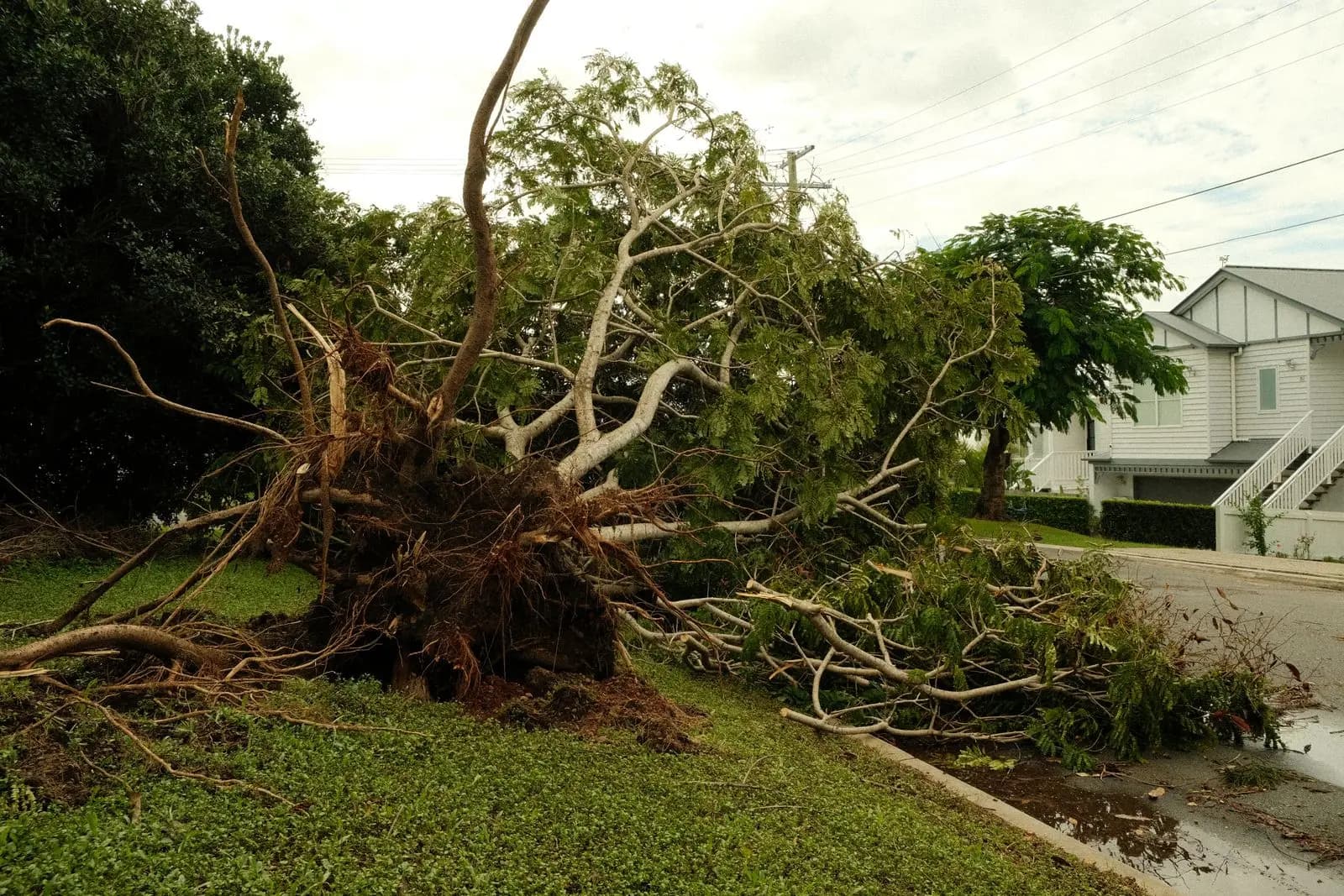
In the low desert, summer monsoon storms knock over more trees in ten minutes than fall in the rest of the year. The usual victims are fast-grown mesquite and palo verde with heavy tops and shallow, irrigated roots, and much of that damage is preventable.
Why do desert trees blow over in the monsoon?
Because they grew too fast on too little root. Lawn sprinklers and shallow drip emitters keep water near the trunk, so roots never spread or go deep. The canopy becomes dense and heavy, and a microburst gust of 60 to 80 mph catches it like a sail.
- Season
- The official monsoon runs from June 15 through September 30. Most blowdowns happen in July and August.
- Prevention
- Thin the canopy before June, move emitters outward as the tree grows, and water deeply and less often.
- After a blowdown
- A young tree can sometimes be reset and staked. A mature one that tipped is usually removed.
Topping, lion-tailing and sunburn
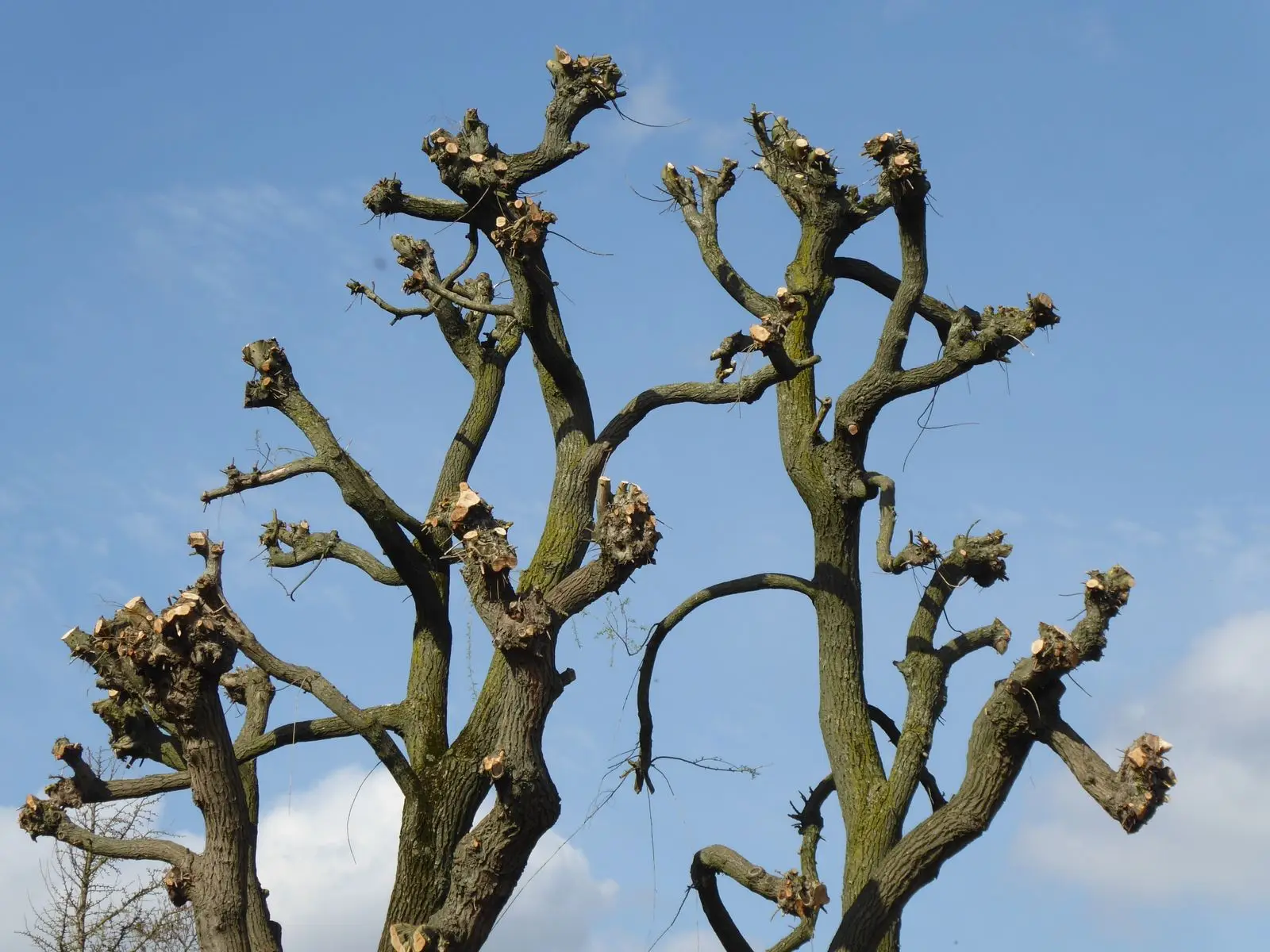
Two pruning mistakes cause much of the tree loss in Phoenix and Tucson. Topping cuts the main limbs back to stubs. Lion-tailing strips the inner branches and leaves a tuft of foliage at each tip. Both are sold as monsoon preparation, and both make failure more likely.
The desert adds a penalty that milder climates do not. Bark suddenly exposed to full summer sun burns, splits and dies. Sooty canker, a fungus that enters through sunburned bark, then kills ash, mulberry, citrus and other thin-barked trees limb by limb.
Correct thinning removes whole branches back to their origin, keeps foliage along the length of each limb, and takes no more than about a quarter of the canopy in a year. The tree trimming and pruning page explains the difference in more detail.
Common Arizona landscape trees
| Tree | Strength | Usual problem |
|---|---|---|
| Chilean and hybrid mesquite | Fast shade | Top-heavy and shallow-rooted under irrigation. The leading monsoon casualty. |
| Palo verde | Native. It is the state tree. | Brittle limbs, weak forks, root borers in older trees |
| Eucalyptus | Tall and drought-hardy | Drops very large limbs. Heavy wood over roofs. |
| Aleppo and Afghan pine | Evergreen screen | Browning from heat stress and mites. Large and costly to remove. |
| Mexican fan and date palms | Low wind risk | Need regular removal of dead fronds and seed stalks |
Native plant law and contractor licensing
Arizona's native plant law protects saguaros, ironwood, native mesquite, palo verde and many other species. On private land the owner may remove them, but must notify the Arizona Department of Agriculture 20 to 60 days before destroying protected native plants as part of clearing land. Moving a saguaro off the property requires a state permit and tag.
Several municipalities add their own rules. Scottsdale and Tucson both have native plant ordinances that apply mainly to development and can require salvage of protected plants.
Tree work for hire generally falls under the Arizona Registrar of Contractors, which licenses landscaping contractors and sets a dollar threshold above which a license is required. Ask for the license number and look it up on the Registrar's site. Unlicensed crews are common after storms.
Low desert, Tucson basin and high country
- Phoenix metro
- Irrigated landscape trees, extreme heat, and microbursts that can cross the valley in an evening.
- Tucson
- More native vegetation left in place and stricter protection of it. Saguaros near houses raise their own removal questions.
- Flagstaff, Prescott and the Rim
- Ponderosa pine forest. Bark beetles, heavy snow and wildfire defensible space drive the work.
- Colorado River towns
- The hottest part of the state. Palms and salt-tolerant trees dominate.
Getting trees ready before June 15
Have the canopy thinned properly
By someone who will show you which branches they plan to remove and why.
Check the stakes
Remove nursery stakes from established trees. Trunks that are held rigid never build strength.
Look at the base
Circling roots, soil piled against the trunk and a wobble in the wind are warnings.
Fix the watering
Move emitters to the edge of the canopy and run them longer and less often.
Arizona tree service questions
Can I remove a saguaro from my Arizona property?
Yes on private land, but the native plant law applies. Destroying protected native plants during land clearing requires advance notice to the Department of Agriculture, and transporting a saguaro needs a permit and tag. Cities may have additional rules.
How often should palms be trimmed in Arizona?
Usually once a year, after the seed stalks emerge in early summer. Only dead and dying fronds should come off. Cutting a palm back to a few upright fronds weakens it.
Can a tree that blew over in a monsoon be saved?
A small, young tree sometimes can if it is stood up within a day or two and the roots are still mostly intact. Large trees that uprooted seldom re-establish and become a repeat hazard.
Does a tree trimmer need a license in Arizona?
Work above the state's handyman threshold requires a license from the Registrar of Contractors. Check the number online, and ask for insurance certificates as well.
Tree service in Arizona, by phone
Call to be connected with an independent tree company serving your part of Arizona, or leave your number for a callback.
(888) 555-0142Call availability varies by area and time of day
Limbwright is a referral service. Your call or request goes to an independent tree service company that sets its own prices and schedule. Ask for proof of insurance and a written scope before work starts. How this works
Request a callback
Leave a number and a tree service provider in your area will call you.