
Virginia
Tree Removal and Tree Service in Virginia
Virginia stretches from tidal shoreline to 5,000-foot ridges, and each part gets its own storm. The state gives localities limited power over private trees, so the main legal constraint for most owners is the Chesapeake Bay buffer, not a city permit.
Isabel, the derecho and Helene
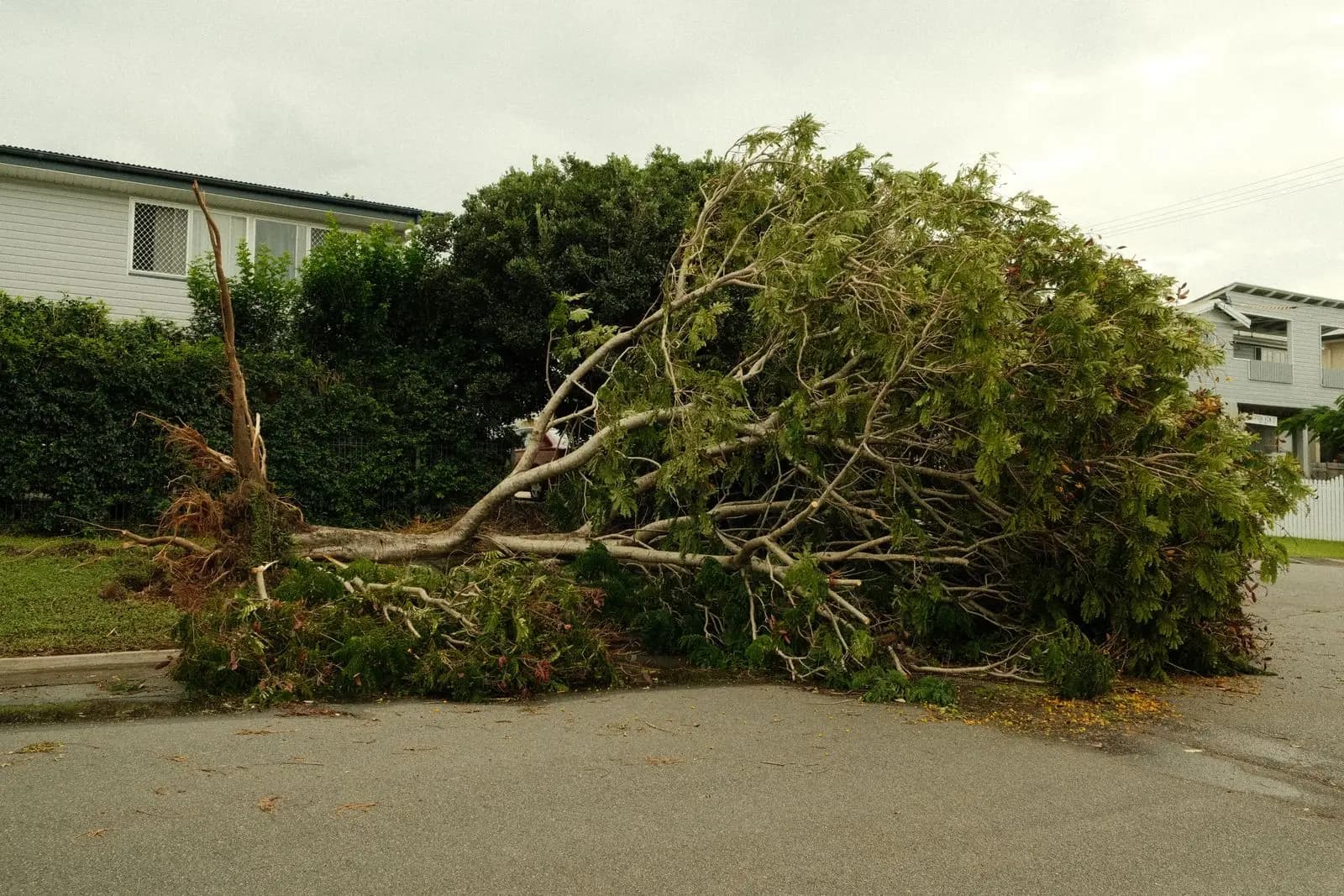
Hurricane Isabel crossed Virginia in September 2003 after a wet summer. Sustained wind on saturated soil took down so many trees that the state's largest utility lost service to most of its customers, the worst outage it had recorded.
The June 2012 derecho arrived from the northwest on a 100-degree evening and reached the coast in a few hours. Gusts of 60 to 80 mph snapped trees from Roanoke to Fairfax to Richmond.
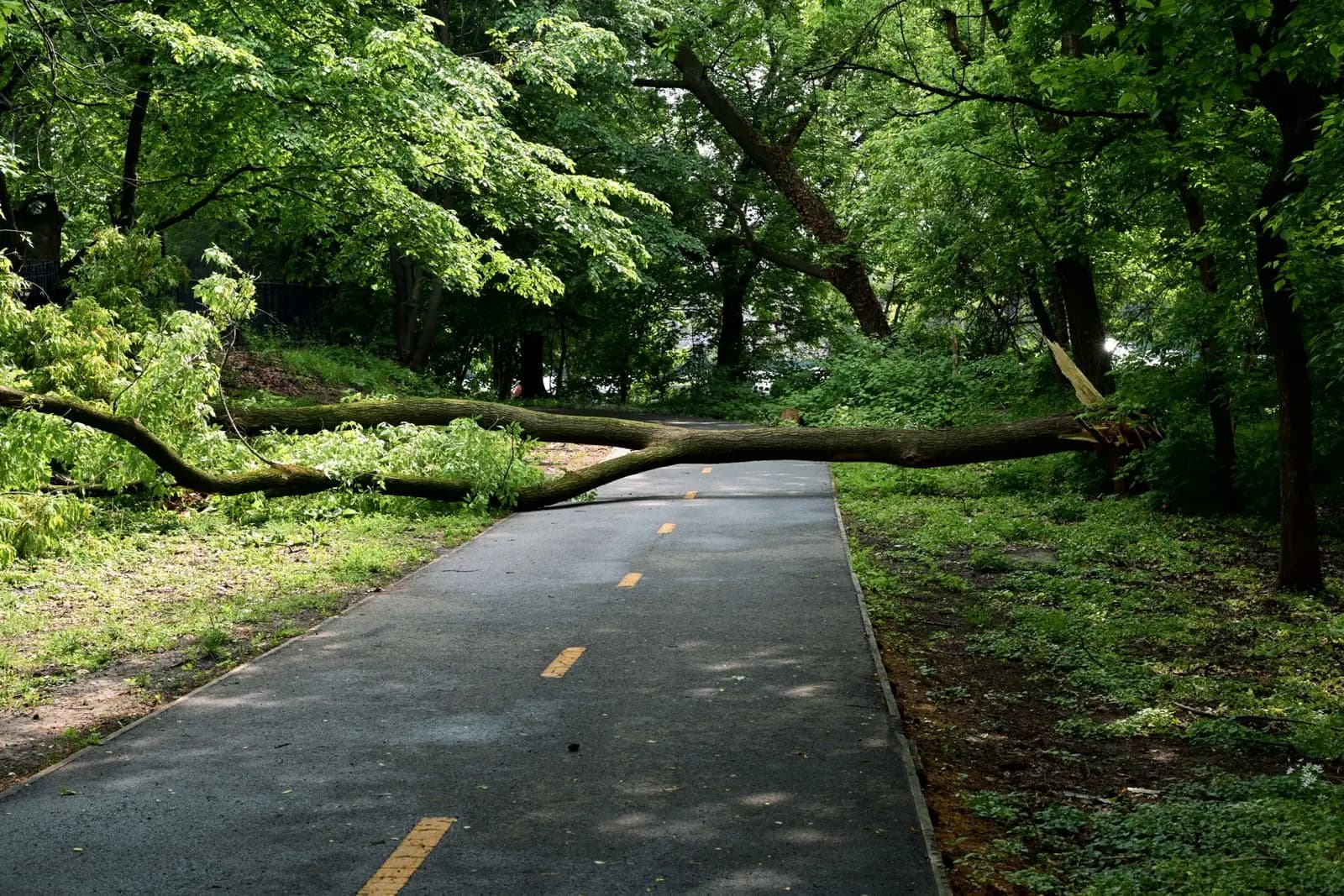
In September 2024 the remnants of Helene brought flooding and wind to the southwest corner of the state, toppling hillside trees across Grayson, Washington and Smyth counties. Southside and central Virginia, meanwhile, see damaging ice every few winters, most recently on a large scale in February 2021.
Virginia tree conditions from the coast to the mountains
| Region | Trees | Usual problems |
|---|---|---|
| Tidewater and Hampton Roads | Loblolly pine, live oak at its northern limit, sweetgum | Hurricane wind, flooding, salt, bay buffer rules |
| Northern Virginia | White and red oak, tulip poplar | Oak decline, tall trees on small lots, thunderstorms |
| Piedmont and Richmond | Oak, hickory, Virginia pine, loblolly | Ice loading on pines, summer wind |
| Blue Ridge and southwest | Oak, hemlock, white pine | Slope access, ice, flooding along creeks |
What is killing Virginia's trees
- Oak decline
- Mature white, red and chestnut oaks dying in clusters across Northern Virginia, linked to drought and wet extremes, borers and root disease.
- Emerald ash borer
- Present statewide after first appearing in Fairfax County. Few untreated ash remain.
- Spotted lanternfly
- Established from Winchester southward. A quarantine governs businesses moving materials.
- Southern pine beetle and Ips
- Kill loblolly and Virginia pine after drought or lightning.
- Beech leaf disease
- A recent arrival now found in several northern counties.
Why Virginia cities regulate less, and where they do
Virginia follows the Dillon Rule: a locality can only do what state law authorizes. State law lets cities and counties set tree canopy requirements for development and protect designated heritage or specimen trees, but it gives them little authority over an ordinary tree on an existing home lot. In most of the state you do not need a permit to remove your own backyard tree.
The major exception is the Chesapeake Bay Preservation Act. Tidewater localities must designate Resource Protection Areas, which include a 100-foot vegetated buffer along tidal shores, tidal wetlands and connected streams. Removing trees in that buffer needs local approval. Dead, diseased or dying trees can generally come out, but you are expected to ask first and often to replant.
There is no arborist license in Virginia. Homeowner association covenants are the other common source of restrictions, and they can be stricter than anything in county code.
Virginia pine and other short-lived trees
Virginia pine colonizes abandoned fields and cut-over land, and many subdivisions from the 1970s and 1980s were built among young stands of it. The species is shallow-rooted and seldom lives past 70 years. Those trees are now old, leaning and falling in ordinary storms.
Bradford pear, silver maple and Leyland cypress have the same pattern on a shorter clock. They were planted for fast shade or screening and reach the end of their useful life in 20 to 40 years.
White oak is the opposite: slow, strong and capable of centuries. When a large white oak declines, have it examined before deciding. Some can be kept with pruning and soil care. The tree risk assessment page explains what an inspection covers.
What to do first in common Virginia situations
- Plan it
Your lot touches tidal water, a marsh or a perennial stream in Tidewater
Ask the county or city whether the tree is in a Resource Protection Area.
- This week
An oak lost its leaves in midsummer
Have it inspected within weeks. Dead oaks become brittle.
- This week
Pines are bent under ice
Stay clear and wait for the thaw. Many recover. Broken tops need removal.
- Act now
A tree has fallen on the house
Follow the steps in a tree fell on the house and call.
Virginia tree service questions
Do I need a permit to cut down a tree on my property in Virginia?
Usually not for a tree on an existing residential lot. Exceptions include trees in a Chesapeake Bay Resource Protection Area, designated heritage or specimen trees, and trees covered by HOA covenants or proffered development conditions.
Can I remove a dead tree in the 100-foot RPA buffer?
Generally yes, but contact your locality first. Most ask for a simple request, sometimes photographs, and replacement planting to keep the buffer functioning.
Why are so many oaks dying in Northern Virginia?
A combination of weather stress, borers and root disease acting on trees of similar age. There is no single treatment. Watering during drought and avoiding root damage help trees that are still healthy.
Are tree services licensed in Virginia?
There is no arborist license. Check insurance certificates and look for ISA certification. Larger jobs may fall under the state's general contractor licensing thresholds.
Tree service in Virginia, by phone
Call to be connected with an independent tree company serving your part of Virginia, or leave your number for a callback.
(888) 555-0142Call availability varies by area and time of day
Limbwright is a referral service. Your call or request goes to an independent tree service company that sets its own prices and schedule. Ask for proof of insurance and a written scope before work starts. How this works
Request a callback
Leave a number and a tree service provider in your area will call you.