
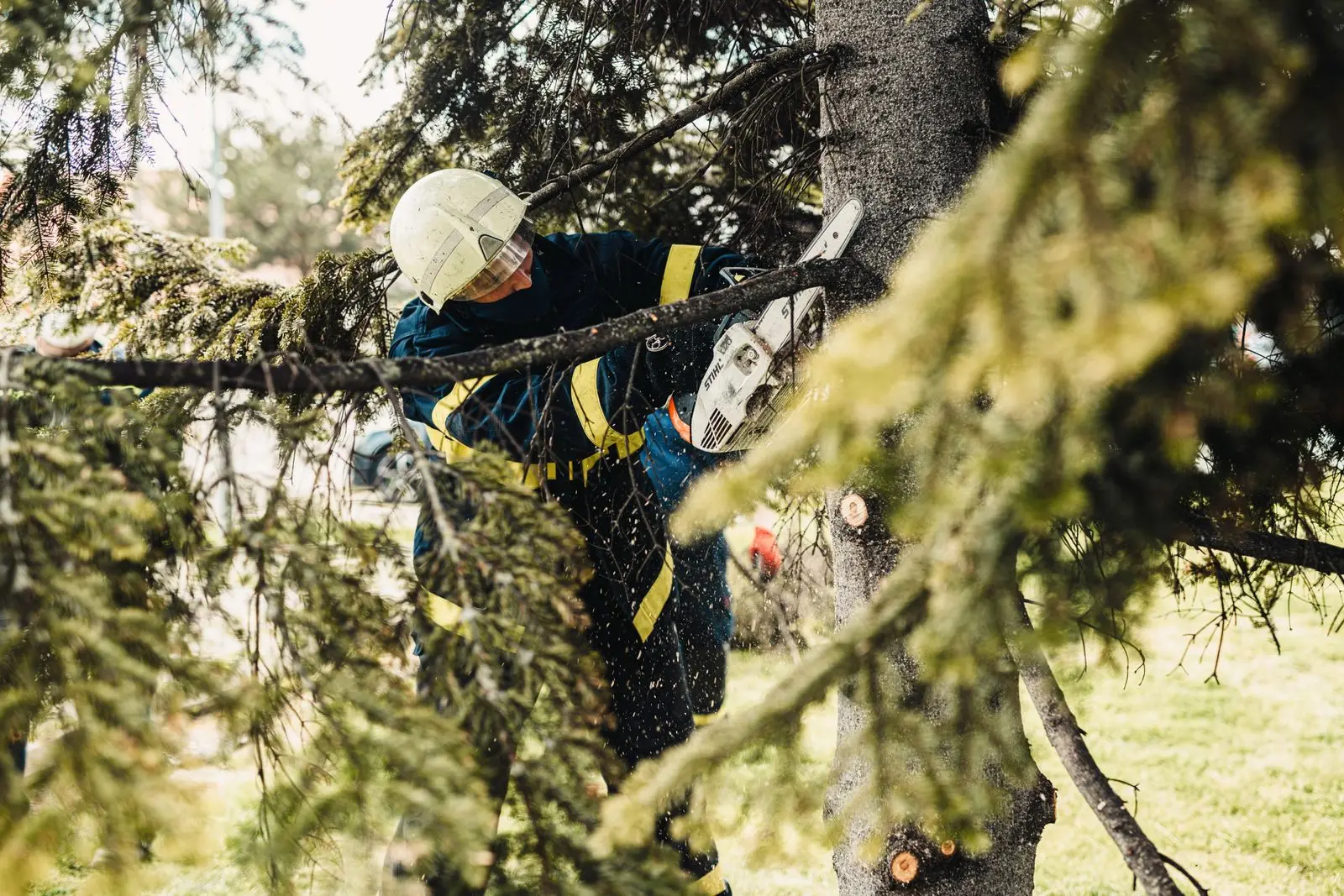
New Hampshire
Tree Removal and Tree Service in New Hampshire
New Hampshire is more than 80 percent forest, and its tallest yard tree, the eastern white pine, is also the one most likely to break in ice or wet snow. Away from the water there are few rules. Within 250 feet of a lake or large river there are many.
Living under white pines
Eastern white pine grows fast, reaches 100 feet or more, and holds its needles all winter. That combination catches ice and wet snow that bare hardwoods shed. Long horizontal limbs peel off, and tops snap where an old weevil injury left a fork.
A pine beside the house is not automatically a hazard. Single-stemmed trees with full crowns and no decay stand for a century. The ones that fail tend to have twin leaders, a history of dropped limbs, resin streaming from a crack, or roots cut for a septic system or driveway.
Granite is the other factor. Over much of the state soil is thin above ledge, so roots spread wide and shallow. After a wet autumn a strong gust can peel a pine and its root mat off the rock.
New Hampshire's major tree-damage storms
| Event | Area | Result |
|---|---|---|
| December 2008 ice storm | Southern and central counties | The largest power outage in state history. Some towns were dark for two weeks. |
| January 1998 ice storm | North Country and higher elevations | Hardwood forests stripped above about 1,000 feet |
| October 2017 windstorm | Statewide | Trees uprooted from saturated soil with leaves still on |
| Thanksgiving 2014 snow | Southern tier | Wet snow snapped pines and oaks that had not dropped their leaves |
The shoreland law and everything else
The Shoreland Water Quality Protection Act covers land within 250 feet of public waters, which includes lakes and ponds larger than ten acres, larger rivers and tidal waters. In the first 50 feet, the waterfront buffer, the law uses a grid-and-points system: each 25 by 50 foot segment must keep a minimum score of trees and saplings, and stumps and roots must stay in the ground.
Between 50 and 150 feet a share of the area must remain in an unaltered state. Dead, diseased and unsafe trees may be removed in both zones, though it is wise to photograph them first and to check with the Department of Environmental Services when the removal is large.
Outside the shoreland zone New Hampshire has no state permit for removing a tree on your lot and no arborist license. Town rules are uncommon, though trees along designated scenic roads need planning board approval before a town or utility cuts them.
Signs a New Hampshire pine needs attention
Two or more tops from one fork
The union often contains bark rather than wood and splits under load.
A long vertical crack with fresh resin
The trunk has started to separate.
Broken stubs high in the crown
Evidence of past failures and entry points for decay.
Soil mounding on one side after wind
The root plate lifted. Treat as urgent.
Needles browning from the bottom up across the whole tree
May be needle disease, which is thinning pines statewide, or root trouble.
Other pests changing New Hampshire's woods
- Emerald ash borer
- First detected in Concord in 2013 and spreading outward. State guidance discourages moving ash wood.
- Hemlock woolly adelgid and elongate scale
- Established in the southern counties.
- Beech leaf disease
- A newer arrival on top of the long-standing beech bark disease.
- Red pine scale
- Has killed red pine plantations in the south.
When should tree work be scheduled in New Hampshire?
Frozen ground is the best friend of a tree crew here. From late December into March a truck or lift can reach trees across lawns, leach fields and wet areas that would be off limits the rest of the year.
- Mud season
- Late March through April. Many towns post weight limits on back roads, which keeps chip trucks and cranes away.
- Summer
- Good access on dry ground. Lake properties are busiest then, so book early.
- Autumn
- The time to remove dead trees before snow loads them.
New Hampshire tree service questions
Should I remove the white pines near my New Hampshire house?
Not as a blanket rule. Have them inspected. Sound single-stemmed pines are usually kept, sometimes with long limbs shortened. Forked, cracked or root-damaged pines within reach of the house are the candidates for removal.
Can I cut trees for a view on a New Hampshire lake?
Within limits. The waterfront buffer must keep its minimum point score in every segment, so you can thin and prune but not clear. Stumps stay in place.
Does New Hampshire license arborists?
No. Look for the New Hampshire Arborists Association or ISA certification, and ask for insurance certificates sent by the insurer.
Can ash firewood be moved within New Hampshire?
The state urges people not to move it, because that is how emerald ash borer spreads. Use ash wood close to where it was cut.
Tree service in New Hampshire, by phone
Call to be connected with an independent tree company serving your part of New Hampshire, or leave your number for a callback.
(888) 555-0142Call availability varies by area and time of day
Limbwright is a referral service. Your call or request goes to an independent tree service company that sets its own prices and schedule. Ask for proof of insurance and a written scope before work starts. How this works
Request a callback
Leave a number and a tree service provider in your area will call you.