
Mississippi
Tree Removal and Tree Service in Mississippi
Mississippi takes hurricanes from the south and tornadoes from the west, and its soils range from Delta clay to bluffs of wind-blown silt that let big trees slide. Tree surgery is a licensed trade here, regulated by the state's Bureau of Plant Industry.
Three kinds of storm, three kinds of damage
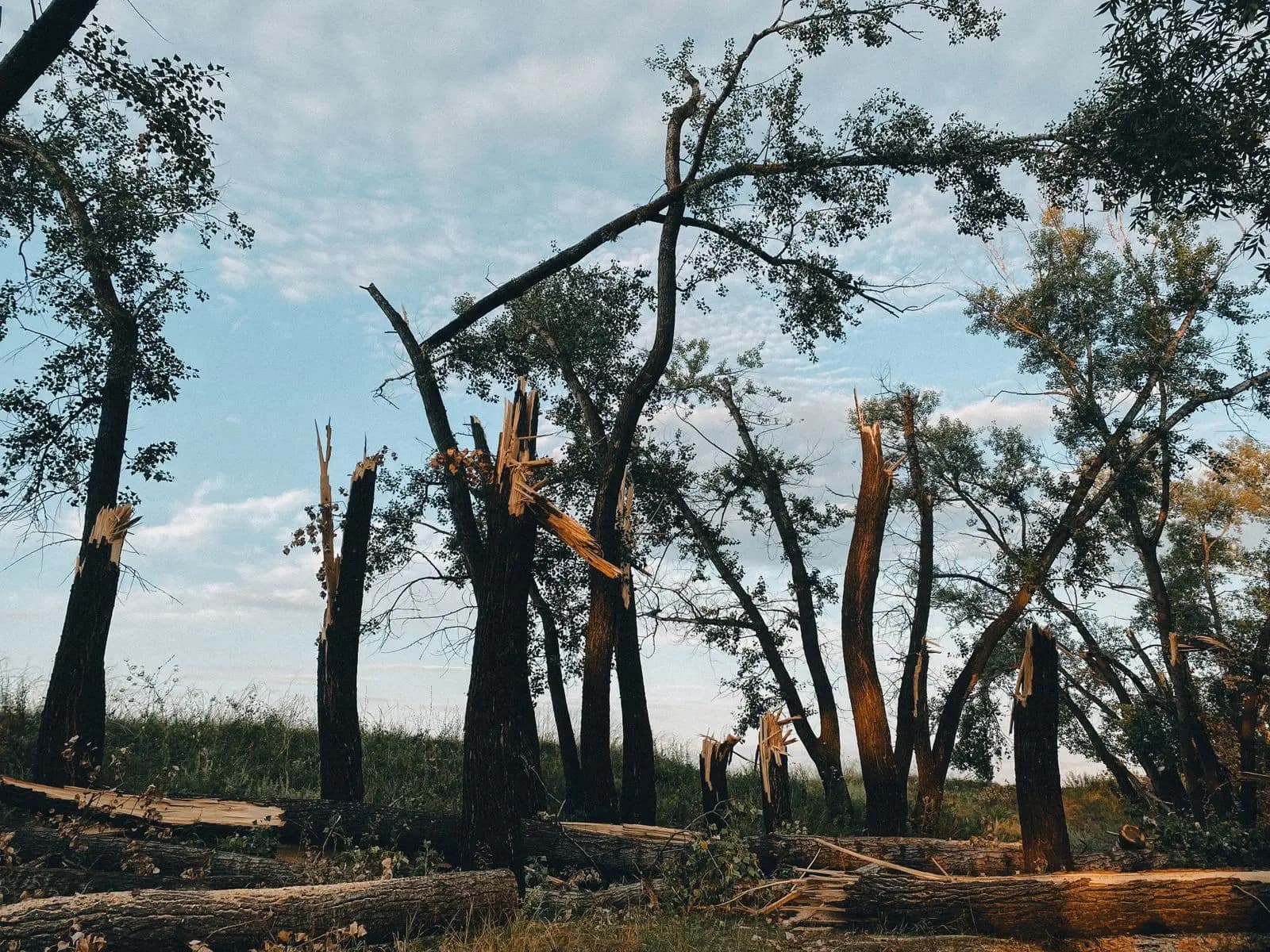
Hurricane Katrina is still the benchmark. In August 2005 it carried hurricane-force gusts well past Hattiesburg and toward Jackson and Meridian, flattening pine stands and urban oaks more than a hundred miles from the beach.
Tornadoes are the second threat, and Mississippi's often come at night and in the cool season. The Rolling Fork tornado of March 2023 and the Easter outbreak of 2020 both left long paths of snapped and debarked trees.
The northern counties add ice. The February 1994 ice storm across the Delta and north Mississippi broke so many trees and poles that some communities waited weeks for power.
Who may do tree surgery in Mississippi
Mississippi's Regulation of Professional Services law covers tree surgery along with landscape horticulture and pest control. The Bureau of Plant Industry, part of the Mississippi Department of Agriculture and Commerce, licenses people who do the work for a fee after they pass an exam and show proof of insurance.
That makes the first hiring question simple: ask for the Bureau of Plant Industry license number and confirm it with the bureau if anything seems off. Storm-chasing crews that cannot produce one are working outside the law.
The state does not require a permit to remove a tree on your own land. A few cities, particularly on the coast, protect live oaks and magnolias above a certain size, so check with city hall in places such as Biloxi, Gulfport and Ocean Springs before cutting.
How Mississippi soils change the job
| Area | Ground | Effect on trees and removals |
|---|---|---|
| Delta | Heavy alluvial clay, flat and often wet | Shallow rooting. Equipment ruts lawns in winter, so crews use mats or wait for dry ground. |
| Vicksburg to Natchez bluffs | Deep loess, a silt that erodes fast when exposed | Trees on bluff edges go over with the slope. Stump grinding is often preferred to digging. |
| Jackson area | Yazoo clay that swells and shrinks | Large oaks near foundations raise drying concerns. Get an engineer's view before removing a tree for that reason alone. |
| Pine Belt and coast | Sandy loam | Pines root deeper but tip in saturated ground during hurricanes. |
Signs a Mississippi pine is finished
The 2023 drought was followed by a wave of Ips beetle attacks that killed pines across much of the state. These are the signs to look for.
Needles fading from green to yellow to red
Starting at the top. By the red stage the beetles have usually left.
Popcorn-sized pitch tubes on the bark
Small white or reddish blobs of resin where beetles bored in.
Reddish dust in bark crevices and at the base
Boring dust means active attack.
Bark flaking off to show winding tunnels
Woodpeckers strip it while feeding on larvae.
Common Mississippi trees and their weak points
- Loblolly and slash pine
- The most frequent removal. Tall, close to houses, and vulnerable to wind, lightning and beetles.
- Water oak
- Fast and short-lived. Decay in the trunk by 60 years is normal.
- Live oak
- Dominant on the coast. Wide and wind-firm, but heavy limbs over roofs need periodic pruning.
- Pecan
- Brittle. Sheds large limbs in ice and summer storms, often over driveways.
- Southern magnolia
- The state tree. Sturdy, rarely removed for safety.
Storm-damaged pine: keep it or take it down
Often worth keeping
- Lost branches but the top is intact
- Leaning less than it did before, with no soil heaving
- Bark intact around the whole trunk
- Green crown six weeks after the storm
Usually removed
- Top snapped out
- Bent hard and did not straighten
- Fresh lean with cracked or raised soil
- Pitch tubes or fading needles in the following months
Pines hide damage. One that was bent far over can look normal for a season and then die. The guide on whether a storm-damaged tree can be saved covers hardwoods too.
Mississippi tree service questions
Is a license required for tree work in Mississippi?
Yes for tree surgery done for pay. The Bureau of Plant Industry issues the license after an exam and proof of insurance. Ask for the number before you sign anything.
How soon should a dead pine be removed in Mississippi?
Within a few months. Heat and humidity rot dead pine quickly, and after about a year the trunk may be too weak to climb, which means a lift or crane and a higher price.
Does Mississippi require a permit to cut down a tree?
There is no state permit for private land. Some coastal cities protect large live oaks and magnolias, so confirm with your city first.
Will insurance pay for trees that fell in a Mississippi hurricane?
Policies generally pay to remove a tree that damaged a covered structure, subject to the deductible, and coastal policies often carry a separate wind or named-storm deductible. Read does insurance cover tree removal and then your own policy.
Tree service in Mississippi, by phone
Call to be connected with an independent tree company serving your part of Mississippi, or leave your number for a callback.
(888) 555-0142Call availability varies by area and time of day
Limbwright is a referral service. Your call or request goes to an independent tree service company that sets its own prices and schedule. Ask for proof of insurance and a written scope before work starts. How this works
Request a callback
Leave a number and a tree service provider in your area will call you.