
Richmond, Virginia
Tree Removal and Tree Service in Richmond
When Hurricane Isabel reached Richmond in September 2003, its peak gust was 73 miles an hour, below hurricane strength. Yet trees came down across the city, nearly everyone lost power, and Isabel became the costliest storm in Virginia history. The reason was the ground, soaked by weeks of rain before the wind arrived.
- County
- Independent city
- Tree rules
- City of Richmond Urban Forestry manages street trees; Chesapeake Bay Preservation Areas near the James
- Key local rule
- Street trees are city trees; contact Urban Forestry before work on them
- Electric utility
- Dominion Energy
- Main hazards
- Tropical storms on saturated soil, derechos, ice, old street trees
Isabel, September 2003
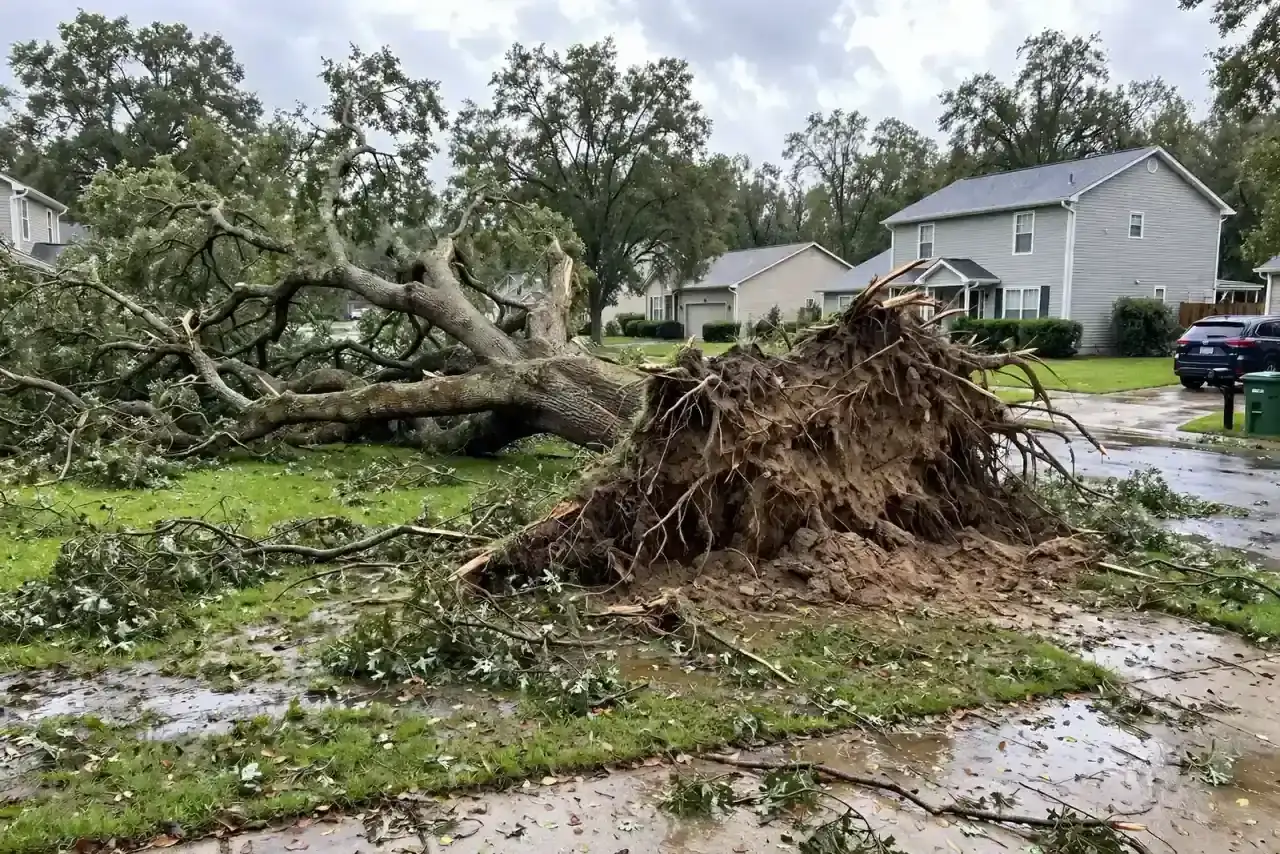
Rain in the weeks before Isabel left Central Virginia's clay soils saturated. When the storm's winds arrived on September 18 and 19, trees that would have held in dry ground pulled out root plate and all. Oaks, sweetgums, maples and pines landed in streets, on cars and on roofs across the Fan, Museum District, Northside and the suburbs.
Structural damage from wind itself was modest. Almost all of the destruction came from falling trees, and power was out for days across most of the region. A few days later, a second round of severe storms brought down more trees on the same soaked ground.
Foresters at the time called Isabel the most destructive storm in memory for the state's trees.
Why do weaker storms topple so many Richmond trees?
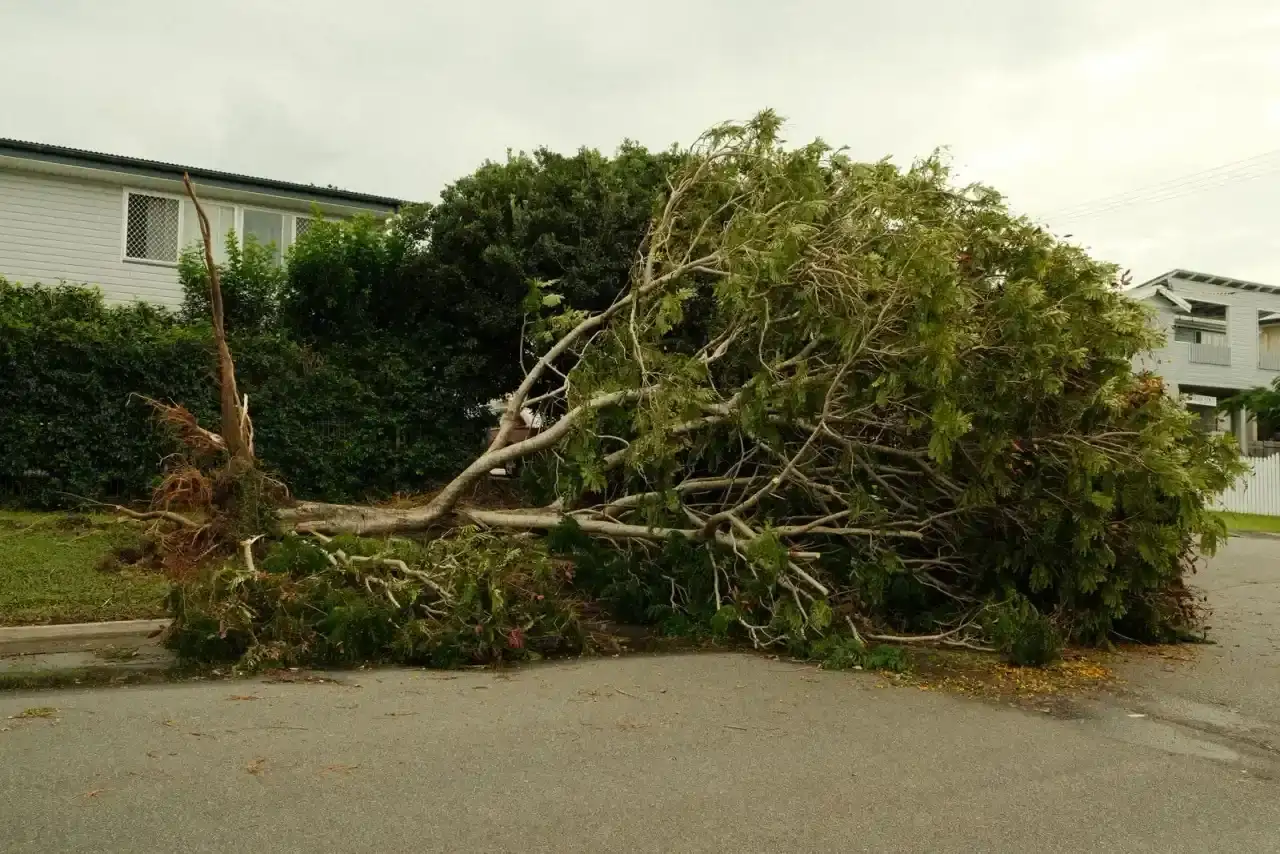
Saturated clay loses its grip on roots. A tree's root plate is held in place by soil friction and the weight of the soil on top. When the soil is soaked, a moderate wind can lever a large tree out of the ground. Shallow-rooted trees, trees with cut or damaged roots and trees with large crowns are most at risk.
- Wet soil
- The single biggest factor in Isabel's tree losses.
- Root damage
- Trenches and construction weaken anchorage.
- Crown size
- Big, dense crowns catch more wind.
Richmond's common big trees
| Tree | Where | Storm notes |
|---|---|---|
| Willow oak | Street trees across the Fan and Museum District | Large crowns; fairly strong but massive |
| Tulip poplar | Yards and woods | Tall, drops heavy limbs |
| Sweetgum | Yards | Shallow roots in wet soil |
| Loblolly pine | Suburbs | Snaps or uproots in tropical storms |
| Red maple | Streets and yards | Breaks at weak forks |
Signs a Richmond tree is a storm risk
Soil cracking or lifting near the trunk after rain
The root plate is moving.
Fresh trenches near the tree
Cut roots for utilities or sidewalks.
Mushrooms at the root flare
Root decay.
Dead limbs in tulip poplars
Heavy wood over roofs and cars.
City trees and stream buffers
Trees in the public right-of-way are managed by the city's Urban Forestry division. Owners should not prune or remove them without city approval. Richmond also has Chesapeake Bay Preservation Areas along the James River and its tributaries, where vegetation removal near streams is regulated.
Private yard trees outside those areas are generally the owner's responsibility.
Preparing trees before a tropical storm
Look at big trees near the house
Lean, decay, dead limbs.
Remove dead wood
Well before the storm season peaks.
Have weak trees assessed
Especially after construction nearby.
Do not over-prune
Stripping crowns does not help.
Richmond tree questions
Who handles fallen street trees?
The city's Urban Forestry and Public Works crews. Report trees down through the city's 311 service.
Is a storm with tropical storm winds a real risk to my trees?
Yes, especially after heavy rain. Isabel showed that saturated soil matters as much as wind speed.
Do I need a permit to remove a yard tree in Richmond?
Generally not for private trees outside protected stream areas. Check if your lot is in a Chesapeake Bay Preservation Area.
What happened to the Fan's street trees after Isabel?
Many were lost and replanted. The city continues to replace street trees as old ones decline.
Reach a tree service in Richmond
Call to be connected with an independent tree company that works in the Richmond area, or leave your number and one will call you back.
(844) 955-1716Call availability varies by area and time of day
Limbwright is a referral service. Your call goes to an independent tree service company that sets its own schedule and terms. Ask for proof of insurance and a written scope before work starts. How this works
Call now
Talk to a tree service provider in your area. Have the tree's location and what it is near ready.
(844) 955-1716Call nowCall availability varies by area and time of day