
Tree removal · Utility lines
Tree Removal Near Power Lines
Electricity can jump to a branch, a saw or a person without contact. That is why federal rules limit who may work near energized lines, and why the first call for a tree touching a main line is the utility, not a tree company.
Call availability varies by area and time of day. Calls are answered by an independent tree service provider.
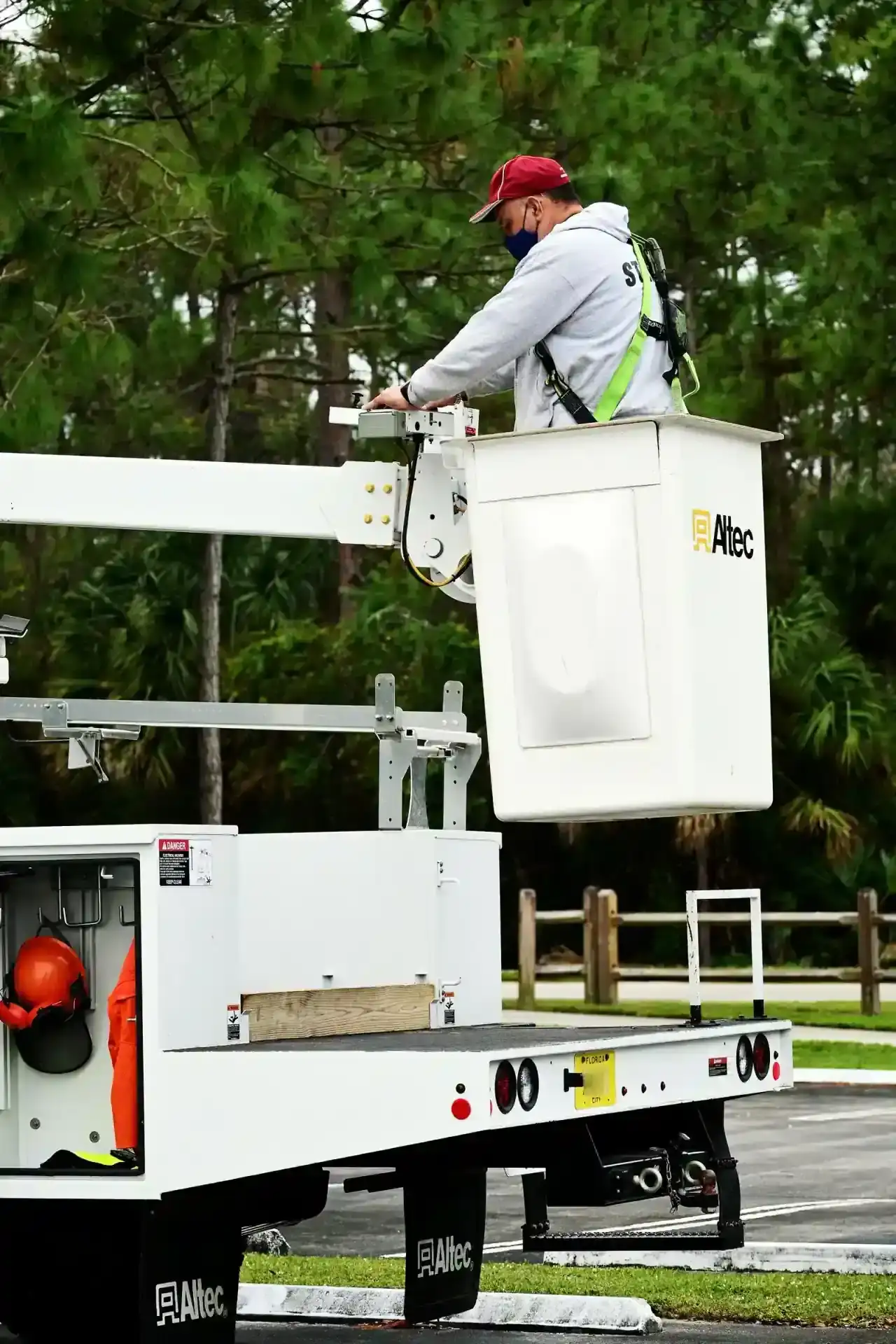
Who removes a tree near a power line?
It depends on which line. Utilities usually clear trees from their distribution and transmission lines on poles. The line from the pole to your house, the service drop, is often the owner's responsibility for tree clearance, but the utility will usually disconnect it so a tree company can work safely.
- Main lines on poles
- Call the utility. Many have vegetation programs and will trim or remove trees threatening their lines.
- Service drop to the house
- Ask the utility for a temporary disconnect, then have a tree company do the work.
- A line already down
- Stay at least 35 feet away and call 911 and the utility.
The federal distance rules
OSHA rules require that workers who are not qualified line-clearance tree trimmers stay at least 10 feet from energized overhead lines up to 50 kilovolts, and farther from higher voltages. The tools and branches they handle count toward that distance.
Line-clearance arborists are trained and equipped to work closer, using insulated tools and aerial lifts. They are usually employed by or contracted to utilities.
Many states add their own high-voltage safety acts that require notifying the utility before work near lines.
Danger signs near lines
Branches resting on a line
They can conduct electricity, especially when wet.
Flickering lights in wind
A branch may be brushing the service drop.
Burn marks on branches
A branch has been arcing against the wire.
A line sagging after a storm
A limb may be loading it. Do not touch the tree.
Smoke or buzzing from a tree
Call the utility emergency number immediately.
How a service-drop job is arranged
Call the utility
Ask about their tree clearance policy and whether they will drop or cover the line.
Schedule a disconnect
The utility disconnects the service drop at the pole for the work window.
Tree work
The crew removes or prunes the tree while the line is dead.
Reconnect
The utility restores service. Damaged masts or meters may need an electrician first.
Which lines are which
| Line | Where it runs | Usual responsibility for trees |
|---|---|---|
| Transmission | Tall towers or poles crossing the region | Utility, under federal reliability standards |
| Primary distribution | Top wires on neighborhood poles | Utility vegetation program |
| Secondary and street lines | Lower wires between poles | Usually the utility |
| Service drop | From the pole to your house | Often the owner, with a utility disconnect |
| Cable and phone lines | Lowest on the pole | The cable or phone company for the line itself |
Utility trimming or removal
Directional pruning
- Utilities cut branches back to make a V or L-shaped gap around lines
- The tree is kept
- It looks lopsided but is healthier than topping
Removal
- For trees that will always grow into the lines
- Often offered by utilities for fast-growing trees under lines
- Replacement with a small-growing species may be suggested
If a tree under lines is always being cut back, consider replacing it with a species that stays under 25 feet. See tree planting.
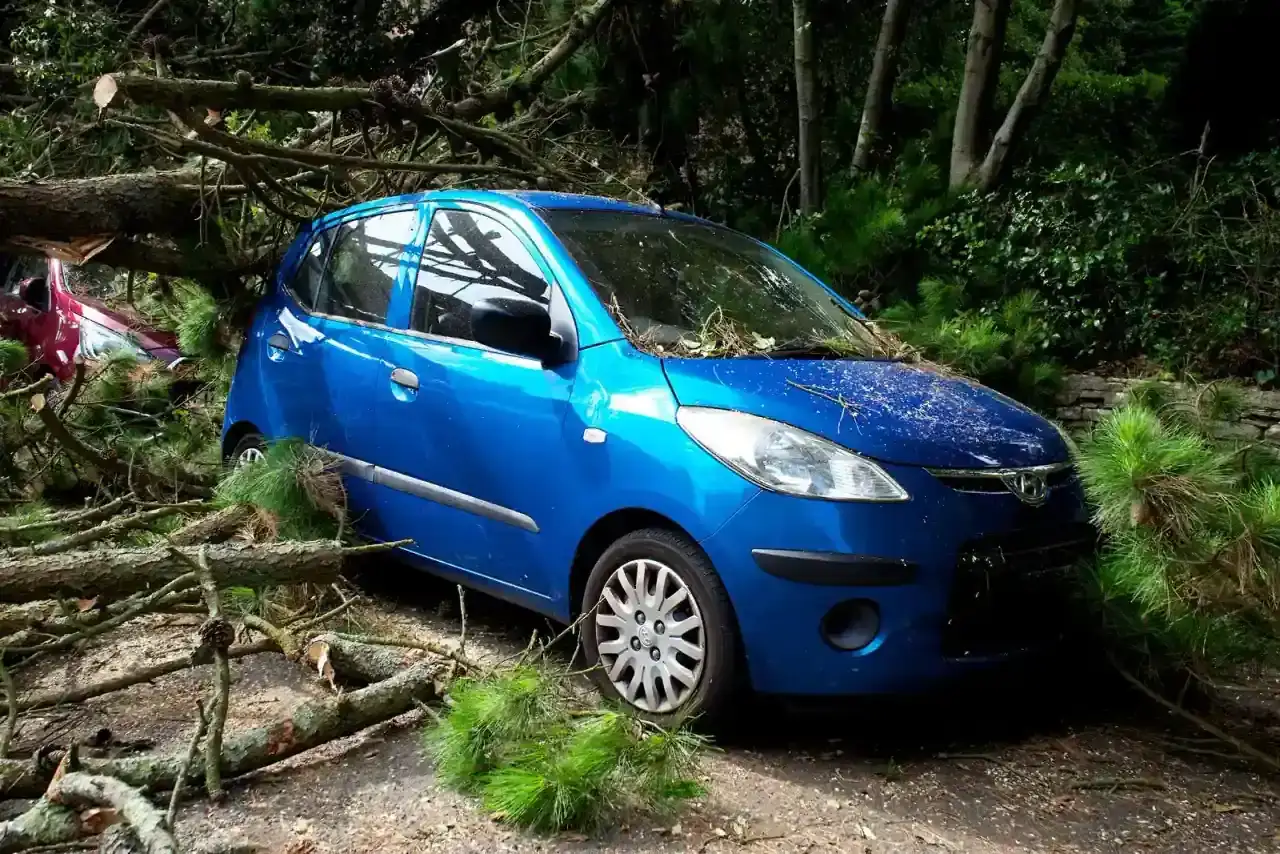
After a storm with lines down
- Assume every wire is live
- Including cable and phone lines, which may touch power lines elsewhere.
- Stay away from the tree
- A tree on a line can be energized all the way to the ground.
- Do not drive over downed lines
- If a line falls on your car, stay inside unless there is fire.
- Report it
- Call the utility outage line and 911.
Power line tree questions
Will the power company remove a tree for free?
Utilities often trim or remove trees threatening their main lines at their own expense. Trees near the service drop are often left to the owner.
Can I trim branches near my service drop myself?
Do not. Contact can be fatal. Ask the utility for a disconnect and hire a crew.
What is a safe distance from power lines?
For anyone who is not a qualified line worker, at least 10 feet for most distribution lines, and more for higher voltages.
Who pays if a tree falls on a power line?
The utility usually repairs its line. The tree owner may be responsible for the tree and for damage to their own service equipment.
Talk to a tree removal near power lines provider
Call to be connected with an independent tree service company near you.
(844) 955-1716Call availability varies by area and time of day
Limbwright is a referral service. Your call goes to an independent tree service company that sets its own schedule and terms. Ask for proof of insurance and a written scope before work starts. How this works
Call now
Talk to a tree service provider in your area. Have the tree's location and what it is near ready.
(844) 955-1716Call nowCall availability varies by area and time of day